LiftMaster 889LM: Install, Program, Maintain
Learn how to install, program, and troubleshoot the LiftMaster 889LM garage door opener with a clear, step-by-step approach. This guide covers compatibility, safety, tools, wiring, remote pairing, MyQ setup, testing, and maintenance for homeowners.


You will install, program, and test a LiftMaster 889LM smart garage door opener, ensuring safe operation and compatibility with your door. Before you begin, gather basic tools, confirm door balance, and disconnect power. This guide walks homeowners through a safe, step-by-step upgrade that leverages MyQ for remote access and monitoring.
What LiftMaster 889LM Is and Why It Matters
The LiftMaster 889LM represents a modern, smart garage door opener that combines quiet belt-driven action with remote access and control through the MyQ ecosystem. Homeowners who upgrade to a model in this family typically gain conveniences like real-time status, app-based control, and push notifications about door activity. The GarageDoorAdjust team emphasizes that choosing a dependable opener matters not only for convenience but for safety, since better sensing and controlled reversals reduce pinch hazards. This section uses the LiftMaster 889LM as the practical example to walk you through installation, programming, and routine maintenance. You’ll learn how to verify compatibility with your current door, prepare properly, and validate sensor function after setup. Throughout, we reference best practices from GarageDoorAdjust and other safety-focused sources to keep your family protected.
According to GarageDoorAdjust, upgrading to a modern opener like the LiftMaster 889LM can boost safety, reliability, and remote monitoring for everyday use. The team also notes that a careful upgrade reduces manual operation errors and helps you regain control over door status from anywhere. By following a structured process, homeowners can complete a secure upgrade without impulse decisions or skipping essential safety checks.
Compatibility and Safety Considerations
Compatibility for the LiftMaster 889LM depends on your existing door hardware and rail dimensions. Ensure that your garage door is a typical sectional door with standard track spacing and sufficient headroom for the opener’s rail. If your current door balance feels heavy or if the tracks are bent, address those issues before attempting an upgrade. Safety sensors must be in good alignment, and the door must reverse on contact with a small object placed on the floor during a test. These checks help ensure the new opener can reverse safely and won’t create pinch points. The GarageDoorAdjust guidance emphasizes that compatibility isn’t just about mounting a unit; it’s about ensuring the entire system works together, including the door itself, sensors, and fasteners. If you have a nonstandard door or custom hardware, consult a professional to assess compatibility and avoid voiding warranties.
Tools, Materials, and Prep for a Safe Upgrade
Before touching any wiring, unplug the opener and secure the door in the open position. Gather essential tools such as a drill, screwdriver set, adjustable wrench, tape measure, level, and a helper for heavy lifting. Have safety gear on hand: safety glasses and sturdy gloves. Keep a clear workspace free of debris, and use a ladder with a stable footing. If any step requires you to work near the door springs, proceed with extreme caution or call a pro. Label wires as you disconnect them, and keep track of small hardware pieces to avoid misplacement during reassembly. This preparation reduces last-minute trips to the toolbox and minimizes the chance of mistakes during mounting or wiring.
Step-By-Step Installation Overview
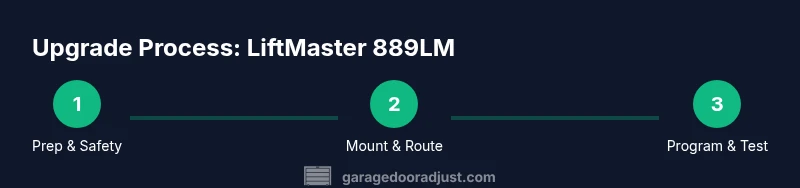
The upgrade flow generally follows a logical sequence: remove the old opener, mount the new header bracket and rail, install the trolley and belt/chain, connect wiring and safety sensors, and finally program remotes and the MyQ app. Plan for extra hands to assist with heavy lifting and precise alignment. The overview section helps you anticipate the order of operations and identify potential bottlenecks before you start.
Programming the Remote and MyQ App
Pairing remotes with the LiftMaster 889LM typically involves a simple button sequence on the unit and the remotes. After installation, you’ll download the MyQ app, create or sign in to your account, and follow the prompts to link your opener. The MyQ platform enables remote status checks, scheduling, and notifications, which enhances everyday usage and security. If you already own a MyQ-compatible camera or hub, check compatibility settings to ensure seamless integration.
As you configure, verify each remote’s control range and confirm that all doors respond promptly. If you encounter pairing issues, consult the user manual for model-specific steps and verify that the door sensors are aligned and the door is unobstructed.
Safety Tests and Sensor Alignment
After physical installation, perform safety tests to confirm auto-reverse and sensor functionality. Place a small object on the door path to verify the opener reverses when it contacts the obstacle. Align the photoelectric sensors so they point at each other with a clear beam. If the light beam is blocked or misaligned, reposition the sensors and re-test. These steps help prevent injuries and protect pets and children. The GarageDoorAdjust recommendations emphasize that sensors and safe-reversing mechanisms are central to safe operation and should be tested with every upgrade or maintenance cycle.
Finally, check the manual release mechanism and ensure it operates smoothly from both inside and outside the garage. This ensures you can manually operate the door in a power outage or when needed for service.
Post-Install Maintenance and Troubleshooting
Ongoing maintenance keeps the LiftMaster 889LM performing reliably. Regularly lubricate moving parts with manufacturer-approved lubricants, inspect the mounting hardware for tightness, and clean the track to prevent binding. If you notice unusual noises or sluggish operation, re-check belt tension and track alignment, and consider re-running safety tests. Common issues—like missed remotes or inconsistent MyQ connectivity—often stem from pairing problems or a weak battery in remotes. Re-pair remotes and re-login to MyQ if needed. Following a routine maintenance schedule will help you catch issues early and extend the life of the opener. The GarageDoorAdjust approach centers on proactive checks and a consistent maintenance routine to minimize surprises.
Authority Sources
- Keep safety top of mind by reviewing government and industry guidance on garage doors and openers.
- For safety guidelines and best practices, see: https://www.cpsc.gov and related safety resources.
- For general energy-efficient and safe garage door operations, see official government or university materials as cited in the References section.
Maintenance Checklist and Quick Reference
- Inspect door balance and track alignment monthly.
- Test auto-reverse and sensor alignment after any install or adjustment.
- Re-pair remotes and verify MyQ connectivity quarterly.
- Use manufacturer-approved lubricants and hardware.
toolsMaterialsIntro
Tools & Materials
- Safety glasses(ANSI Z87.1 compliant)
- Ladder (stable)(Secure footing, 2-3 steps above floor level)
- Screwdriver set(Flathead and Phillips options)
- Wrench set(Adjust and hold nuts/bolts)
- Drill with bits(Pilot holes for mounting hardware)
- Level and tape measure(Ensure proper alignment)
- Pliers and wire strippers(Wiring connections)
- Voltage tester(Verify power is off before handling wiring)
- New opener hardware kit (compatible with 889LM)(Mounting hardware, belt/chain, trolley, rail pieces)
- MyQ-enabled device (phone/tablet)(For app setup and remote control)
- Manual release key or emergency handle(Backup operation in power outages)
Steps
Estimated time: 2-4 hours
- 1
Power down and prepare workspace
Unplug the opener to ensure no power is flowing to the unit. Clear the area and secure the garage gate so it stays in the open position while you work. Prepare your tools and review the installation guide to minimize surprises.
Tip: Have a helper to hold components during mounting. - 2
Disconnect old opener and remove unit
Detach the old opener from its mounting bracket and disconnect wiring connections one by one. Label the wires for easy reassembly and keep fasteners organized. Remove the rail if needed and set components aside safely.
Tip: Take photos of the existing wiring before disconnecting. - 3
Mount the header bracket and rail
Attach the new header bracket to the ceiling studs and secure the rail to the bracket. Use a level to ensure the rail runs straight from the wall to the door. Tighten hardware evenly and verify there is no play in the rail.
Tip: Check that the bracket is perpendicular to the wall for proper alignment. - 4
Attach the trolley, belt/chain, and secure the door side
Install the trolley on the rail, connect the belt or chain per the kit, and secure the door-side hardware to the door itself. Ensure the belt tension is appropriate and that the trolley moves smoothly without binding.
Tip: Do not overtighten belt/chain; slight slack is normal. - 5
Wire the opener and install safety sensors
Connect power and run wiring as per the LiftMaster instructions. Position the photoelectric sensors on both sides of the door opening and align them so the beam is uninterrupted. Tighten mounts and test without the door installed to verify electrical continuity.
Tip: Keep sensor wires away from moving parts to avoid snagging. - 6
Program remotes and test operation
Pair the remotes to the new opener and link the MyQ app if you’re using it. Run a full door cycle, testing auto-reverse, force adjustments, and sensor checks. Confirm the door closes fully and stops if obstructed.
Tip: Always test the door from both inside and outside before finalizing.
Got Questions?
Is the LiftMaster 889LM compatible with all standard garage doors?
Compatibility depends on your door’s type and current hardware. Most standard sectional doors will work with a modern opener, but verify rail length, mounting height, and sensor alignment before upgrading. If you have a nonstandard or heavily modified door, consult a professional.
Compatibility depends on your door type and hardware—most standard sectional doors work, but verify rail length, mounting height, and sensors before upgrading.
Do I need to hire a professional to install the 889LM?
Many homeowners with basic electrical skills can complete the upgrade, but tasks involving heavy lifting, precise alignment, or springs should be handled by a pro. If you’re unsure at any step, hire a licensed technician.
If you’re comfortable with electrical work and ladder work, you can install it yourself; otherwise, consider a pro for safety.
How do I program remotes and pair MyQ with the 889LM?
Programming typically involves a quick button sequence on the opener and the remotes, followed by linking the opener to the MyQ app. If you have existing MyQ devices, follow the app prompts to add the new opener.
Program remotes using the opener’s button sequence and connect to the MyQ app to finish setup.
What safety tests should I run after installing?
Test auto-reverse with a small object on the door path, confirm the sensors are aligned, and verify the door stops closing when blocked. Conduct manual-release checks and ensure the door releas e handle works smoothly.
Run auto-reverse tests, check sensor alignment, and verify the manual release works correctly.
Is battery backup included or required for the 889LM?
Many LiftMaster models offer a battery backup option; check your specific unit’s features. If included, test the backup during a power outage and ensure it still controls the door safely.
Battery backup options vary by model; test backup operation if your unit includes it.
How long does a typical upgrade take?
For a standard installation with basic tools and no major door issues, plan for 2-4 hours. If you encounter alignment or wiring challenges, allocate more time or hire a pro.
Most upgrades take 2-4 hours, more if there are alignment or wiring challenges.
Watch Video
Quick Summary
- Verify compatibility before buying the opener.
- Test all safety features after installation.
- Use MyQ to enable remote monitoring and control.
- Follow a step-by-step plan to stay organized.