LiftMaster 87504: Installation, Repair, and Safety Guide
Learn how to install, diagnose, and maintain the LiftMaster 87504 garage door opener with step-by-step instructions, safety tips, and troubleshooting strategies from GarageDoorAdjust.


With LiftMaster 87504, you can diagnose common opener issues, install a new unit, or reprogram remotes. This quick answer confirms you’ll need basic tools, follow safety steps, and reference the model’s wiring and programming steps. Use this as a starting point before diving into the detailed, step-by-step guide for success.
Why LiftMaster 87504 is a popular choice for homeowners
The LiftMaster 87504 is widely adopted by homeowners who want a reliable, belt-driven garage door opener with modern security features. For many, this model balances quiet operation, predictable performance, and straightforward programming. According to GarageDoorAdjust, choosing a model with solid compatibility and a clear remote setup path reduces ongoing headaches and improves daily use of the garage. In this guide, we’ll use the LiftMaster 87504 as our reference point to explain installation, maintenance, and troubleshooting in plain terms.
Safety first: Garage door opener safety and compliance
Safety is non-negotiable when working on or around a garage door system. Make sure the power is off at the breaker before any work begins, and never bypass safety devices such as photoelectric sensors. The LiftMaster 87504 relies on sensors that detect obstructions; if misaligned, they can falsely halt operation. Keep hands clear of the closing path and test the door after any adjustment. Local codes may require a professional installation; always consult your local authority if you are unsure.
Compatibility and troubleshooting basics
Before you replace or repair a LiftMaster 87504, verify compatibility with your door, rails, and mounting height. Most issues fall into a few categories: power supply problems, sensor misalignment, misprogrammed remotes, and safety-reverse failures. If the door won’t open fully, inspect the limits and force settings; if it beeps or hums, check the belt tension and track alignment. This guide focuses on common symptoms and practical checks you can perform safely as a homeowner.
What you’ll need (overview) and planning considerations
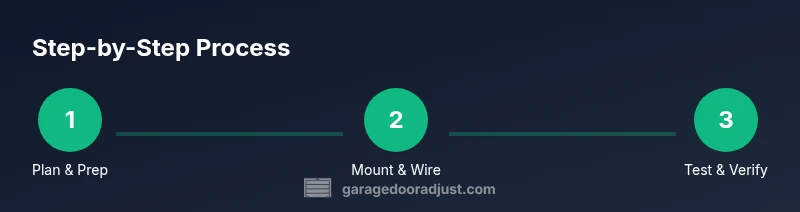
A sound plan prevents frustration. Gather a basic toolkit, a sturdy ladder, a few fasteners, and a reliable flashlight. Having a partner to assist can make lifting the opener easier and safer. In the following steps, we’ll outline a typical installation/repair flow for the LiftMaster 87504, including mounting alignment, wiring, sensor connections, and remote programming. Always stay within the manufacturer’s diagrams to avoid miswiring that could affect safety.
Maintenance and common fixes for LiftMaster 87504
Regular maintenance keeps the LiftMaster 87504 operating smoothly. Lubricate moving parts as recommended by the manufacturer, check the drive belt for wear, and clean the rails to reduce resistance. If the opener is noisier than usual, inspect track alignment and roller wear. Sensor alignment issues are a frequent cause of nuisance halts; realign them so they point toward each other and verify the beam is unobstructed.
When to replace vs repair and pro guidance
Not every problem is economical to fix yourself. If you notice persistent sensor failures, irregular motor humming, or recurring faults after reprogramming, it may be time to consider a replacement or professional service. A trained technician can verify spring balance, track integrity, and torsion settings. The goal is safe, reliable operation with minimal risk to you or your property.
Troubleshooting quick-start checklist
Use this quick-start checklist to triage issues with the LiftMaster 87504:
- Confirm power to the unit and check the outlet or circuit.
- Test whether the door responds to remote and wall control.
- Inspect photoeye sensors for dirt, misalignment, or obstruction.
- Verify the limit and force settings in the opener’s menu.
- Listen for unusual noises that signal worn gears or belt wear.
Tools & Materials
- Cordless drill/driver(For mounting hardware and drilling pilot holes.)
- Phillips head screwdriver(PH2 size for most fasteners.)
- Flat-head screwdriver(Used for adjustments if needed.)
- Adjustable wrench(For nuts/bolts on the rail and bracket.)
- Needle-nose pliers(For wires and small connections.)
- Level(Ensure brackets are square and track is vertical.)
- Tape measure(Measure mounting points and clearance.)
- Stepladder(Stable ladder tall enough to reach the ceiling.)
- Wire nuts(Connect and insulate wire splices.)
- Voltage tester(Verify power before wiring.)
- Safety goggles(Eye protection during drilling and wiring.)
- Remotes and batteries(Have spare batteries for programming.)
- Electrical tape(Insulate exposed connections.)
Steps
Estimated time: 90-150 minutes
- 1
Power down and safety check
Turn off power to the opener at the circuit breaker and unplug the unit if accessible. Confirm there is no voltage at the device by testing a controllable circuit. This protects you from electric shock during wiring and mounting.
Tip: Always double-check the power source before touching electrical components. - 2
Disconnect the old opener and remove cover
If replacing an existing unit, disconnect all wiring and remove the mounting screws. Take photos of the connections before detaching to aid correct reassembly with the LiftMaster 87504.
Tip: Label wires as you disconnect to avoid miswiring later. - 3
Mount new rail/bracket assembly
Position the mounting bracket and rail per the manufacturer’s instructions. Use a level to ensure the track is plumb and securely fasten to the ceiling joists.
Tip: Check for any obstructions above the headroom and maintain even spacing. - 4
Connect wiring and sensors
Reconnect limit switches, safety sensors, and other required wiring following the LiftMaster 87504 diagram. Attach photoelectric sensors so the beams align directly across the door path.
Tip: Double-check polarity and secure wire bundles away from moving parts. - 5
Program remotes and keypad
Use the programming procedure in the LiftMaster manual to pair remotes and keypad with the 87504. Test from multiple distances and ensure each device responds consistently.
Tip: Keep the remote programming steps handy for quick reference. - 6
Test operation and safety checks
Power up and run the door through several cycles. Verify auto-reverse functionality and sensor operation; adjust limit switches if the door does not open or close fully.
Tip: If the door does not reverse on contact, stop and re-check the safety beam alignment.
Got Questions?
What is the LiftMaster 87504?
The LiftMaster 87504 is a belt-driven garage door opener model designed for quiet operation and modern security features. This guide covers installation, programming remotes, and routine maintenance.
The 87504 is a belt-driven opener designed for quiet operation. We'll cover how to install it, program remotes, and keep it running safely.
Is LiftMaster 87504 compatible with my existing door?
Compatibility depends on your existing track, mounting height, and door weight. Always consult the manufacturer’s diagrams and verify rail and mounting compatibility before replacing components.
Compatibility depends on your current track and mounting setup. Check the LiftMaster diagrams before you replace anything.
How do I program remotes for the 87504?
Remotes are programmed using the opener’s learn button and a sequence in the manual. Follow the steps step-by-step and test each remote from different distances.
Use the learn button and a simple sequence from the manual. Test each remote after programming.
What safety features should I check on the LiftMaster 87504?
Ensure the photoeye sensors are aligned and unobstructed, the auto-reverse function works properly, and the emergency release engages smoothly.
Check sensor alignment, auto-reverse, and the release mechanism to ensure safe operation.
Can I install LiftMaster 87504 myself, or do I need a pro?
You can perform many installations yourself if you follow instructions carefully and observe safety precautions. If you encounter high-tension components or uncertain wiring, hire a pro.
DIY is possible if you follow the safety steps; if in doubt, hire a professional.
Watch Video
Quick Summary
- Plan before you mount the rail
- Safety first: power down and test
- Program remotes after wiring
- Test thoroughly and adjust as needed
- Call a pro if you encounter persistent issues