How did my garage door spring break? A homeowner's troubleshooting guide
Diagnose a broken garage door spring quickly with this step-by-step guide. Learn common causes, safety tips, fixes, and when to call a pro for peace of mind.


Most likely, a torsion or extension spring failed due to wear, fatigue, or an imbalance that stressed the system. You may hear grinding, notice a door that won’t stay open, or see a sudden drop. Do not attempt to lift or repair a broken spring yourself—use the diagnostic flow and call a pro if needed. This quick check helps confirm symptoms before you proceed.
How did my garage door spring break? Causes and warning signs
If you're wondering how did my garage door spring break, you're not alone. In most homes, springs cycle thousands of times over many years, enduring heat, cold, and humidity. Tiny flaws from manufacturing or installation can linger unseen until fatigue triggers a failure. According to GarageDoorAdjust, wear over time and improper balance are the most common culprits behind spring failure. The GarageDoorAdjust team found that corrosion and microscopic cracks can weaken the coil long before a loud snap is heard. Regardless of the cause, recognizing the early warning signs helps prevent sudden collapse or injury. In the next sections, we'll outline the symptoms, explain why springs fail, and show you safe, practical steps to diagnose the problem without attempting dangerous repairs.
Common signs of a failing spring
A spring is designed to keep the door properly balanced and to bear most of the weight during operation. When it starts to fail, the symptoms become obvious. You might hear creaking, grinding, or a loud pop when the door moves. The door may feel heavy, or it may slam shut rather than easing down smoothly. If one side seems higher or the door drifts after you lift it, that imbalance points to spring wear or cable issues. Another telltale sign is a door that won’t stay open or a spring that is visibly twisted, stretched, or broken. If you notice any of these signs, treat them as a red flag that requires professional assessment.
Safety first: why not DIY a broken spring
Broken springs are under extreme tension. Even when the door is closed, the spring stores force that can snap loose suddenly. A misstep with winding bars, pliers, or improper support can cause severe injuries or property damage. For homeowners, the safest path is to stop using the door, disconnect the opener only if you know how to do it safely, and call a trained technician. We'll outline the safer diagnostic checks you can perform from a distance before a pro arrives.
Diagnostic flow: quick checks to perform safely
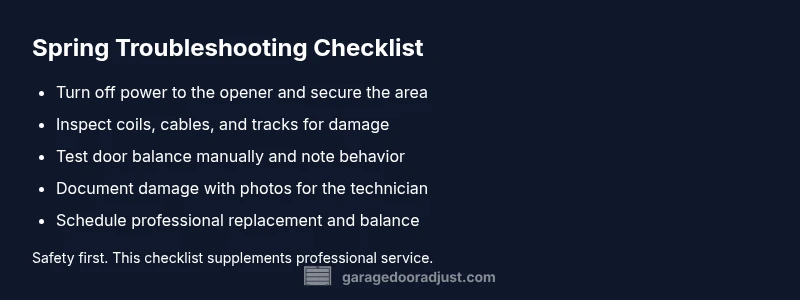
Start with the basics: unplug or switch off the garage door opener to eliminate power as a variable. Visually inspect the torsion bar, drums, cables, and track alignment from a safe distance. Do you see obvious damage such as a broken coil, snapped cable, or a misaligned track? Test balance by pulling the door up about a foot and releasing it. If it doesn’t stay put, the spring or balance mechanism is off and needs professional evaluation. For extension springs, look for gaps in the coils or worn anchor points. If you’re unsure, stop and call a pro; continuing to operate the door risks further damage. Based on GarageDoorAdjust guidelines, prioritize safety and professional evaluation when in doubt. GarageDoorAdjust analysis shows audible signs often precede a failure, so be cautious.
Prevention and maintenance to extend spring life
Prevention begins with regular checks and gentle care. Lubricate moving parts with a silicone-based lubricant at least twice a year, and keep track and cables aligned. Test the door balance monthly by partially lifting it and releasing it; it should hold its position. If you notice uneven drops, more noise, or increased effort, schedule a professional inspection. Regular maintenance reduces stress on springs and helps identify wear before a catastrophic break occurs.
When to replace: know before you call a pro
A broken spring is not a typical DIY project. If you observe a visibly broken coil, a gap in the coils, or a door that cannot be lifted safely, contact a licensed garage door technician. Replacement usually involves removing the old spring, installing a correctly sized new spring, re-tensioning, and testing for balance. Ask about warranty, safety checks, and calibration of the opener after replacement. The goal is a safe, balanced door that operates smoothly and reliably.
Steps
Estimated time: 60-120 minutes
- 1
Power down and secure the area
Turn off the opener and unplug, keep kids and pets away, and support the door only with safe methods. Do not rely on a single person to hold weight.
Tip: Wear eye protection and work gloves. - 2
Check door balance from ground
With the door closed, disconnect the opener and lift the door manually about a foot; observe if it stays or drifts. A door that moves unexpectedly indicates balance issues.
Tip: Use a helper if you must handle the door at height. - 3
Inspect visible components
Look for broken coils, snapped cables, or track misalignment. Photograph damage for the technician and note any unusual noises.
Tip: Take wide and close-up photos from multiple angles. - 4
Record details for the technician
Note the door type (torsion vs extension), spring size, weight, and installation date. Include photos, serial numbers, and any recent work.
Tip: Having precise information speeds up the repair. - 5
Schedule professional service
Contact a licensed technician for torsion spring replacement and balance calibration. Request warranty and safety checks as part of the job.
Tip: Ask about turnaround time and parts warranty. - 6
Post-repair safety check
After the service, perform 2-3 controlled tests with the opener and ensure smooth balance, proper stopping, and no unusual noises.
Tip: If anything feels off, pause use and call the pro.
Diagnosis: Door feels heavy or won't stay up; springs suspected
Possible Causes
- highWorn torsion spring due to age
- mediumImbalance from misaligned tracks or worn cables
- lowDamaged safety sensors or opener issues
Fixes
- easyDo not attempt spring replacement yourself. Call a licensed technician for replacement and rebalancing
- easySecure the door and disconnect the opener to prevent movement
- easyProvide photos, model numbers, and measurements to the technician to speed diagnosis
Got Questions?
Why did my garage door spring break?
Springs break due to wear, fatigue, corrosion, and improper balance. Regular use over years can lead to eventual failure. If you notice signs, arrange a professional inspection.
Springs break because of wear and fatigue over time; arrange a professional inspection.
Can I tell if a spring is broken without a tool?
Visible gaps, broken coils, or a door that won’t lift smoothly are strong indicators. If unsure, don’t test further and call a pro.
Visible gaps or a door that won’t stay up means a break; don’t test further.
Is it safe to operate the door with a broken spring?
No. A broken spring can cause sudden door movement and injury. Stop using the door and contact a professional.
No, don’t operate the door; it’s dangerous.
What should I ask when hiring a pro?
Ask about licensing, insurance, warranty on parts and labor, and safety practices. Request a written estimate.
Make sure they’re licensed and insured, and ask about warranties.
How long does replacement take?
It varies by system, but most torsion spring replacements take a few hours including testing and balancing.
Expect a several-hour job with testing after replacement.
Will a balance adjustment fix the issue after a break?
Sometimes a tune-up and recalibration are enough, but a broken spring usually requires replacement for a proper balance.
Often you’ll need a full replacement for proper balance, not just a tune-up.
Watch Video
Quick Summary
- Turn off power and avoid DIY spring repair.
- Call a licensed technician for torsion spring work.
- Document and photograph issues to speed service.
- Regular maintenance helps prevent future spring failures.