Can You Open a Garage Door with a Broken Spring? Troubleshooting Guide
Urgent guide for homeowners: can you open a garage door with a broken spring? Learn safety steps, diagnostic flow, when to call a pro, and prevention tips.


No—do not attempt to open or operate a garage door with a broken spring. The spring holds most of the door's weight; a failure can cause sudden drop or a violent snap. If you must access the space, use the manual release cord to disengage the opener and contact a qualified technician immediately.
Understanding the Risk of Broken Springs
When a garage door is functioning normally, the torsion or extension springs share the load that raises and lowers the door. A broken or severely weakened spring shifts that burden to cables and other components, creating an unstable system. If you ask the direct question, can you open a garage door with a broken spring, the practical answer is that it should not be attempted. A door with a compromised spring is prone to sudden, dangerous movement, which can cause injury to hands, arms, or bystanders and can damage the door itself and nearby property. Signs include a door that won’t stay balanced, unusual noises, or a door that appears uneven or heavy to lift. Treat this as a high-risk situation and prioritize safety over convenience. According to GarageDoorAdjust, safety should come first when springs fail, and professional evaluation is strongly recommended.
Quick-Check Safety First
Before you touch anything, ensure you are in a safe environment. Unplug the automatic opener and disconnect any power from the garage door system. Do not rely on the motor to move the door for you; a broken spring can snap suddenly. Keep children and pets away from the door, and ensure you have a clear exit path. If the door is blocking a doorway or trapping a vehicle, do not try to force it open. Use the manual release only to prevent the door from being lifted by the opener, and then call a professional for service. This initial safety step protects you from injury and prevents further damage.
Diagnostic Flow: Symptoms to Diagnosis
Symptoms of a spring problem can include the door feeling heavy, uneven operation, a loud grinding or creaking sound, or gaps at the top of the door when it’s open. The most likely cause is a broken torsion or extension spring (high likelihood). Other potential causes include misaligned tracks or damaged cables (medium likelihood) or worn rollers and hinges (low likelihood). A systematic approach helps: observe symptoms, check for visible damage from a safe stance, listen for abnormal sounds during movement, and verify that the opener is not controlling the door when a fault is suspected. GarageDoorAdjust analysis suggests that diagnosing spring-related issues early reduces risk and increases the chance of a safe repair.
Common Spring Failures and What They Look Like
Springs can fail in several ways. A torsion spring near the drum may unwind or snap, producing a broken wire or a visible gap near the mounting plate. Extension springs installed along the sides can detach from their mounting brackets, causing sudden resistance or a door that won’t rise smoothly. Not all symptoms indicate a spring break—the cables, pulleys, and tracks can contribute to rough operation too. Proper diagnosis requires a careful visual check (without placing your hands near the spring) and testing the door using the manual release to confirm safe disengagement. If you notice corrosion, cracking, or distortion in the spring, treat it as a major failure and halt use until a pro inspects.
Tools, Safety Gear, and Preparation
Before you ever approach a broken-spring scenario, gather the essentials: safety glasses, work gloves, a sturdy ladder, and clear floor space. Do not attempt repairs without the right tools and training. Keep a flashlight handy for inspecting high components like torsion bars, and ensure you have a secondary person nearby to assist in an emergency. Never place any body part between the door and the track while testing. If you detect any sign of a structural issue with the door frame, stop immediately and call a professional.
Step-By-Step: Safe Actions Before Calling a Pro
This section outlines practical steps to take in the immediate aftermath of discovering a broken spring, without attempting risky repairs yourself. The goal is to secure people and property, prevent additional damage, and prepare for professional service. Remember: do not try to lift or adjust a spring. Keeping the door still and disengaged from the opener minimizes the chance of a sudden drop. These steps help you stay safe and ready for a technician to take over.
When to Hire a Professional and What to Expect
Spring replacement is a high-risk task that should be performed by a licensed technician. Expect the technician to assess spring type (torsion vs extension), inspect tracks, cables, and balancing, replace the broken spring with the correct tension, and verify the door’s alignment and travel limits. The service often includes adjusting spring tension, lubricating moving parts, and testing door operation under power and manual modes. Costs vary by location and door type, but the main point is that this is not a DIY job for most homeowners. The technician will provide a balance check to ensure the door moves smoothly and safely.
Prevention Tips to Extend Spring Life
Regular maintenance significantly reduces the risk of unexpected spring failure. Schedule annual inspections, lubricate moving parts, and keep tracks clean of debris. Visual checks for rust, stretched cables, or misalignment can catch problems early. Replacing worn parts in pairs and ensuring proper door balance helps prevent frequent failures. A proactive maintenance routine is the best defense against sudden spring breakage and costly repairs.
Quick Reference: If You’re Stuck, Do This Now
If the door is currently down or drooping due to a suspected spring problem, do not force it upward. Keep the area clear and call a trained technician. The safest course is professional intervention—attempting to fix the spring yourself can lead to serious injury or worse. Remember: safety first, and when in doubt, delay use and seek professional help.
Steps
Estimated time: 60-120 minutes
- 1
Power off and secure the area
Shut off power to the opener and clear the area. This reduces the risk if the door shifts unexpectedly. Do not rely on the motor to move the door.
Tip: Keep a clear escape path and have a second person nearby. - 2
Engage the emergency release
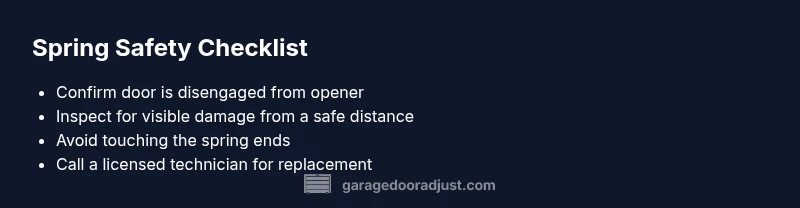
Pull the manual release to disconnect the door from the opener. This allows you to control the door manually without the opener applying force.
Tip: Do not stand under the door while engaging. - 3
Inspect from a safe distance
From the ground or a stable ladder, look for obvious signs of spring damage, misalignment, or frayed cables. Do not touch the spring itself.
Tip: Use a flashlight to get a close look at the spring ends. - 4
Avoid DIY spring work
Do not attempt to remove or adjust the spring tension. Spring replacement requires specialized tools and training to avoid serious injury.
Tip: If you suspect a failure, treat it as dangerous and proceed to call a pro. - 5
Call a licensed professional
Explain the symptoms, any noises, and whether the door is fully closed or stuck in mid-travel. A pro can safely replace springs and balance the system.
Tip: Ask about warranty and what parts will be replaced. - 6
Coordinate access for repair
Provide the technician with a clear description of the door setup and access routes. Prepare to be available during the service for questions.
Tip: Remove vehicles and secure the area around the garage. - 7
Post-service safety check
Test the door in both open and closed positions under power and manual modes to confirm proper function and balance.
Tip: Listen for smooth operation and watch for unusual resistance. - 8
Schedule preventive maintenance
Arrange regular inspections to catch wear early and extend spring life. Prevention reduces emergency repairs.
Tip: Record service dates and parts replaced for future reference.
Diagnosis: Door is hard to lift, unbalanced, or drops unexpectedly; visible spring damage or loud popping sounds.
Possible Causes
- highBroken torsion spring
- mediumDetached or stretched extension spring
- lowDamaged cables or track misalignment
Fixes
- easyDisengage the opener with the emergency release and keep people away from the door
- hardDo not attempt spring replacement yourself; contact a licensed garage-door technician
Got Questions?
Can you open a garage door with a broken spring?
Generally no. A broken spring cannot safely lift the door and may cause sudden movement or free-fall. Use the emergency release to disengage the opener and contact a pro.
No. A broken spring makes the door unsafe to lift. Use the emergency release and call a professional.
Is it safe to use the manual release to open the door if the spring is broken?
The manual release can disengage the opener, but you should not attempt to lift the door by hand. Keep everyone clear and call a technician for repair.
You can disengage with the manual release, but don’t try to lift it yourself. Call a pro for repair.
How long does a spring replacement typically take?
A professional replacement is usually completed within a few hours, depending on door type and technician workload. It includes inspection, replacement, and a safety test.
Expect a few hours for replacement and safety checks.
What are other signs of spring damage besides a broken coil?
Look for rapid door sag in one corner, loud popping noises, frayed cables, or visible rust on springs. These signs indicate an issue that needs professional evaluation.
Watch for sagging, loud pops, and rust—these mean you should call a pro.
Should I replace both springs at once?
If your door uses two springs, replacing them in pairs helps maintain balance and safety. A pro can assess whether both are near end-of-life and recommend replacement.
If you have two springs, consider replacing them together to keep balance.
How can I prevent spring failures in the future?
Regular maintenance, proper door balance, and timely replacement of worn components can prevent unexpected failures. Schedule annual inspections and keep tracks clean.
Regular checkups and keeping everything well-lubricated helps prevent failures.
Watch Video
Quick Summary
- Never operate a door with a broken spring.
- Disengage the opener and avoid lifting the door manually.
- The safest path is professional spring replacement for proper balance.
- The GarageDoorAdjust team recommends regular maintenance to prevent failures.