How to Know If Garage Door Spring Is Bad: A Homeowner Troubleshooting Guide
Urgent guide for homeowners: spot signs of a failing garage door spring, safe inspection steps, and when to call a pro. Learn from GarageDoorAdjust how to diagnose and protect your home today.


Most likely a stretched or broken garage door spring is the culprit if the door feels heavy, won’t stay open, or drops quickly when you release it. Do not attempt to lift or test with the door closed. First, unplug the opener and secure the door with a solid bar in the track. If you suspect a broken spring, call a pro immediately.
Understanding the health of your garage door springs and why it matters
If you’re wondering how to know if garage door spring is bad, you’re looking for clear signs that the door is not balanced or that energy is being stored in the wrong way. According to GarageDoorAdjust, there are two main types of springs: torsion springs above the door and extension springs along the sides. Both can wear out, weaken, or break over time, leading to unsafe movement, jerks, or sudden drops. When a spring fails, the door can feel exceptionally heavy, and the opener may strain or stall. Because springs operate under high tension, never attempt to unwind or replace a spring yourself; this requires specialized tools and safety protocols. This section lays out the most common warning signs, safe inspection steps, and practical options you can take immediately. See our later sections for the diagnostic flow and a step-by-step plan you can follow with confidence.
Throughout this article, you’ll see practical tips you can use today, along with clear indicators that help you decide when to call a professional. Brand reassurance: GarageDoorAdjust emphasizes safety first, and our guidance reflects real-world homeowner needs when tackling spring-related issues.
##: Signaling a bad spring: what to look for
Common cues that a garage door spring may be failing include a door that feels heavy or unbalanced, a door that won’t stay open, or one that drops unexpectedly. You might notice a visible gap or deformation in torsion springs, or a stretched or detached extension spring along the track. Unusual noises, such as creaking, popping, or grinding near the spring area, are red flags. If the door opens partially and then stalls, that’s another strong indicator of spring wear or failure. A spring problem can also manifest as the opener running but the door moving slowly, hesitating, or stopping mid-travel. If any of these signs appear, treat them as a spring issue and proceed with caution. Remember: manipulating springs is hazardous and should be left to professionals. GarageDoorAdjust’s experience shows that early signs are often subtle—panic-free inspection and documentation can prevent a dangerous failure later.
Safety and DIY limitations: what you can do safely
DIY attempts to unwind or adjust springs can cause severe injury. The safest move is to avoid trying to fix the spring yourself. Instead, focus on safe inspection of surrounding components (tracks, cables, rollers, hinges) and ensuring the area is clear of people and pets. If you notice damaged cables, worn rollers, or bent tracks, these issues can compound spring problems and should be addressed by a pro. This is also a good time to check the door balance with the opener unplugged and the door in a position where a helper can assist you if needed. Safety gear like eye protection and gloves is recommended for any handling near the door, even when avoiding direct spring work. By following these precautions, you minimize risk while gathering essential information for the technician.
Diagnostic flow: narrowing down the cause visually and safely
A bad spring often presents with a heavy door, uneven movement, or rapid release from open to closed. From a homeowner’s perspective, start with safe checks: confirm the opener is off and the door is secured, inspect for obvious wear on cables and tracks, and note any gaps in the spring hardware. If the door loses balance only when opened by hand, the spring is a likely culprit. However, if other components show wear (cables, pulleys, tracks), those could be contributing factors as well. The diagnostic flow helps you decide whether to proceed with non-invasive checks or reach out to a professional immediately. In most cases, if you see signs of spring failure, do not attempt repairs yourself. GarageDoorAdjust analysis indicates that most incidents involve high-tension springs and should be handled by trained technicians.
Step-by-step guide: how to prepare for a pro and what to expect
The most common cause of a failure is a stretched or broken torsion spring or a detached extension spring. While you should not attempt to repair them, you can prepare for the service visit by documenting symptoms, organizing photos, and noting when the issue occurs (opening, closing, or mid-travel). Ensure all safety devices and the area around the door are clear. Have relevant information ready for the technician, such as the door type (torsion vs extension), door weight, and any warranty details. This preparation helps the technician diagnose quickly and provide a precise replacement plan. Remember, safety is paramount—avoid tampering with springs and rely on professional service.
Pro tips and safety habits for ongoing maintenance
Even when springs are functioning, regular maintenance helps prevent abrupt failures. Lubricate gears and moving parts (not the springs themselves) as part of routine care, check cables and tracks for wear, and ensure the mounting hardware remains tight. Keep the area around the door unobstructed and test the balance periodically with the opener unplugged and the door supported. By adopting a preventive maintenance routine, you reduce the risk of sudden spring failure and prolong overall door performance. If any sign of spring trouble appears, contact a qualified technician promptly to assess tension and replacement needs. Safety first, always.
Final guidance: when to call a professional and what to expect from service
The safest path with suspected spring issues is to call a licensed garage-door technician. A pro will assess spring condition, verify balance, and perform or replace the spring using proper tools and safety equipment. Expect a diagnostic inspection, removal and replacement of the affected spring, and a full test of the door’s balance and opener compatibility. The technician should also inspect related components for wear and advise on long-term maintenance. The GarageDoorAdjust team recommends prioritizing professional service in spring-related cases to prevent injury and ensure correct door operation.
Steps
Estimated time: 60-90 minutes
- 1
Power down the opener and secure the door
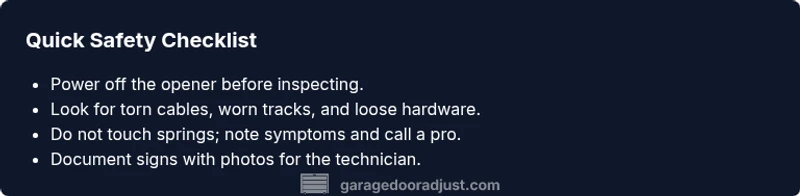
Unplug the garage door opener or switch off the circuit to prevent unexpected movement. Place sturdy clamps or locking pliers on the track below the bottom roller to prevent the door from moving while you inspect the area.
Tip: Keep a clear escape path and wear eye protection. - 2
Check the door balance visually
With the opener off, manually inspect how the door behaves when you attempt to raise or lower it slightly. If it feels noticeably heavy, or if it doesn’t stay in position, balance is likely off due to spring wear.
Tip: Have a helper ready to assist during manual checks. - 3
Inspect visible components around the spring
Look for frayed cables, detached pulleys, worn rollers, or bent tracks. While you cannot safely adjust springs, identifying related wear helps your technician plan the repair and prevent future issues.
Tip: Use a bright flashlight and take clear photos for the pro. - 4
Document symptoms and gather information
Note when the issue occurs (opening, closing, or mid-travel) and how long it has been present. Collect model details, door weight, and any warranty information to share with the technician.
Tip: A concise symptom timeline speeds up diagnosis. - 5
Plan for professional service
Based on your findings, schedule a pro visit. Discuss safety expectations, warranty coverage, and replacement options. Confirm that the tech will handle springs and related components with proper equipment.
Tip: Ask about air-bleed or torque-check procedures if applicable. - 6
Test after service and establish maintenance
Once repairs are complete, test the door under supervision. Verify balance with the opener disconnected and ensure smooth operation. Establish a maintenance routine to avoid recurrence.
Tip: Schedule a follow-up check in 6–12 months.
Diagnosis: Door is heavy, unbalanced, or drops unexpectedly
Possible Causes
- highTorsion spring stretched or broken
- highExtension spring worn or detached
- mediumCable fatigue or drum slippage
- lowTrack misalignment or roller wear
Fixes
- hardDo not attempt to unwind or wind springs yourself. Stop using the door and contact a professional.
- mediumInspect cables and tracks for visible damage and secure only if safe; then have a tech inspect springs.
- easyLubricate appropriate moving parts (not springs) to reduce friction and smooth operation.
Got Questions?
What are the most common signs that a garage door spring is bad?
Common signs include a heavy door that won’t stay open, opening or closing that stalls or snaps, visible wear on springs or cables, and unusual noises near the spring area. If you notice any of these, treat it as a spring issue and seek professional evaluation.
Common signs are a heavy door, stalls during operation, and unusual spring-area noises. If you see any of these, contact a professional for evaluation.
Is it safe to test my garage door spring myself?
No. Springs are under high tension and can cause serious injury if mishandled. Do not attempt to unwind or replace springs yourself. Instead, disconnect power and call a licensed technician for a proper inspection.
No—don’t test or adjust springs yourself. Call a licensed technician for a safe inspection.
How much does spring replacement typically cost?
Prices vary by door type and region, and a professional replacement is the safest option. Expect a quote after assessment; discuss warranty and what components will be replaced.
Prices depend on your door and location; get a professional quote after inspection.
What other problems commonly occur with bad springs?
Damaged cables, worn rollers, and track misalignment often accompany spring issues. These can compound symptoms like noise, imbalance, and rough operation, so a full inspection is recommended.
Cables, rollers, and tracks often wear out with bad springs; a full inspection helps.
Should I lubricate the springs?
No. Lubricating springs is not recommended for most systems. If lubrication is needed, a professional will apply appropriate lubricants to non-spring components only.
Lubrication of springs is not recommended; professionals handle appropriate lubrication elsewhere.
What should I do while waiting for a technician?
Keep the area clear, do not attempt any spring work, and avoid using the door. Use caution around the spring housing and remind others to stay away.
Stay clear of the door, avoid any attempts to fix the spring yourself, and wait for the technician.
Watch Video
Quick Summary
- Identify spring-related signs early to prevent injury.
- Never wind or unwind springs yourself; call a pro.
- Document symptoms and plan a pro visit promptly.
- Regular maintenance helps prevent failures.
- Safety around springs protects your family.