How to Lift a Garage Door With a Broken Spring
Learn safe, practical steps when a garage door spring breaks. This guide explains why lifting is hazardous, what you can do now, and how to arrange pro help for a secure repair.


When a garage door spring breaks, do not attempt to lift or operate the door. Disconnect the opener, secure the area, and contact a licensed garage-door technician for spring replacement. This avoids severe injury and door damage. GarageDoorAdjust emphasizes safety first and recommends professional service for any spring-related work.
Understanding the risk of a broken spring
A garage door that relies on torsion or extension springs stores a tremendous amount of energy. When a spring breaks, that stored energy can release suddenly, causing the door to slam shut or drop from its tracks. The weight distribution of the door shifts, making manual lifting dangerous and unpredictable. Many homeowners underestimate how quickly a door can move, which can lead to crushed fingers, pinched skin, or more serious injuries. According to GarageDoorAdjust, the safest approach is to treat a broken spring as a repair issue, not a do-it-yourself lift project. Even with help, attempting to lift or balance a door while springs are compromised can result in severe harm. The long-term fix is a spring replacement by a qualified technician, followed by a careful rebalancing and testing of the door’s safety features. Keep children and pets away from the area, and avoid trying to hold or prop the door in mid-air. After all, the door’s safety sensors and reversal mechanism are designed to protect you only when the system is intact and properly adjusted.
Tools & Materials
- Safety glasses(Protect eyes from sudden door movement or debris.)
- Work gloves(Improve grip and shield hands during handling.)
- Stable helper or support braces(Provides basic stabilization if you must secure the door temporarily.)
- Clamps or locking pliers(Can help restrict unintended door movement while awaiting service.)
- Owner’s manual or model number(Helpful for scheduling the correct spring replacement and parts.)
Steps
Estimated time: 60-180 minutes
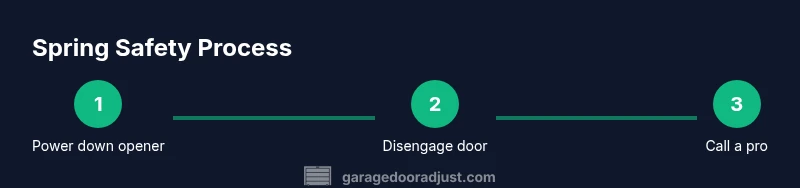
- 1
Power down the opener
Unplug the garage door opener or switch off the circuit to ensure the motor cannot operate. This reduces the risk of sudden movement while you’re assessing the door. If you cannot access the outlet safely, notify others in the home to stay clear of the area.
Tip: Double-check with a voltage tester to confirm there’s no live current before touching any components. - 2
Engage the emergency release
Pull the red emergency release cord to disconnect the door from the opener. Do not attempt to lift the door by hand if a spring is broken; the door may be heavier and less predictable without proper balance. Stand to the side and keep your hands away from the torsion area.
Tip: Ask a second person to assist in controlling the door’s movement during release—never rely on one person for heavy handling. - 3
Do not lift; secure temporarily
If the door is resting on a track, avoid trying to lift it to a higher position. Instead, use clamps or wedges on the track to prevent unexpected movement and mark the area as off-limits until a pro arrives. The safer route is to keep the door closed and call for service.
Tip: Temporary stabilizers reduce risk, but they do not replace professional spring work. - 4
Call a licensed technician
Spring replacement is a hazardous task that requires specialized tools and training. Contact a licensed garage-door technician, share the door’s make, model, and the observed damage, and arrange for a same-day or next-day service if possible.
Tip: Ask about warranties on parts and labor; confirm they’re insured and licensed in your state. - 5
Inspect and test after service
Once the spring is replaced and the door is rebalanced, have the tech test the door’s smooth travel and safety features. Reconnect the opener only after the technician confirms proper balance and alignment, then test manually and with power to ensure safe operation.
Tip: Document the service date and keep the original model numbers for future reference.
Got Questions?
Is it safe to lift a garage door if the spring is broken?
No. A broken spring can release stored energy suddenly and cause serious injury. Seek professional service to replace the spring and restore proper balance.
No. A broken torsion spring can snap and hurt you. Call a professional to replace the spring and ensure safe operation.
Can I manually release the door to move it?
You can disengage the opener using the emergency release, but do not try to lift the door by hand if the spring is broken. Have help and seek pro service.
Yes, you can use the emergency release to disconnect the opener, but don’t try to lift the door yourself.
What are signs of a broken torsion spring?
Look for a gap in the spring, loud popping sounds, or a door that sits unevenly. If you see these, avoid door movement and contact a pro.
A broken torsion spring often shows a gap or deformity and odd noises. Don’t operate it and call a professional.
How long does spring replacement take?
Typical repair takes 1-3 hours depending on access and parts. Schedule with a pro and plan for a visit during daylight.
Most spring replacements take about one to three hours, depending on your setup.
Should I DIY a spring replacement?
DIY spring replacement is not recommended due to high risk of severe injury. Hire a licensed technician.
DIY spring replacement is dangerous; it’s best to hire a trained technician.
What maintenance helps prevent future failures?
Regular lubrication, balance checks, and annual inspections by a professional help prevent sudden failures and extend life.
Regular checks and lubrication can prevent future issues and extend the life of your system.
Watch Video
Quick Summary
- Do not lift a door with a broken spring.
- Unplug the opener and disengage the door safely.
- Hire a licensed tech for spring replacement.
- Secure the area and prevent movement until repair.
- Test safety features after service.