Will Garage Door Work Without Sensors? A Homeowner Troubleshooter
Urgent guide for homeowners: can a garage door operate without safety sensors? Learn risks, common sensor issues, a diagnostic flow, and step-by-step fixes to keep your family safe.


The door may physically operate without sensors, but safety interlocks rely on photo-eye sensors. If removed or failing, the opener can close on an obstacle, risking injury or damage. Do not operate the door until sensors are repaired or replaced. See our full step-by-step guide for safe testing and fixes.
Why sensors matter for safety and why this matters to you
When a garage door opens and closes, safety sensors (photo-eye sensors) are the last line of defense against crush injuries. They detect objects or people in the path and signal the opener to stop and reverse. According to GarageDoorAdjust, these sensors are a foundational safety feature that helps prevent accidents in busy driveways and garages. If your system is working correctly, a blocked or dirty sensor won’t just fail to close—it will stop the door before contact. If you’re asking, will garage door work without sensors, the honest answer is that it might move, but without sensors you lose automatic obstruction detection, increasing risk for children, pets, and vehicles. This is why most modern codes require sensors, and most manufacturers design units around this safety standard. If you’re troubleshooting, treat sensor health as a priority, not a cosmetic detail.
Quick reality check: does the door still move without sensors?
In many older or bypassed setups, the door can still move with the opener engaged. The chain or belt drive may operate the carriage, and the door may reach closed positions. However, the critical safety feature—the auto-reverse and obstruction detection—hinges on the sensors. If you continue operating without sensors, you’re relying on mechanical guesswork rather than actual obstacle detection. That creates a real risk of injury or property damage. GarageDoorAdjust’s guidance emphasizes that bypassing safety features is not a recommended or lasting solution; it’s a stopgap at best and unsafe at worst.
What homeowners should focus on first
Before considering any permanent changes, verify basic safety and insulation: clear the doorway of obstructions, ensure there’s no loose wiring near the sensors, and confirm that the opener is receiving power. If the sensor indicators aren’t lighting or blinking as expected, you’re likely facing misalignment, dirty lenses, or a power/wiring issue. In short, the simplest fixes are usually the most effective: clean the lenses, realign the sensors, and inspect the connections. Throughout this guide, we’ll stay grounded in safe testing practices and avoid encouraging dangerous bypasses.
Safety-first mindset when troubleshooting
Even if you’re tempted by a quick, sensor-free test, remember that the sensors protect people near the door. The risk isn’t just a crushing hazard; a misbehaving door can cause pinched fingers or damage to vehicles. If you’re unsure about any step, pause and contact a professional. For code compliance and long-term safety, sensors are not optional. The GarageDoorAdjust Team consistently recommends restoring or replacing sensors instead of running the door without protection.
Common questions homeowners ask during troubleshooting
- Will the door work without sensors? Yes in many cases, but safety features may be disabled. - Do bypass options meet code? Generally not; consult local codes and a licensed technician. - Can sensors be aligned or replaced myself? Small adjustments are often doable, but replacement parts should match your model. - When should I call a pro? If the wiring looks damaged, the LED indicators show faults, or there’s any doubt about safety, call for help immediately.
Steps
Estimated time: 25-40 minutes
- 1
Power down and prepare
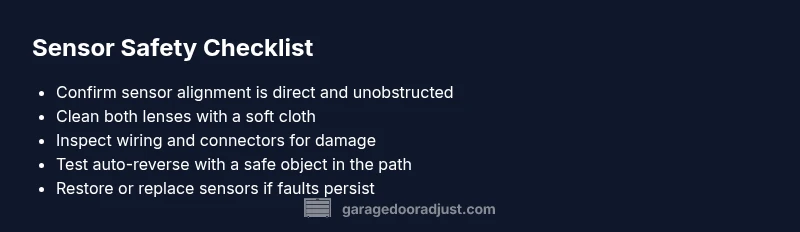
Unplug the garage door opener and disconnect power at the wall or breaker. Gather a flashlight, a clean microfiber cloth, and a screwdriver if you need to adjust brackets. This keeps you safe while you inspect sensor components.
Tip: Always work with the door in the closed position when you begin diagnostic steps. - 2
Inspect sensor alignment
Look at each sensor eye to ensure they are facing each other directly with no gaps. A slight tilt or misalignment can break the signal. Correct the mounting if needed and re-test the alignment using the indicator lights.
Tip: Small adjustments can restore proper alignment without replacing parts. - 3
Clean the sensor lenses
Dust and spider webs can reflect infrared signals and trigger faults. Wipe both lenses gently with a microfiber cloth. Do not scratch the glass or apply cleaners that could damage the lenses.
Tip: Avoid touching the LED indicators directly to limit fingerprints on the lens. - 4
Check wiring and connectors
Inspect the sensor power cables for nicks, frays, or loose connectors. Re-seat any loose plugs and secure the cables away from moving parts. Poor connections can cause intermittent sensor failures.
Tip: If you see damaged insulation, stop and replace the affected wiring. - 5
Test safety reversal
With power restored, hold a harmless object in the door's path and press the test button to confirm the door reverses. If it does not reverse, stop using the door and call a pro. Do not rely on a compromised safety system.
Tip: Repeat the test after each adjustment to confirm progress. - 6
Decide next steps
If the sensors still fail, replace the sensor kit or call a licensed technician. Do not attempt long-term operation without working sensors, as it violates safety standards and local codes.
Tip: Keep spare sensors on hand for future maintenance.
Diagnosis: Door moves but sensor-related issues or safety warnings occur
Possible Causes
- highMisaligned sensors
- mediumDirty or obstructed sensor lenses
- lowDamaged or loose wiring/connectors
- lowPower issues to the opener or sensors
Fixes
- easyRealign sensors so both eyes face each other with a clear line of sight
- easyClean sensor lenses with a soft cloth and verify no dirt buildup
- easyCheck and secure all wiring, connectors, and the sensor mounting brackets
- easyTest the opener’s safety reversal using the built-in test button
Got Questions?
Can I bypass sensors to make the door operate?
No. Bypassing sensors can violate safety codes and create a serious crush hazard. If you must test, rely on professional supervision and revert to normal sensor operation as soon as possible.
Bypassing sensors is dangerous and not recommended. Seek professional help and restore the sensors for safe operation.
Why won’t my door close with sensors?
Common causes are misaligned sensors, dirty lenses, or damaged wiring. Check alignment, clean the lenses, and inspect wiring before considering replacement parts.
Often it’s misalignment or dirt on the lenses that stops the door from closing.
Is a sensor replacement expensive or complicated?
Sensor replacement is typically straightforward and affordable when using the correct kit for your model. A pro can verify compatibility and install correctly to ensure safety features resume.
Sensor replacement is usually simple and affordable, but get a professional if you’re unsure.
Can I test safety features without sensors?
You can test the opener function without the sensors, but the auto-reverse safety is disabled. Do not rely on it for daily use; consult a technician to restore the sensors.
You can test the opener, but safety features won’t be active without sensors.
What should I do if wiring is damaged?
Turn off power and stop using the door. Damaged wiring is a fire risk and must be repaired or replaced by a qualified technician.
If wiring is damaged, stop using the door and get a pro to fix it.
Why does the sensor indicator blink or stay red?
Blinking or solid red usually indicates misalignment, dirt, or a fault in the sensor circuit. Start with a clean and realign check, then test again.
A red light often means a sensor fault—check alignment and cleanliness first.
Watch Video
Quick Summary
- Inspect and re-align sensors before replacing parts
- Do not operate the door without a functioning safety system
- Regular maintenance reduces sensor faults
- Call a pro for wiring issues or persistent faults