Garage Door Without Opener: A Complete How-To Guide
Learn how to safely operate and diagnose a garage door without an opener. This educational guide covers manual release, safety checks, common issues, and when to call a professional for repair.


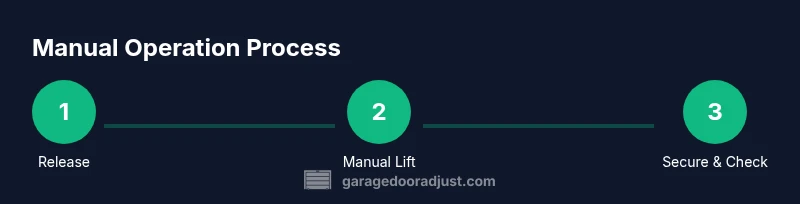
By following these steps, you can safely operate and troubleshoot a garage door without an opener. You’ll locate the emergency release, disconnect the door from the opener, lift manually to open, and secure it for safety while you plan next steps. Always observe safety guidelines and consider professional help for complex issues.
Understanding manual operation of a garage door without an opener
Operating a garage door without an opener means using your own effort to move the door and relying on manual release hardware to disconnect it from the motorized system. This is a temporary measure used when power is out, the opener fails, or you’re performing maintenance. According to GarageDoorAdjust, manual operation should be treated as a safety-critical skill that requires awareness of spring tension, track alignment, and door balance. Expect a heavy but controllable load, especially with older or unbalanced doors. Take your time, keep hands clear of springs and pulleys, and have a clear path to the door so you don’t trap yourself or bystanders. When done correctly, you can gain access without powering the opener while you arrange repairs or service.
Safety considerations before you begin any manual operation
Manual operation can be hazardous if you rush or ignore spring tension and track integrity. Always wear gloves and eye protection, and keep bystanders away from the door’s path. Do not place your body under a door that feels heavy or balky. If you notice grinding, binding, excessive looseness, or unusual noises, stop and call a professional. Ensure the area beneath the door is clear, and use adequate lighting. Remember that torsion springs can be dangerous; do not attempt to adjust them yourself. Safe handling reduces the risk of injury and avoids unintended door movement during manipulation.
Diagnostic overview: when the opener is the issue, not the door
If the door won’t move with the opener, start by checking the emergency release and attempting a controlled manual lift. A door that is balanced and properly lubricated should stay roughly in place when lifted halfway and released. A door that slides up and down with effort or pulls you toward the spring area indicates balance or track issues. Note any irregular sounds or stiffness, which can indicate worn rollers, bent tracks, or misaligned springs. Use the diagnostic findings to inform whether the issue is mechanical (hinges, tracks, springs) or electrical (opener motor, limit switches).
The manual release: what it is and how it works
The emergency release lever or cord disengages the door from the garage door opener’s drive mechanism, allowing manual operation. This device separates the door’s torsion or extension spring system from the opener so you can lift or lower the door by hand. Locate the release near the top of the door, typically on the trolley or hanging from the rail. On a two-car setup, both sides may have releases. Use a firm, steady pull to disengage, then surge the door cautiously if it’s heavy. After you’re done, keep the release accessible for future use.
Common issues with manual operation and how to recognize them
A door that feels exceptionally heavy, sticks, or sags in the middle is often a sign of balance or track problems. Misaligned tracks can cause binding and potential derailment. Worn rollers or hinges can create noise and rough movement. If the door shifts suddenly or drops when you release it, springs or cables may be under excessive tension and require professional servicing. Document the symptoms you observe, as this will help a technician diagnose the root cause more quickly.
Basic safety steps for lifting and securing the door
Plan your approach before touching the door: remove pets and kids from the area, wear gloves, and stand to the side rather than directly in line with the door. When lifting, use both hands on the door’s bottom panel and keep your back straight to prevent strain. If the door is heavy, enlist a helper. To secure an opened door, use a sturdy prop or clamp on a safe, non-slip surface to prevent accidental closure. Never stand directly under a door in motion, and never rely on a single weak point for support.
How to assess and document the door’s condition after manual operation
Once the door is open or partially open, perform a quick assessment of balance, tracks, springs, and hardware. Look for loose screws, scuffed rails, or bent components. Test the door’s movement from open to closed to sense any binding. Record any noises and the time taken to move through its range. This information is helpful for a professional inspection and can guide maintenance decisions. Remember to re-engage the opener once repairs or power restoration is complete, following the manufacturer’s instructions.
Practical maintenance tips to prevent future opener-free incidents
Schedule regular lubrication of rollers, hinges, and tracks with a silicone-based or garage-door-specific lubricant. Keep weather-stripping intact to reduce overall load. Check spring tension and balance by testing the door’s response when opened halfway. Clean the tracks and ensure no debris blocks movement. A routine inspection can catch wear before it leads to an unsafe situation. The goal is to keep the door balanced, labeled, and operable with or without the opener.
When to call a professional for a garage door without an opener
If you encounter persistent heaviness, binding, unusual noises, or a sagging door, stop using it and contact a professional immediately. A trained technician can safely adjust springs, balance the door, align tracks, and inspect cables for wear. Do not attempt to adjust springs or cables yourself, as those parts store significant energy and can cause severe injury. Early professional intervention minimizes risk and reduces the chance of further damage.
Authority sources and safety references
For safety and maintenance guidance, refer to trusted sources: the U.S. Consumer Product Safety Commission (CPSC) at https://www.cpsc.gov, Occupational Safety and Health Administration (OSHA) at https://www.osha.gov, and university extension resources such as https://extension.illinois.edu. These sources provide general safety principles and maintenance best practices relevant to garage doors and other household systems. Always follow local codes and manufacturer instructions when performing any repair or adjustment.
Tools & Materials
- Stepladder(Stable, rated for at least 250 lbs; position away from door path)
- Safety gloves(Grip and protect hands during lifting and release handling)
- Safety glasses(Eye protection in case of sudden door movement or debris)
- Work light or flashlight(Bright, non-flicker; helps identify tracks and mounting points)
- Locking pliers or vise-grips(Optional for securing components during manual operation)
- C-clamps (2)(Optional for temporarily stabilizing a door that tends to drift)
- Rope or sturdy cord(Useful as a provisional prop to keep the door open when needed)
Steps
Estimated time: 30-60 minutes
- 1
Locate and engage the emergency release
Stand to the side and locate the emergency release cord or lever at the top of the garage door system. Pull it firmly to disengage the door from the opener. This action allows you to operate the door manually without the motor applying force.
Tip: Ensure you have a clear path and a helper if the door is heavy. - 2
Lift the door manually to open position
With a firm grip on the bottom panel, lift the door smoothly to the fully open position. If the door feels heavy or binds, stop and reassess balance and track alignment before continuing.
Tip: Keep your back straight and use your legs to lift, not your back. - 3
Secure the door in the open position
If you’ll be moving around the garage, propping the door open prevents accidental closure. Use a sturdy prop or clamp on a non-slip surface, and never place a body under the door while it’s being propped.
Tip: Test the prop before stepping away—give the door a gentle nudge to confirm stability. - 4
Lower slowly and recheck clearance
Gently lower the door a few inches and release to observe how it settles. If it drifts or binds, stop and inspect tracks for obstructions or misalignment, then call a pro if the issue persists.
Tip: Never force a door that refuses to move; forcing can cause damage or injury. - 5
Re-engage the opener and plan maintenance
Once power is restored, re-engage the opener according to the manufacturer’s instructions and test the auto-reverse safety feature. Schedule a professional inspection if you noticed any imbalance, strange noises, or slow operation during manual use.
Tip: Document any symptoms to share with the technician for faster diagnosis.
Got Questions?
Can I open a garage door without power or opener?
Yes, if you can access the emergency release and lift the door manually. This should be treated as a temporary measure while arranging professional service. Do not force the door if it binds or feels unbalanced.
Yes—use the emergency release and lift carefully. If the door is hard to move or seems unbalanced, stop and seek professional help.
Is it safe to operate a garage door manually?
Manual operation is safe when you follow safety steps: wear gloves, keep hands clear of springs, and avoid standing under the door. If any component feels off, stop and call a technician.
Yes, with proper safety steps. If anything feels off, stop and contact a professional.
What if the door is heavy or unbalanced when lifting?
Do not force it. A heavy or unbalanced door often indicates problems with springs, tracks, or balance. Stop and have a professional assess the system to prevent injury or further damage.
If it’s heavy or unbalanced, stop and call a professional for inspection.
How can I tell if maintenance is needed after manual operation?
Note any unusual noises, binding, or drift in the door’s position. Schedule lubrication, track cleaning, and a balance check soon after manual use to prevent future issues.
Look for noises, binding, or drifting, and plan a maintenance check.
Should I replace springs or cables myself?
No. Springs and cables store high tension and require specialized tools and training. Leave these tasks to a licensed technician to avoid severe injury.
Don’t DIY springs or cables—leave to a professional.
When should I call a professional for a garage door issue?
Call a professional if you notice persistent heaviness, noise, misalignment, or door drift after attempting manual operation. Early intervention minimizes risk and damage.
Call a professional if problems persist after manual checks.
What safety resources can help me deal with a garage door issue?
Consult authoritative sources like CPSC and OSHA for general safety guidelines, and consider university extension resources for maintenance practices.
Refer to safety resources from CPSC or OSHA and university extensions for guidance.
Can I re-engage the opener myself after manual operation?
Yes, follow the manufacturer’s re-engagement steps to reconnect the door to the opener and test the auto-reverse safety feature before using the door again.
Yes, re-engage the opener according to the manual and test safety features.
Watch Video
Quick Summary
- Know how to safely use the manual release
- Test door balance and track condition before relying on manual operation
- Do not attempt spring or cable adjustments yourself
- Engage a professional for persistent issues