Emergency Garage Door Release: A Homeowner’s Guide
Learn how to safely use the emergency garage door release to manually operate your door during outages or opener malfunctions. This guide provides a clear, step-by-step approach to staying safe and restoring basic access.


With an emergency garage door release, you can disengage the opener and manually lift the door during a power outage or opener malfunction. Locate the release cord or lever, pull it to disengage, then lift the door slowly with two hands. Re-engage the opener after testing, and avoid forcing the door or standing underneath.
What is an Emergency Garage Door Release and When to Use It
An emergency garage door release is a safety feature built into most sectional garage doors with automatic openers. It provides a manual way to operate the door when the power is out or the opener malfunctions. The release typically appears as a red cord or lever connected to the door’s trolley, or as a small switch on some newer openers. Knowing how to use this release is a critical safety skill for homeowners. GarageDoorAdjust’s guidance emphasizes that you should use the release only when you absolutely cannot open the door with the opener. Attempting to use it during a failed sensor or jam can be dangerous if you’re not prepared. Practicing the procedure in advance, when the power is on, helps reduce panic during an outage. The goal is to gain safe, manual control without compromising the door’s balance or track alignment. This knowledge aligns with GarageDoorAdjust’s overall approach to practical, safety-first garage door care.
How to Locate Your Emergency Release on Common Opener Setups
Locating the emergency release usually means finding a red cord or a small lever near the garage door opener track or carriage. On older systems, the cord hangs down from the rail and is easy to reach from ground level. On newer smart openers, the release might be a small lever or a disconnect switch on the motor housing. If you’re unsure where it is, consult the owner’s manual or search for the model number online. The key is to identify the exact point where the trolley attaches to the door so you can disengage the opener without forcing the door. As a general rule, never pull the release from a position where you could get pinched by a moving part. This knowledge aligns with safe operation practices promoted by GarageDoorAdjust.
Safety Essentials Before You Begin
Safety should come first. Clear the area beneath the door and ensure children and pets are away. If the garage is dim, switch on a bright light or use a flashlight. Wear work gloves to protect your hands from sharp edges or pinch points. If the door feels unusually heavy or uneven, stop and call a professional—do not force it. Lastly, if you smell burning or hear grinding noises, stop and disconnect power at the main breaker to reduce the risk of an electrical fault. Following these safety steps helps prevent injuries and avoids damage to the door or opener. GarageDoorAdjust stresses that a calm, prepared approach reduces risk during an emergency release.
Step-by-Step Overview (High-Level) to Manual Release
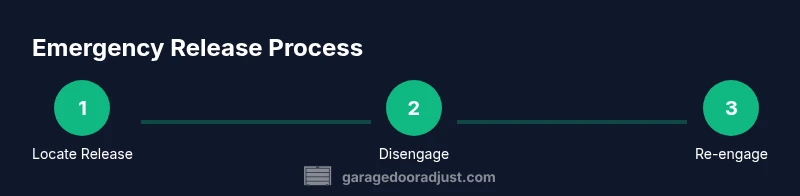
This section provides a high-level overview of the manual-release process to complement the step-by-step instructions that follow. You’ll locate the emergency release, disengage the opener, lift the door safely, and re-engage the opener when you’re ready. Treat this as a temporary solution to gain access, not a long-term replacement for repair. Understanding the mechanics—how the trolley disengages from the chain or belt and how the door’s balance affects movement—helps you avoid common mistakes. GarageDoorAdjust’s approach is to empower homeowners with practical, low-risk techniques for emergency situations.
Re-engaging the Opener After Manual Release
To re-engage, close any opened segment of the door, then re-activate the opener once you’ve confirmed the path is clear. In some systems, you’ll need to pull the emergency release cord toward the opener again until you hear a click, then operate the switch or remote to confirm engagement. If the door won’t re-engage or reverses unexpectedly, stop and inspect for obstructions, misaligned tracks, or a jammed trolley. Re-engaging safely is critical to restore automatic operation and prevent sudden door movement.
Common Mistakes to Avoid
Avoid pulling the release while the door is in motion, which can lead to sudden movements or tangling of the release mechanism. Do not stand under a partially opened door or attempt to support a heavy door without help. Never bypass safety sensors or try to fix the opener’s electronics yourself during an outage. If you observe any unusual sounds, resistance, or gaps in the tracks, delay action and contact a professional. By avoiding these errors, you can prevent injuries and property damage.
Maintenance and Prevention After an Emergency Release
After using the emergency release, inspect the door for signs of wear, damage, or misalignment. Lubricate moving parts per the manufacturer’s recommendations, typically focusing on rollers, tracks, and hinges. Check balance by carefully lifting the door halfway and releasing; if it doesn’t stay in place, there may be a spring or track issue that requires expert attention. Regular inspections, annual professional tune-ups, and staying current with safety features help prevent future outages. GarageDoorAdjust recommends keeping a copy of the user manual handy and reviewing the emergency release procedure periodically to stay prepared.
When to Call a Professional
If the door is heavy, sticks at any point, makes unusual noises, or does not re-engage after release, stop and call a licensed technician. Electrical faults, broken springs, misaligned tracks, or damaged cables require professional service to avoid serious injury. Even when you can manually release and open the door, a professional inspection ensures continued safe operation and prevents further damage. The GarageDoorAdjust team encourages homeowners to schedule maintenance after any emergency release to restore reliability and safety.
Tools & Materials
- Emergency release cord/handle(Red cord or lever connected to the door trolley; locate near the rail.)
- Garage door opener manual(Keep a recent copy in the garage for model-specific steps.)
- Work gloves(Protect hands from pinch points and sharp edges.)
- Flashlight(Ensure visibility in dim garages.)
- Phone or mobile device(For calling a technician or emergency services if needed.)
- Door braces or wedges(Prop the door if it cannot be held safely open.)
Steps
Estimated time: 15-20 minutes
- 1
Locate the emergency release
Identify the red release cord or lever on your opener’s track or trolley. Confirm you’re in a safe space and avoid reaching into moving parts. This step ensures you know where to start without delaying action.
Tip: Have the manual nearby and practice locating the release in good lighting. - 2
Disengage the opener
Pull the release to disengage the door from the opener. This creates a separate, manually operable system so you can safely move the door without the motor pulling it.
Tip: Keep a firm grip and stand to the side to avoid pinch points. - 3
Lift the door safely
With both hands, brace your legs and slowly lift the door to the desired position. Don’t jerk or slam it; a controlled lift reduces the risk of injury or door damage.
Tip: If the door feels heavy or unbalanced, stop and seek professional help. - 4
Prop or hold the door if needed
If you cannot hold it open securely, use door braces or wedges to prevent movement. Do not rely on yourself alone for long holds.
Tip: Use sturdy supports placed beneath the door’s bottom panel or on the ground to stabilize. - 5
Re-engage the opener
When you’re ready, re-engage by returning the release to its resting position or following your model’s re-engagement method. Ensure the trolley is properly seated before testing.
Tip: You should hear/feel a click when engagement occurs; if not, stop and inspect. - 6
Test and inspect after release
Operate the door with the opener to confirm smooth function and alignment. Look for rubbing, unusual noises, or resistance and address them promptly.
Tip: If anything seems off, avoid operating the door until a technician checks it.
Got Questions?
What is an emergency garage door release and when should I use it?
The emergency release disconnects the door from the opener so you can manually operate it during power outages or opener malfunctions. Use it only when you cannot open the door with the opener and move to a safe location.
An emergency release lets you open the door manually during outages; use it only when needed and stay clear of the door as you operate it.
Where is the emergency release cord located on most openers?
The release is typically a red cord or lever near the track or trolley, sometimes attached to the opener’s motor housing. If in doubt, consult the owner's manual for your model.
Look for the red cord near the track or the lever on the opener housing, and refer to the manual if you’re unsure.
How do I re-engage the opener after using the emergency release?
After manual use, re-engage by restoring the connection per your model’s instructions—often by pulling the release back toward the motor until a click and then testing with the remote.
To re-engage, restore the connection and test the door with the remote.
Is it safe to manually lift a garage door by myself?
Manual lifting can be safe for light-to-moderate doors if you have a clear path, use proper lifting technique, and avoid overreaching. If the door is heavy or unbalanced, seek help.
It can be safe if you’re careful and the door isn’t too heavy; otherwise, get assistance.
What should I do if the door won’t stay in the open position after manual release?
A door that won’t stay open usually indicates a balance or track issue. Do not force it; brace the door safely and call a professional to inspect the springs and tracks.
If it won’t stay open, don’t force it—call a pro to check balance and tracks.
Can an emergency release cause the door to fall?
If used correctly on a balanced door, the release should not cause a fall. However, a misbalanced or damaged door can slip or drop, which is why a follow-up inspection is essential.
When used properly on a balanced door, it shouldn’t drop; if you notice issues, get a professional check.
Watch Video
Quick Summary
- Know where your emergency release is and how to use it safely
- Lift with your legs and maintain a firm grip to prevent injuries
- Re-engage the opener only after the area is clear
- Call a professional for any signs of misalignment or damage