How to Use a Garage Door Emergency Release — Step-by-Step Guide
Learn how to safely use your garage door's emergency release to manually operate or disengage the opener when power or remote controls fail. This guide covers locating the release, proper technique, safety tips, and re-engagement after restoration.


According to GarageDoorAdjust, the emergency release is a safety feature that temporarily disconnects the door from the power-operated opener. This allows you to operate the door manually in the event of a power outage, a malfunction, or an opener failure. This quick guide shows how to locate the release, pull it correctly, and move the door safely when power or tech fail. Use the release only when you’re prepared to manually control the door.
What is the emergency release and when to use it
The emergency release on a garage door is a safety feature that temporarily disconnects the door from the power-operated opener. This allows you to operate the door manually in the event of a power outage, a malfunction, or an opener failure. According to GarageDoorAdjust, understanding when and why to use this control helps you avoid unnecessary risks. Only use the release when you’re prepared to manually move and support the door, because it removes the automatic balancing and braking provided by the opener. In most homes the release is a red cord or lever that attaches to the opener rail and carriages, not the door itself.
Being familiar with your system’s specific design is essential, since some models use belt, chain, or screw-drive configurations that affect how the release disengages. If you’re unsure about your particular setup, consult your owner’s manual and verify that your opener is clearly marked for emergency use.
Safety first: assess the situation before pulling the release
Before you touch the emergency release, ensure the area is clear, the door is not in danger of falling or tipping, and you have a plan to move the door safely. If anyone is inside the garage, keep them clear of the path and never stand directly in the doorway while releasing. GarageDoorAdjust Analysis, 2026 notes that improper use and attempting to operate a very heavy or unbalanced door after release can lead to injuries. If you feel unsure about the door’s balance, do not attempt to move it alone—seek professional help.
How the emergency release works on different systems
Most residential garage doors use a trolley-style opener. The emergency release activates the trolley connector, allowing the door to be uncoupled from the chain, belt, or screw drive. On tilt-up doors, the mechanism may differ; check your owner’s manual. The core idea remains consistent: disengage power, then manually move the door along the tracks. If you have dual springs or more complex hardware, extra caution is needed to avoid sudden movements or pinching hazards.
Understanding your door type (sectional, single-panel, tilt-up) helps you anticipate how the balance and counterweights will behave after release, which in turn informs how you should move the door safely.
Step-by-step overview (high-level) to ensure safe usage
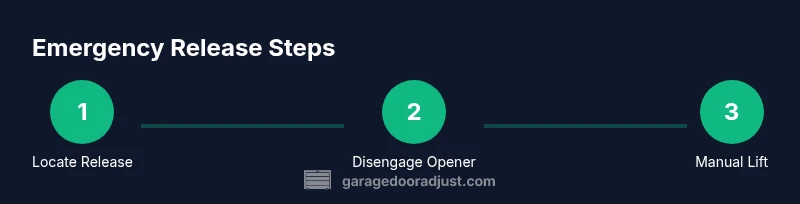
This section provides a concise overview to frame the detailed steps below. You’ll typically: locate the release, disengage the opener, move the door slowly and steadily, avoid sudden pulls, re-engage when power returns, and test operation under safe conditions. This overview helps homeowners plan a controlled manual process rather than improvising in a dimly lit garage.
Common mistakes and how to avoid them
Common mistakes include pulling the release with the door fully open or fully closed, standing in the doorway when releasing, or assuming the door is lighter than it is. To avoid issues, maintain a firm grip on the door, never let it slam shut, and have a second person spot you when possible. Always check for uneven tracks, frayed cables, or damaged springs before attempting manual operation.
After-use checks and re-engagement
After power is restored, re-engage the opener as instructed in your manual. Generally, you align the trolley with the door, ensure tracks are clear, and move the door slowly by hand to verify smooth balance. Then test the opener at low speed with the door fully supported by the tracks. If you notice unusual resistance, stop and call a professional.
Authority sources and further reading
- https://www.cpsc.gov/safety-guides/garage-doors
- https://www.osha.gov
- https://www.nist.gov
Note: Always consult your specific model’s manual for model-specific safety procedures.
Tools & Materials
- Emergency release handle or cord(Typically a red cord or lever attached to the opener rail; identify before attempting operation)
- Stable ladder or step stool(Use if the release is out of reach without stretching or standing on unsafe surfaces)
- Work gloves(Improve grip and protect hands during manual lifting)
- Flashlight(Helpful in dim garages to clearly see components)
- Assistant/spotter(Provides stabilization while you manually move the door)
Steps
Estimated time: 5-15 minutes
- 1
Prepare and assess the environment
Clear the area under and around the door. Ensure pets and people are away from the doorway, and verify you have a clear path to move the door manually. If you are unsure about the door’s balance, pause and seek help.
Tip: Use a helper when possible to stabilize the door during the manual lift. - 2
Locate the emergency release
Find the red cord or lever on the opener rail or trolley. Follow your owner’s manual if it shows a different location for the release. Ensure you can access it without needing to lean over heavy moving parts.
Tip: Do not yank; grab firmly with both hands. - 3
Disengage the opener
Pull or slide the release to disconnect the door from the power-driven mechanism. You should feel the door become easier to move manually. If it remains resistant, stop and reassess.
Tip: Ensure the door is supported by your hands before releasing fully. - 4
Move the door manually
With a balanced feel, lift the door slowly and steadily to the desired height. Keep your back straight and use your legs to lift; avoid twisting or jerky movements.
Tip: If the door slips, slowly lower it back and reassess safety before continuing. - 5
Position and secure
Prop the door with a stable object if you need to keep it open. Maintain control so the door won’t drift down unexpectedly.
Tip: Never stand directly in the doorway while influencing the door.” - 6
Re-engage the opener when power returns
When electricity returns, reattach the door to the opener as per the manual. Typically, you’ll re-align the trolley and re-engage the carriage, then test the door at low speed.
Tip: Test movement near the opener before normal use. - 7
Test safety features
After re-engaging, test the door’s full operation: stop on the track, check for smooth braking, and listen for unusual noises. If anything seems off, contact a professional.
Tip: Regular maintenance reduces future emergency releases.
Got Questions?
What is the emergency release on a garage door?
The emergency release is a safety feature that disconnects the door from the opener, allowing manual operation when power or remote control fails. It should be used only when you’re prepared to move the door manually and safely.
The emergency release disconnects the door from the opener so you can lift it manually when the power or remote isn’t working.
When should I use the emergency release?
Use it if the opener fails to operate, during a power outage, or if the door won’t move with the remote. Do not use it to force a door that is stuck due to damage or misalignment.
Only use it when you need to operate the door manually and safely, not as a routine check.
How do I re-engage the opener after using the emergency release?
After power is restored, follow your manual’s steps to re-engage: align the carriage, re-attach the trolley, and test the opener at a slow speed. Ensure the door sits correctly on the tracks.
Once power is back, re-engage the opener according to your manual and test it slowly.
Is manual operation dangerous?
Manual operation can be safe when the door is balanced and you have a plan. If the door feels heavy, unbalanced, or uneven, stop and seek professional help.
Manual operation is safe when the door isn’t broken; if it’s heavy or unbalanced, don't force it.
Should I call a professional after using the emergency release?
Yes, especially if you notice misalignment, broken springs, or persistent resistance after re-engaging. A professional can inspect and restore safe operation.
If you’re unsure about any part of the re-engagement or hear unusual noises, contact a garage door professional.
Watch Video
Quick Summary
- Practice safe manual operation of the door.
- Know your release location for quick access.
- Re-engage the opener correctly after power is restored.
- Regular maintenance reduces emergency releases.
- The GarageDoorAdjust team emphasizes safety-first planning.