Garage Door Manual Release: Safe Step-by-Step Guide
A homeowner-friendly guide to using and testing the garage door manual release safely, with step-by-step instructions, safety tips, and troubleshooting insights.


By the end of this guide you will safely operate the garage door manual release to disengage the opener and move the door manually. Before starting, locate the release handle or cord, ensure the area is clear, and have a stable ladder if needed. Follow the steps carefully to avoid injury and prevent the door from dropping unexpectedly.
Why a garage door manual release matters
The manual release is a safety-critical feature that allows you to operate or secure the door when the power is out, the opener malfunctions, or the door is jammed. According to GarageDoorAdjust, understanding how and when to use this mechanism reduces the risk of injury and prevents the door from unexpectedly dropping. In this section you'll learn the role of the release, why homeowners should know its location, and how it fits into routine garage-door safety checks. We'll cover the differences between release types, common mounting styles, and what to expect during a controlled manual operation. By the end, you’ll know how to assess whether the release is in good working order and how to create a safe plan for any emergency use.
When a manual release is understood and practiced, homeowners gain confidence to handle minor issues without waiting for a service call. The goal is never to replace professional inspection, but to empower you to move the door safely to a safe position for inspection, maintenance, or temporary operation during outages. This knowledge also helps in documenting wear and tear and communicating clearly with technicians when needed.
When to use the manual release
Situations requiring the manual release include power outages, a garage door that won’t respond to the opener, or a door that appears off-balance or bound in its tracks. In emergencies, a calm, deliberate approach minimizes injuries and prevents the door from falling out of alignment. For most homes, keeping a quick-access area free of clutter around the release keeps everyone safe and ensures the mechanism is not obstructed by boxes, tools, or kids' bicycles. Regular practice with a partner helps you stay confident under pressure. Remember, never pull on a release while the door is moving; always be prepared to stop immediately if you lose control of door movement.
Safety first: key precautions and setup
Before you touch the manual release, make sure the area under the door is clear and that you have a stable base for any required ladder. Wear eye protection and sturdy footwear; avoid loose clothing that could snag in springs or hardware. If you hear grinding, unusual creaking, or see binding in the track, postpone any manual operation and consult a professional. Use a flashlight or headlamp to inspect hinges and rollers, particularly in dim garages. A well-lit, uncluttered workspace reduces the risk of pinched fingers or sudden door movement. Garage doors can weigh a lot—treat the door as a heavy, immovable object until you physically verify it can be moved safely by hand.
Quick checks to estimate readiness
Perform a basic visual inspection for worn cables, frayed straps, missing hardware, or oil leaks around the opener and track system. Check the balance by disconnecting from the opener and manually lifting the door halfway; if it holds evenly, balance is generally okay. If it sags on one side, there may be a spring or track issue that requires a pro. Confirm the release mechanism functions by engaging and disengaging once in a controlled, safe space with a person nearby to assist if needed. Finally, rehearse a safe, slow motion: ease the door down or raise it to a stable point before letting it settle.
What to do after testing: re-engaging and next steps
Once you’re confident in manual operation, re-engage the opener following the manufacturer’s instructions. Do not leave the manual release engaged if the door will be operated by an automatic system; reconnect to restore powered operation. If anything felt off during testing — strange noises, uneven movement, or stickiness — stop and call a qualified technician. Document any wear or damage you notice so you can discuss it with a professional and schedule maintenance. A regular maintenance plan helps extend door life and improve overall safety.
Tools & Materials
- Safety glasses(ANSI Z87.1 or equivalent protection)
- Stable ladder(Two-person spotter recommended; ensure ladder height allows safe reach)
- Flashlight(Inspect the release area and tracks in dim garages)
- Work gloves(Protect hands during adjustments or probing of components)
- Closed-toe footwear(Wear sturdy, non-slip shoes to prevent injury)
- Marker or chalk(Mark alignment points if you measure movement)
Steps
Estimated time: 30-60 minutes
- 1
Locate the release handle or cord
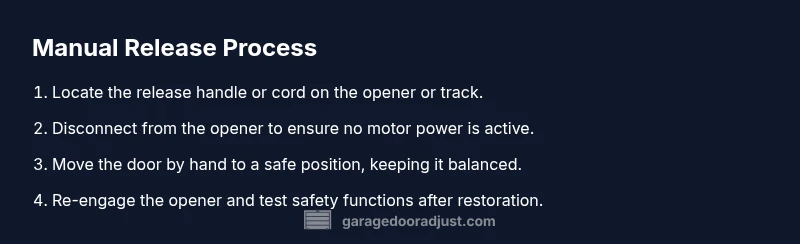
Identify the manual release on your specific door system. It is often a red handle or cord located near the opener or along the track. If you’re unsure, consult the owner’s manual or manufacturer’s diagram before touching any hardware.
Tip: Stand to the side of the door path and keep your body out of the direct line of the door. - 2
Test the release without the door moving
With the door disconnected from the opener, gently tug the release to confirm disengagement. Ensure the door is stationary before applying any manual force. This confirms the mechanism works without load.
Tip: Have a partner ready to assist and prevent accidental movement. - 3
Disengage the door from the opener
Pull the release until you feel it disengage the opener’s carriage. Confirm the opener can’t operate the door by itself and that you can move the door by hand without resistance from the motor.
Tip: If you sense binding, stop and reassess; forcing the release can damage springs. - 4
Move the door by hand to position it
With the opener disengaged, lift or lower the door slowly. Use both hands to guide the door and keep it balanced at all times to prevent it from snapping shut or dropping unexpectedly.
Tip: Keep a firm grip and stay clear of pinch points like hinges and rollers. - 5
Test the door’s balance and track clearance
Move the door to a mid-height position and briefly release it to see if it stays in place. Check tracks for obstructions and ensure there’s no binding along rollers or springs.
Tip: If it doesn’t stay in place, stop and call a pro—balance issues require professional attention. - 6
Re-engage the opener or set up safe reactivation
If you plan to operate automatically again, re-engage the opener following the manufacturer’s instructions. Verify safety reversal and proper travel limits after reconnection.
Tip: Test the auto-reverse function after re-engagement to ensure safe operation.
Got Questions?
What is a garage door manual release?
A garage door manual release disconnects the door from the automatic opener, allowing you to operate the door by hand. It is typically a cord or lever near the motor or track. Understanding its function helps you handle outages or malfunctions safely.
The manual release disconnects the door from the opener so you can move it by hand during outages or issues.
Where is the manual release located on my door?
Most releases are on the garage door opener track, commonly a red cord or lever. Exact positions vary by model, so check the owner’s manual or manufacturer diagrams for your system.
Look for a red cord or lever on the track near the opener; if unsure, consult your model’s manual.
Is it safe to release the door if someone is under it?
No. Do not release or move the door while anyone is under it. Ensure the area beneath the door is clear and supported during manual operation.
Never release or move the door when someone is under it; keep the area clear at all times.
What should I do after using the manual release?
Move the door by hand to a safe position, inspect for issues, and re-engage the opener if you plan to use automatic operation. If anything feels off, contact a professional.
After releasing, check the door’s movement and re-engage the opener only when it’s safe to do so.
What signs indicate the release or door needs service?
Unusual noises, binding movement, door that doesn’t stay in place, or visible wear on cables or tracks suggest service is needed by a professional.
Listen for grinding, feel for sticking, and watch for misalignment—these mean you should call a technician.
Can I use the manual release during a power outage?
Yes. The manual release works when the opener is powered off, allowing manual door operation until power is restored.
You can use it during a power outage to open or close the door by hand.
Watch Video
Quick Summary
- Identify the manual release location and purpose.
- Test in a safe, controlled environment before any manual operation.
- Re-engage the opener only after confirming smooth, safe manual movement.
- Inspect for wear and plan professional maintenance as needed.
- Always follow manufacturer guidance and local safety standards.