How to Shut a Garage Door: A Homeowner's Guide
Learn safe, step-by-step methods to shut a garage door, whether using an automatic opener or manual release. This guide covers safety checks, common issues, and maintenance tips for homeowners.


To safely shut a garage door, start with a clear area and test the door’s balance, then use the opener or manual release as appropriate. If the door stalls or reverses, stop immediately and troubleshoot sensor alignment or track obstructions. This guide provides a complete, safe process for both manual and automatic closing.
Safety-first approach to shutting a garage door
Shutting a garage door is a routine task, but it carries significant safety risks if done improperly. Heavy moving parts, pinch points, and the potential for doors to drop unexpectedly require deliberate caution. In this section we establish the core safety mindset: keep people clear of the door path, verify the area is free of pets, vehicles, and toys, and never stand beneath or directly in line with the door while it is closing. For homeowners wondering how to shut garage door safely, the answer is to combine a clear workspace with controlled, deliberate actions. If you notice jerky movement, unusual noises, or misaligned tracks, stop and consult a professional. Following these safety principles reduces injuries and helps you complete the task with confidence.
Tools and materials you may need
- No tools required for a basic close, but keep a flashlight handy in low light.
- Optional: safety gloves to improve grip when handling the door manually.
- If you’re troubleshooting, you might need a flashlight, a small ladder, and a simple wrench for loose hardware.
- A phone or camera to document any misalignment for later service.
Using the right tools and preparing the workspace are essential steps in knowing how to shut garage door safely. Always prioritize personal safety over speed, and ensure children and pets stay away during the process.
Step-by-step overview for shutting a garage door
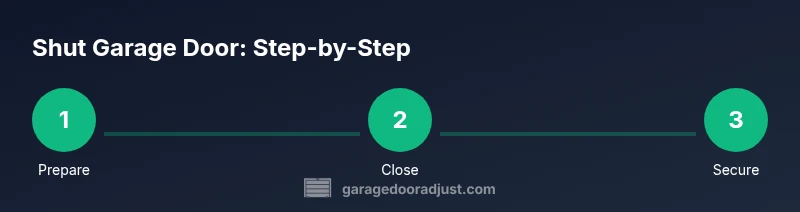
This guide covers two primary paths: closing with an automatic opener and closing manually when the opener is unavailable or unsafe to use. The steps below outline a comprehensive approach, including safety checks, sensor verification, and final security checks. You’ll learn how to diagnose common issues, such as doors that stall, reverse, or stay open. By following these steps, you’ll achieve a controlled, safe shutdown every time.
Step 1 – Prepare and clear the path
Before touching the door, make sure the entire area in front of the door is free of obstacles. Remove tools, toys, and cords, and verify that children and pets are out of the doorway path. Visual checks should include looking for bent tracks, loose screws, or any debris that could jam the rollers. If your door has a balance issue, you may feel extra resistance when lifting, which is a warning sign to stop and avoid closing until a professional inspects it. This preparation reduces the risk of pinching or crushing injuries during the close.
Step 2 – Close with the automatic opener (when safe to do so)
If you are using the garage door opener, start by ensuring the door sits evenly on the ground. Stand clear of the door’s path and press the close button. If the door closes smoothly, hold momentarily to ensure it’s detected as complete, then release. Do not stand in the doorway while the door travels; keep hands and fingers away from pinch points. If an obstacle triggers the safety reverse, back away and remove the obstruction before attempting again.
Step 3 – Troubleshooting a door that won’t close
A door that fails to close completely could indicate an obstacle, sensor misalignment, or track damage. Look for obstructions in the doorway, misaligned safety sensors, or dirty sensor lenses. Clean the lens with a soft cloth and realign sensors so they face each other directly. If the door still resists closing, stop and consult a professional. For the question of how to shut garage door when it won’t cooperate, the process is to identify and remove the obstruction, reset safety features, and re-test before attempting a full close.
Step 4 – Manual release and safe manual closing
If the opener fails or you must close the door manually, locate the emergency release handle on the opener rail. With one hand on the handle, slowly disengage the door from the opener, then gently lower it with controlled, even pressure. Keep feet clear of the bottom edge and never allow the door to drop from height. If you feel resistance, stop and reassess. It’s safer to seek assistance for heavy doors than to pinch fingers or injure yourself.
Step 5 – Final checks and securing the door
Once the door is fully closed, test the door balance by applying gentle resistance to the bottom edge; it should stay in place and not drift upward. If the door drifts, call a technician to inspect springs and tracks. Confirm the opener’s safety features are re-engaged and functioning, and verify that the door remains closed when you give it a light push near the bottom. Finally, consider recording the date of maintenance and any issues observed for future reference.
Maintenance and safety reminders
Regular maintenance helps ensure a smooth shut every time. Lubricate moving parts (hinges, rollers, and tracks) as recommended by the manufacturer, usually every 6–12 months. Check weatherstripping for gaps that might affect door alignment, and tighten loose hardware. Test the auto-reverse feature monthly by placing a tall object in the door’s path; the door should reverse upon contact. These practices help extend the life of the system and improve safety when you shut garage door.
Tools & Materials
- No tools required(Most doors can be closed without tools; only use tools if performing maintenance or sensor adjustments.)
- Safety gloves(Optional for grip and protection when manually guiding the door.)
- Flashlight(Helpful in low light to inspect tracks and sensors.)
Steps
Estimated time: 15-25 minutes
- 1
Prepare and inspect the workspace
Clear the area in front of the door and visually inspect tracks, springs, and hinges for any obvious damage or obstructions. If you notice bent tracks or loose hardware, do not attempt to force the door shut; address the issue or call a professional.
Tip: Take a quick 2‑minute walk-around to confirm the path is free and that the door sits evenly on the ground. - 2
Close with the automatic opener
If you’re using the opener, stand clear of the door path and press the close button. Watch the door descend; if it stops early or reverses, release and reattempt only after removing any obstacles and ensuring sensors are aligned.
Tip: Keep your body to the side of the doorway to avoid pinch points and never reach into the path while it moves. - 3
Troubleshoot a door that won’t close
Check for obstructions and inspect safety sensors. Clean sensor lenses and re-align them so they face each other. If the door remains open, stop and contact a professional technician to evaluate wiring, springs, or torsion systems.
Tip: If the door closes but feels uneven, stop and check alignment before attempting again. - 4
Manual release and closing
If the opener cannot be used, locate the emergency release and disengage the door. Grasp the bottom edge and lower the door slowly and evenly. Do not push or yank; keep your hands out from under the door at all times.
Tip: Keep your stance wide and one hand near the bottom edge to control the drop. - 5
Final checks and securing the door
Close fully and test the door balance by gently pulling on the bottom edge to ensure it stays put. Re-engage the opener and test the safety reversal. Ensure no one stands beneath the door during testing.
Tip: Record your maintenance date and any anomalies for future reference.
Got Questions?
What should I do if the garage door reverses before closing?
Stop and inspect the safety sensors and tracks. Realign sensors, remove obstructions, and test again. If the door still reverses, call a professional.
If the door reverses, stop, check the sensors and tracks, realign them, and test again. If it keeps reversing, consult a technician.
Is it safe to manually close the door?
Yes, with proper technique: disengage the opener, grip the bottom edge, and lower the door slowly while keeping fingers clear of pinch points.
Yes. Disengage the opener, hold the bottom edge, and lower slowly, avoiding pinch points.
Why won’t my garage door close all the way?
Root causes include obstructions, misaligned sensors, or damaged tracks. Inspect for debris, check sensors, and ensure tracks are straight before attempting again.
Most times it’s an obstruction, sensor misalignment, or track damage. Inspect and address those areas before retrying.
How often should I test the safety features?
Test the auto-reverse and sensors monthly to ensure early failure is caught and repaired promptly.
Test monthly to catch any safety feature issues early.
Can I disable safety features to close the door faster?
No. Safety features are there to prevent injury. If issues arise, fix or replace components rather than disabling protections.
No. Do not disable safety features; fix the components instead.
Watch Video
Quick Summary
- Prepare the space and inspect for safety before closing.
- Use the opener when safe to do so, but never stand in the doorway.
- Troubleshoot sensor alignment and obstructions if the door won’t close.
- Learn the manual release procedure for emergencies.
- Perform routine maintenance to keep the door closing reliably.