Why Is My Garage Door Not Shutting? A Troubleshooting Guide
Urgent, step-by-step guide for homeowners troubleshooting why a garage door won’t shut. Learn quick fixes, safety checks, and when to call a pro for reliable results.


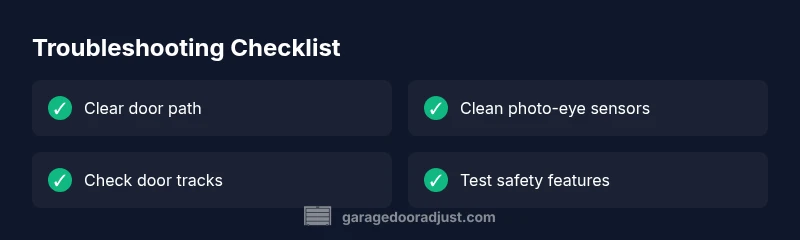
Most garage doors won’t shut due to a simple obstruction, misaligned safety sensors, or an out-of-range limit setting on the opener. Start with quick checks: remove debris from the door path, wipe the photo-eye sensors, and ensure the tracks are clear. If the door still won’t close, reset the opener and re-test before tackling more complex repairs.
Why is the garage door not shutting? (Defining the problem)
If you’re wondering why is the garage door not shutting, start with the most common, low-risk issues. Debris on the floor, a misplaced item in the door path, or ice along the track can prevent closure. The door may be misaligned on the vertical tracks, causing the bottom edge to stall. The safety sensors, usually mounted near the bottom corners, can misread the beam if they’re dusty, misaligned, or blocked. The opener's close-limit setting may be out of adjustment, so the door reverses before fully closing. Finally, damaged tracks, springs, or cables can prevent closure, but those problems can be dangerous and usually require a professional.
Safety first: Inspect without risking injury
Before you touch anything, power down the opener and keep hands away from moving parts. Use a sturdy ladder only if you need to view the tracks up close. If the door is heavy or seems unbalanced, pause and call a pro. Safety is non-negotiable because springs and cables store tension that can cause serious injury if mishandled.
Quick visual checks you can do today
- Clear the floor of any obstructions and make sure the door can travel the full path without resistance.
- Inspect tracks for dents, rust, or debris; wipe them clean and remove buildup.
- Check weatherstripping at the bottom to ensure it isn’t caught in the track.
- Verify that springs and rollers look intact; if you see obvious wear or deformation, stop and seek professional help.
- Test both wall switch and remote control to confirm consistent operation.
How photo eye sensors can stop closure
Photo-eye sensors create a safety beam across the doorway. If this beam is blocked, misaligned, or dirty, the opener may refuse to close. To fix:
- Wipe the sensor lenses with a clean, dry cloth.
- Realign the sensors so they face each other directly with a clear line of sight.
- Check for bright sunlight or reflective glare that can fool the sensor; shield or reposition if needed.
- Look for LED indicators on the sensor housing; a steady green usually means proper alignment.
When to reset or reprogram the opener
If simple checks don’t resolve the issue, resetting or reprogramming the opener can restore proper close behavior. Locate the Learn/Set button on the motor unit, briefly press it, and then reprogram remotes and keypads following your model’s manual. After a reset, test the close function multiple times to confirm the door reaches a full shut position before reversing.
Maintenance tips to prevent recurrence
- Lubricate moving parts lightly with silicone spray; avoid oil-based lubricants on plastic bushings.
- Check balance and tension periodically; an imbalanced door will strain the opener and misread the close limit.
- Schedule an annual professional inspection to catch wear in springs, cables, or tracks before a failure occurs.
- Keep sensors clean and aligned; clean weatherstripping to prevent debris from sneaking into the track.
Common misconceptions about garage door closures
Many homeowners assume a door that closes eventually is fine. In reality, subtle issues like a slightly misaligned sensor, a marginally off limit, or a tiny track dent can worsen over time. Don’t ignore slow reversals or irregular sounds; addressing them early reduces the risk of sudden failure or injury.
Steps
Estimated time: 25-40 minutes
- 1
Power down and check manually
Turn off the opener at the wall or unplug the unit. Manually lower the door to confirm it can be moved with moderate effort and stays in place when you release. This validates basic balance before you touch other parts.
Tip: Always have a second person nearby to help handle the door safely. - 2
Clear the door path & inspect tracks
Remove any objects on the floor along the door path. Visually inspect the vertical and horizontal tracks for dents, rust, or debris that could impede closure. Clean thoroughly and ensure the door can travel smoothly.
Tip: Use a flashlight to spot hidden obstructions behind rollers or track bends. - 3
Test and clean the photo-eye sensors
Wipe the lenses on both sides with a dry, lint-free cloth. Realign the sensors so they face each other directly with an unobstructed beam. Confirm the LED indicators show correct status.
Tip: Avoid touching sensor lenses with fingers; oils can hamper sensing. - 4
Reset the close limit and re-test
Locate the Learn/Set button on the opener motor. Press it to reset, then reprogram remotes and test the close function. Watch for the door to reach bottom without reversing.
Tip: If your model uses a dial or screw for limit adjustment, turn it in small increments. - 5
Check springs, cables, and rollers
Inspect for visible wear, fraying, or looseness. Do not attempt to adjust heavy springs yourself—this is hazardous. If you suspect damage, stop testing and call a pro.
Tip: Note any unusual noises or stiffness to report to a technician. - 6
Restore power and perform a full test
Reconnect power and run several full-close tests using both the wall switch and remote. Ensure the door closes completely and stays in place before reversing. Repeat until consistent.
Tip: Document the behavior with a short video if you call for professional help.
Diagnosis: Garage door won't shut or reverses before fully closing
Possible Causes
- highObstruction or debris in the door path
- highMisaligned safety photo-eye sensors
- mediumIncorrect close limit setting on the opener
- mediumDamaged or bent tracks/rollers
- lowWiring or power issues to the opener
Fixes
- easyClear the door path of obstructions and remove loose debris
- easyClean and realign photo-eye sensors for an unobstructed line of sight
- easyReset the close limit on the opener and test closure
- mediumInspect tracks/rollers for damage and gently realign or lubricate as needed
- easyCheck electrical connections and power to the opener; reset the breaker if needed
Got Questions?
Why does my garage door close part of the way and then reverse?
This is usually caused by a misadjusted close limit, an obstruction, or a sensor issue. Start with clearing the path and realigning the safety sensors, then re-test the close function.
If your door reverses, check for obstructions and sensor alignment, and reset the close limit before testing again.
How do I reset the close limit on my opener?
Find the Learn/Set button on the opener, press to reset, and then reprogram remotes. Follow your model’s manual for exact steps and test several times.
Look for the Learn button on the motor unit, press to reset, then reprogram and test the door closing again.
Is it safe to manually close the door?
Only with the power disconnected and hands clear of hardware. If the door feels heavy or unbalanced, stop and call a professional.
Never force the door; disconnect power first and seek help if anything feels unsafe.
How can I tell if the sensors are dirty?
Check the sensor lenses for dust or smudges and test the beam with a quick blockage-and-release test. Indicators on the sensor can show misalignment.
Dusty sensors or misalignment can stop the door from closing properly, so clean and realign them.
When should I call a professional?
If you hear grinding, see damaged tracks or springs, or can’t safely reset limits, contact GarageDoorAdjust or another qualified technician.
If springs or tracks look damaged or you’re unsure, it’s safer to call a pro.
Can weather affect garage door closure?
Yes. Ice, wind, or extreme cold can affect track alignment and sensor performance. Regular maintenance helps prevent weather-related issues.
Weather can interfere with closure; keep an eye on tracks and sensors during extreme conditions.
Watch Video
Quick Summary
- Check for obvious obstructions first
- Clean and realign safety sensors
- Reset travel limits safely and test multiple times
- Call a pro for springs, cables, or bent tracks