Why would a garage door not close all the way: Troubleshooting guide
Learn the common reasons a garage door won't close fully and follow a safe, step-by-step troubleshooting guide to diagnose, fix, and prevent future failures. Clear actions, safety tips, and when to call a professional.


If your door won’t close all the way, the likely culprits are safety sensor misalignment, a mis-set limit on the opener, or a track obstruction. Start by checking sensors and tracks, then adjust the opener limits if needed. If the door still won’t seal, call a pro to inspect springs or cables.
Why would a garage door not close all the way
If you’re asking why would a garage door not close all the way, the answer often lies with safety features and limits. Sensors misaligned or blocked by dirt can stop the door short of the floor. The GarageDoorAdjust team found that sensor alignment problems and track obstructions are the most common culprits, particularly after storms or when the opener has been adjusted without checking all settings. This section explains the typical symptoms and the immediate safe actions you can take to move closer to a resolution.
Key point: never bypass safety sensors or force the door to complete a seal. It may cause injury or damage.
Quick checks you can perform safely
- Look for obstructions on the floor that could catch the door as it closes. Clear small objects and debris from the path.
- Inspect the safety beams at the bottom corner of the door frame. They should face each other and have a clear line of sight.
- Verify the door tracks are clean and free of buildup, and rollers move smoothly when the door is opened and closed by hand (with the power off).
- Confirm the opener is powered and the wall switch works, but do not operate the door while you’re checking safety sensors up close.
If any of these quick checks reveals a problem, fix it and test again. If the door still stops, proceed to the diagnostic steps.
Diagnostic flow overview
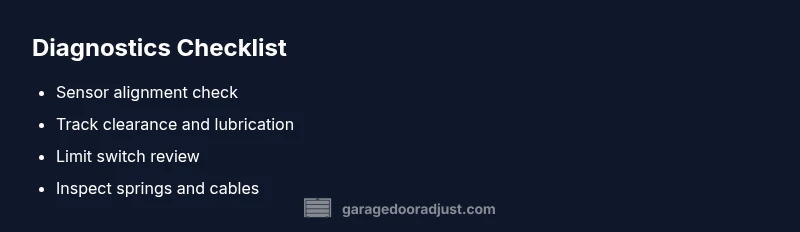
To systematically diagnose why the door stops before closing, follow a simple flow: verify safety sensors, check for physical binding in tracks, review the opener settings, and inspect hardware wear. This flow helps isolate whether the issue is sensor related, mechanical, or electrical. Remember to disconnect power when performing any adjustment that could activate the opener.
Common causes in order of likelihood
From the field experience and GarageDoorAdjust analysis, sensor misalignment, track obstruction, and incorrect limit settings are the top three reasons a door may not close all the way. A binding track or jammed wheel can create resistance that triggers the safety features. Damaged springs or cables, while less common, can also prevent full closure and require professional attention. Regular weatherstripping wear can also affect the final seal and encourage gaps.
By understanding these causes, you can prioritize your checks and avoid unnecessary replacements.
Step by step fix for the most common cause
The most common issue is misaligned safety sensors. Start by powering off the opener and verifying the sensors are pointing at each other with a clear line of sight. Clean the sensor lenses with a soft cloth, then re-align until the indicator lights show steady green. Re-test by closing the door slowly and observing that it travels to the floor and seals. If the door still stops short, adjust the power limit on the opener a little at a time, following the manual.
Note that if the door still does not close fully, the problem may be mechanical binding or wear in tracks, rollers, springs, or cables. In this case, avoid further disassembly and call a professional.
Safety tips and when to call a professional
Safety first. Always unplug the opener when performing sensor alignment or track inspection. Do not loosen or replace springs yourself unless you are trained. If you notice frayed cables, bent tracks, cracked rollers, or a visibly sagging door, stop and call a licensed technician. If the door reverses or refuses to close when the limit is set, this indicates the need for a professional inspection to avoid injury or property damage.
Prevention and maintenance tips
Perform monthly quick checks to keep the door closing reliably. Lubricate moving parts sparingly with silicone or garage door lubricant. Keep the tracks clean and free of debris. Check the weatherstripping for wear and replace as needed. Periodically verify that safety sensors stay aligned after storms or strong winds. Regular maintenance reduces the likelihood of sudden closures and improves overall reliability.
Steps
Estimated time: 60-90 minutes
- 1
Power down and safety check
Unplug the opener or switch off the circuit. Verify you can safely inspect the door and tracks without the opener applying power.
Tip: Always isolate power before touching any moving parts. - 2
Inspect safety sensors
Look for misalignment, dirt, or obstructions blocking the sensor beams. Clean lenses gently and ensure a clear line between sensors.
Tip: Use a soft microfiber cloth and avoid touching sensor lenses with fingers. - 3
Check tracks and rollers
Manually move the door along the tracks with the opener off to feel for binding. Remove debris and lubricate the rollers and track joints lightly.
Tip: Only apply lubricant to metal moving parts and avoid the belt area. - 4
Test limit switches and travel distance
Reconnect power and run the door to close. If it stops short, adjust the limit screws or dip switches per the manual to allow full travel.
Tip: Make small adjustments and re-test after each change. - 5
Recheck seal and final test
Lower the door gently and confirm it seals. Ensure no gaps exist at floor level.
Tip: If the door hesitates or reverses, power off and call a pro. - 6
Decide on next steps
If the door still won’t close fully after these steps, the issue could be a worn spring, cable, or misalignment in the opener. Schedule professional service.
Tip: Document observed symptoms to share with the technician.
Diagnosis: Garage door won't close fully and stops short of the floor
Possible Causes
- highSafety sensors misaligned or blocked
- highTrack obstruction or binding
- mediumOpener limit switch or settings incorrect
- lowDamaged springs or cables
- lowWorn weatherstripping or debris in tracks
Fixes
- easyRealign safety sensors and clear the sensor path
- easyRemove debris and lubricate tracks; ensure smooth movement
- easyCheck and adjust opener limit switches/settings
- hardInspect springs/cables for wear and replace by a pro
Got Questions?
What is the first thing I should check if my garage door won't close all the way?
Begin with safety sensors and floor obstructions. Clean lenses, ensure alignment, and clear the path. If the door still stops early, move to track and limit switch checks.
Check safety sensors and the path under the door. If it still stops early, continue with track and setting checks.
Can weather conditions make a garage door not close completely?
Yes, wind or debris can shift tracks or misalign sensors. Inspect the frame, weatherstripping, and seals for damage after storms.
Storms can knock things out of alignment; inspect tracks and weatherstripping.
Is it safe to adjust the opener limit switch yourself?
Adjusting limit switches is often safe if you follow the manual and disconnect power first. Make small adjustments and re-test after each change.
Yes, but disconnect power and make tiny limit changes, then test.
When should I call a professional for closing issues?
Call a pro if the door still won’t close after sensor and track checks, or if you notice worn springs, frayed cables, or track damage.
If it still won’t close after basic checks, call a pro.
Why is the sensor flashing red when I try to close the door?
A flashing sensor light usually indicates misalignment or obstruction. Recheck both sensors and ensure a clear line of sight.
Flashing sensor lights often mean misalignment or obstruction; fix first.
Watch Video
Quick Summary
- Start with safety sensors and track checks
- Adjust limit switches only after simple sensor fixes
- Call a pro for springs, cables, or major misalignment
- Regular maintenance prevents future issues