Why My Garage Door Is Not Closing: Troubleshooting Guide
Struggling with a garage door that won't close? This step-by-step guide helps homeowners diagnose sensor, track, and opener issues quickly and safely. Learn how to fix not closing problems and when to call a pro.


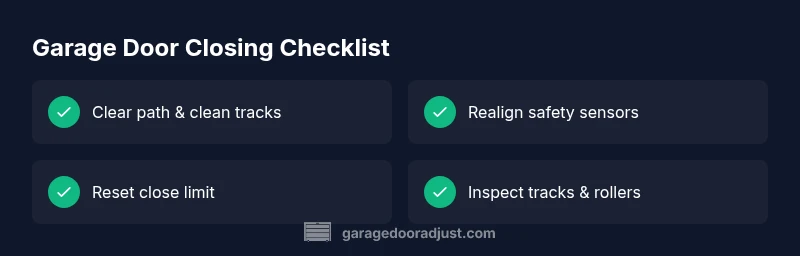
Most closing failures come from safety sensors, misaligned tracks, or a misconfigured opener limit. Start by clearing the doorway of obstacles, then realign the photoelectric sensors and reset the close-limit on the opener. If the door still won't close, check tracks for debris, inspect springs for wear (do not adjust springs yourself), and consider calling a pro.
Understanding why my garage door is not closing
When homeowners ask, why my garage door is not closing, the most common culprits are safety sensor problems, a misconfigured close limit, or obstructions on the door path. According to GarageDoorAdjust, sensor misalignment or obstruction is a leading contributor to not closing problems in 2026. This section lays out how a standard residential setup works, why these symptoms occur, and how to approach fixes with safety as the top priority. Understanding the system helps you prioritize checks and avoid unnecessary parts replacement. Keep in mind that the safety sensors are designed to prevent doors from causing injury or damage, so many fixes involve realigning or cleaning rather than replacing hardware.
Steps
Estimated time: 60-90 minutes
- 1
Power down and prepare the workspace
Unplug the garage door opener and clear the area beneath the door. Ensure children and pets are away. This reduces the risk of injury during inspection and prevents accidental door movement.
Tip: Always unplug the opener before touching mechanical components. - 2
Clear obstructions and test basic operation
Remove any objects on the floor and ensure the door can travel freely by hand when the opener is unplugged. Plug the unit back in and operate the close command to observe the door’s behavior.
Tip: If the door won’t move even by hand, there may be an issue with the torsion bar or springs—do not force the door. - 3
Test and realign safety sensors
Check that the sensors are facing each other with a clear line of sight. Clean any dirt or spider webs from the lenses and confirm the indicator lights are solid (not blinking).
Tip: Use a soft, dry cloth to clean lenses and gently adjust the sensors until the lights indicate proper alignment. - 4
Reset the close-limit switch on the opener
Find the close-limit screw on your opener (often near the back or side panel). Use a small screwdriver to adjust the limit toward the “close” position in small increments, testing after each adjustment.
Tip: Make minor adjustments; test the door after each turn to avoid overshooting or binding. - 5
Inspect tracks and rollers for wear
Examine tracks for dents, bends, or obstruction points. Ensure rollers rotate smoothly by hand and aren’t jammed. If you notice damage, do not force movement.
Tip: Damaged tracks or worn rollers often require professional replacement. - 6
Test remotes and reprogram if needed
Test the wall console and remote control. If they fail to respond consistently, reprogram the remotes according to the manufacturer’s instructions and re-link the opener to your devices.
Tip: Replace remote batteries if they’re old and failing.
Diagnosis: Garage door won't close fully or stops before reaching the floor.
Possible Causes
- highObstacle or debris on the door path
- highSafety sensor misalignment or obstruction
- mediumIncorrect close-limit setting on the opener
- lowTrack misalignment or bent rollers
Fixes
- easyRemove any objects from the doorway and clean the tracks of dust and debris
- easyRealign the safety sensors and clean their lenses
- easyReset the opener close limit and re-teach the opener
- mediumInspect tracks and rollers for damage and seek professional help if bent or worn
Got Questions?
What is the first thing I should check if my garage door won't close?
Begin with a safety check: ensure no obstruction blocks the door path, and verify sensors are aligned and clean. If the door still won’t close, inspect the close-limit setting and tracks.
First, remove any obstructions and ensure the safety sensors are clean and aligned. If needed, check the close limit and tracks.
Can a dirty sensor lens prevent closing, and how do I fix it?
Yes. Clean the sensor lenses with a soft cloth and recheck the alignment. If the beam remains interrupted, adjust the sensors until the indicator lights show stable alignment.
Dirty sensor lenses can stop closing—clean gently and realign until the lights indicate proper alignment.
Is it safe to reset the opener or reprogram remotes myself?
Yes, you can reset the opener and reprogram remotes following the manufacturer’s instructions. Avoid tampering with springs or high-tension components.
You can reset the opener and reprogram remotes, but don’t touch the springs or high-tension parts.
Why does the door close partway and then reverse?
This often points to a safety sensor issue, obstacle detection, or an incorrect close-limit setting. Check sensors and limits, and inspect the tracks for binding.
If it closes partway and reverses, check safety sensors, limit settings, and track movement.
When should I call a professional for a closing problem?
If you notice persistent sensor misalignment, damaged tracks, or if springs or cables require inspection, call a professional. Safety concerns warrant expert evaluation.
Call a pro if sensors, tracks, or springs look damaged or after repeats failures.
Watch Video
Quick Summary
- Identify root cause before any fixes.
- Start with sensors and limit settings first.
- Never adjust springs—call a pro when in doubt.
- Regular maintenance prevents most closing issues.