Why Is My Garage Door Not Opening: A Homeowner's Troubleshooting Guide
Struggling with a garage door that won't open? This step-by-step guide from GarageDoorAdjust helps homeowners diagnose common causes, perform safe fixes, and know when to call a professional.


Most garage doors fail to open due to power or sensor issues, a blocked track, or a faulty opener. Start with quick checks: ensure the outlet is live, test the wall control and remote, and look for obvious obstructions. If it remains stubborn, follow the diagnostic flow and perform the safe fixes outlined below.
Why Is My Garage Door Not Opening? Common Causes
If your garage door won't open, the problem is usually one of a few culprits. According to GarageDoorAdjust, the most frequent causes are a power issue (dead outlet or tripped circuit), misaligned or dirty safety sensors, an obstruction on the tracks, a failing opener motor, or a broken spring or cable. Start by ruling out simple, safe explanations before assuming a major repair. Look for obvious signs: a flickering light on the opener, a grinding sound without movement, or a door that rises a few inches and stops. Document the symptoms as you test each possibility; this helps you measure progress and makes it easier to describe the issue to a tech if needed. In many cases, the fix is quick and inexpensive, but taking the right safety steps matters to protect you and your family. GarageDoorAdjust recommends starting with these checks in the order listed below, so you don’t overlook a simple cause.
How Garage Door Openers Work and What Can Fail
A typical garage door system includes an electric opener, a drive mechanism (chain, belt, or screw), springs that counterbalance weight, tracks and rollers, and safety sensors. The safety sensors detect an object in the path and stop the door from closing. When everything works, a push of the button or a remote sends power to the motor, delivering smooth operation. If the door won’t move, the issue may be electrical (dead outlet, tripped breaker, faulty receiver), sensor misalignment, worn gears or belt, or a physical obstruction on the tracks. Understanding these components helps you differentiate between a DIY fix and a professional repair.
Start with Safe, Basic Checks You Can Do Today
Before you call for help, perform these checks with the door in clear view and the area free of people and pets. First, verify the outlet powering the opener is live by plugging in a lamp or charger. If it’s outdoors, reset any GFCI protection and check for a tripped breaker. Then test both the wall switch and the remote: if one works and the other doesn’t, the issue is often a battery or wiring problem. Inspect the safety sensors at the bottom of the door tracks: wipe the lenses, check cords for damage, and ensure nothing is blocking the beam. Look along the tracks for obstructions, dents, or loose bolts; if you see damage or severe binding, stop and call a pro. If you can safely disengage the opener using the emergency release, you can try lifting the door by hand to check balance. If it feels extremely heavy or sticks, springs or cables may be compromised and require professional service.
Diagnostic Flow: Symptom → Diagnosis → Solutions
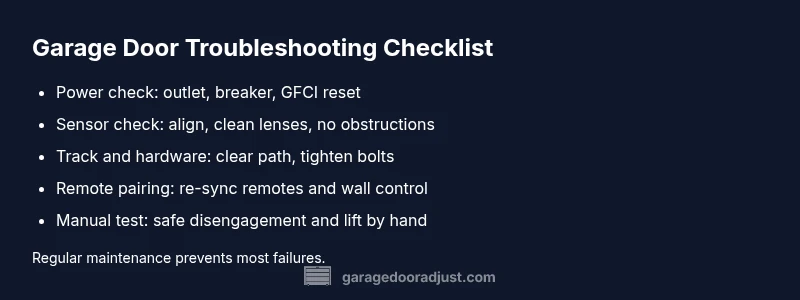
Start with the symptom: the door does not respond to the wall control or remote. Move through these checks in order: 1) Power verification (is the outlet live, are breakers on?); 2) Sensor check (are the safety eyes aligned and unobstructed?); 3) Mechanical check (tracks clean, rollers intact, no loose hardware); 4) Opener health (any buzzing, clicking, or error codes?); 5) Manual operation (can you lift the door when the opener is disengaged?). For each diagnosed issue, apply the recommended fix. This structured approach minimizes guesswork and keeps you safe, especially if your door uses torsion springs or has a history of wear.
Step-by-Step: Fixing the Most Common Cause
- Power and reset: unplug the opener, wait 30 seconds, plug back in, and test. Tip: use a light to confirm the outlet has power during the test. 2) Sensor realignment: adjust the bottom brackets until the safety lights behave normally when aligned; clean the lenses and remove any debris. Tip: avoid shiny reflections that can fool sensors. 3) Track obstructions: remove any debris, wipe grease, and tighten loose hardware. Tip: don’t force a bent track back into place. 4) Reprogram remote: delete old pairing, then re-pair the remote and wall control. Tip: test with a second remote if available. 5) Check balance: disengage the opener and move the door manually; if heavy, call a pro. Tip: only attempt manual operation if you understand how to safely disengage. 6) Safety test: re-engage the opener and run open/close cycles with the door restrained. Tip: keep hands clear of the moving door. 7) Lubrication: apply silicone-based lubricant to tracks, rollers, and hinges; wipe away excess. Tip: avoid WD-40 on tracks. 8) Documentation: note how the door behaves after each step to assist a technician if needed. Tip: snap a quick photo of misaligned parts for reference.
Prevention and Maintenance for Reliable Operation
Create a simple monthly routine to reduce future failures. Check sensors and lenses, clear the area in front of the door, and perform a controlled open/close cycle. Replace remote batteries every 6–12 months and re-pair as needed. Annually inspect springs, cables, tracks, and fasteners; tighten loose hardware and look for signs of wear or corrosion. Schedule a professional safety inspection every 2–3 years, especially if your door is old or makes unusual noises. Keeping a basic maintenance log helps you catch issues early and plan costs before they become urgent. GarageDoorAdjust emphasizes proactive checks to minimize emergency repairs and extend the life of your system.
Steps
Estimated time: 30-60 minutes
- 1
Verify power and reset the opener
Unplug the opener, wait 30 seconds, plug back in, and run the open/close test. This resets the control board and can clear minor glitches.
Tip: If the outlet is on a switched circuit, ensure the switch is ON before testing. - 2
Realign and test safety sensors
Check the bottom sensors on both sides of the door. Align them so the indicator lights show steady and parallel. Clean the lenses and remove any dust or cobwebs.
Tip: Do not bypass safety sensors; they protect people and pets. - 3
Clear tracks and inspect hardware
Remove debris from tracks, wipe away built-up grease, and tighten loose bolts. Make sure the track is straight and there are no obstructions against the rollers.
Tip: Only perform adjustments with the door in a safe, supported position. - 4
Reprogram remotes and wall controls
Delete old remote pairings and re-pair each remote to the opener. Check the wall control LED and ensure it indicates normal operation.
Tip: If you have a keypad, reprogram it to rule out user error. - 5
Test manual opening and balance
Disengage the opener and try lifting the door by hand. If it’s extremely heavy or sticks, springs or cables may be damaged and require a professional.
Tip: Do not attempt spring work unless you’re trained. - 6
Run a full cycle test
With everything reconnected, run the door through multiple open/close cycles to confirm smooth operation and repeat sensor checks.
Tip: Record any odd noises or stalls for reference. - 7
Lubricate and protect
Apply a light silicone-based lubricant to metal moving parts, avoiding the belt or pulley housings. Wipe off excess.
Tip: Lubricate annually or when parts start to squeak. - 8
Document and plan maintenance
Note performance after each step and schedule regular maintenance checks, especially if you rely on the door daily.
Tip: Keep a maintenance log for easy reference later.
Diagnosis: Garage door won't open when using remote or wall button
Possible Causes
- highPower issue (outlet, breaker, GFCI trip)
- highSafety photo-eye sensor misalignment or blockage
- mediumOpener motor fault or worn drive belt
- mediumTrack obstruction or misalignment
- lowRemote control or wall switch wiring issue
Fixes
- easyCheck outlet power by plugging in a lamp and reset any tripped breakers or GFCI outlets
- easyInspect safety sensors; clean lenses, verify alignment, and remove any obstruction
- mediumListen for motor noise; if there is burning smell or no response, stop using the opener and seek service
- mediumInspect tracks for debris, dents, loose bolts; realign or replace damaged sections as needed
- easyReprogram remotes and re-pair with the opener; test all remotes and keypads
Got Questions?
Why won't my garage door open even though the opener is running?
If the opener runs but the door doesn’t lift, check power, sensors, and tracks first. Ensure the outlet is live, reset the opener, clean sensor lenses, and look for obstructions in the track. If the door still won’t move, there may be a mechanical or safety issue that requires professional attention.
If the opener runs but the door stays put, start with power, sensors, and tracks, then call a pro if springs or cables seem worn.
What should I do if the safety sensor is misaligned?
Realign the safety sensors so the indicators show solid operation. Clean the lenses, adjust brackets, and remove any objects blocking the beam. Test by closing the door to confirm the sensors react correctly.
Realign the sensors and test with a closing cycle to ensure safety.
Is manual opening safe if the automatic system fails?
Manual opening is possible but should be done with caution. Use the emergency release only if you know how to do it safely, and avoid forcing the door if springs or cables look damaged.
You can open manually if you know how to use the release, but don’t force it if springs look bad.
Why is there beeping or an error code on my opener?
Beeping or error codes point to sensor or internal control issues. Check the manual for the code meaning, reset the opener, and inspect sensors and wiring.
Beep codes usually mean sensor or control problems; reset and check sensors and wiring.
Could a dead battery in the remote cause the door not to open?
Yes. Replace the remote battery and re-pair the remote with the opener; test with other remotes if available.
Yes—change the batteries and re-pair the remote to see if that resolves the issue.
When should I call a professional for a garage door that won't open?
If you suspect a broken spring, damaged cables, bent tracks, or you can’t safely disengage the opener, stop and contact a licensed technician. Also seek help if the door remains heavy to lift manually or shows frequent malfunctions.
Call a professional if springs, cables, or tracks look damaged, or if manual operation is hard or unsafe.
Watch Video
Quick Summary
- Identify power/sensor issues first and avoid forcing a stuck door
- Use the diagnostic flow to stay systematic and safe
- Regular maintenance prevents most common failures
- Call a pro for springs, cables, or damaged tracks