Garage Doors Aren't Opening? A Step-by-Step Troubleshooting Guide
Urgent, step-by-step fixes when garage doors aren't opening. Learn common causes, safety tips, and a diagnostic flow to get your door moving again with GarageDoorAdjust guidance.


When garage doors aren't opening, the most common causes are power issues, a blocked safety sensor, or a faulty wall switch. Start with the basics: check the outlet and opener light, confirm the keypad works, and try the manual release if safe. If the door moves only partway, proceed through the diagnostic flow to isolate the problem.
Why garage doors aren't opening
According to GarageDoorAdjust, when garage doors aren't opening, the problem often starts with simple, addressable issues rather than a failed motor. The most frequent culprits are power issues from a tripped breaker or dead outlet, misaligned safety sensors, or a malfunctioning wall switch or remote. Start by verifying the basics: is the opener plugged in? Is the outlet live? Do you see a blinking light on the opener or keypad? If power is present but the door still won't move, you may be facing sensor or switch problems, or an obstruction in the track. In many cases, addressing these factors resolves the issue without professional help. If the door moves only partway, or if you hear unusual grinding, note the symptom as you proceed through a structured diagnostic flow to isolate the root cause. Remember, garage doors are heavy and counterbalance systems rely on springs; never force a door beyond its natural range. This guide walks you through safe, incremental steps to restore function and prevent further damage.
Quick safety steps before you begin
Safety always comes first. Before you touch anything, unplug the opener at the outlet and keep fingers away from moving parts. Wear sturdy gloves and eye protection if you must handle hardware, and ensure children and pets are away from the work area. If you must use a ladder, have a helper stabilizing it and never stand on the ladder while the door is moving. Do not loosen or adjust springs or cables yourself—these components are under high tension and injuries can occur. If you notice frayed cables, damaged tracks, or a door that feels unusually heavy, stop and call a professional.
Diagnostic flow: symptom to solution
A practical way to troubleshoot is to map the symptom to a likely cause, then apply a safe fix. If the door refuses to move when using both the wall switch and remote, start with power and sensor checks (high likelihood). If the opener light blinks or the keypad behaves erratically, focus on the control wiring and remotes (medium likelihood). Obstructions in the tracks or binding at the rollers indicate a mechanical issue (medium likelihood). Finally, if you hear the motor running but the door stays put, the problem may be with spring balance or track alignment (low likelihood but high-risk if touched). For each cause, apply the corresponding fix in a calm, incremental sequence and test after each step. If the problem persists or you encounter signs of structural damage or spring tension, contact a licensed technician immediately.
Common fixes you can perform this minute
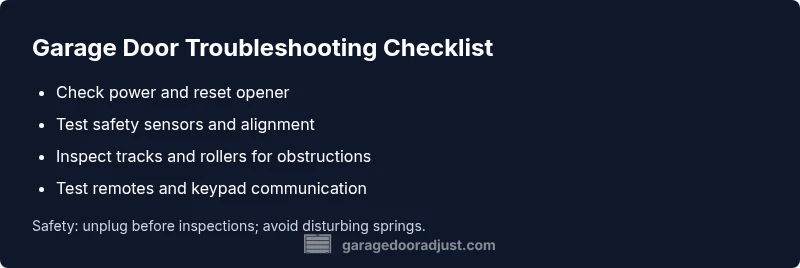
- Check power: verify the opener is plugged in and the outlet works. Try a different device in the same outlet to confirm power. - Safety sensors: clear the sensor beams of any debris, ensure lenses are clean, and realign sensors so the LEDs point toward each other. - Remote and keypad: replace batteries, re-pair remotes if needed, and reprogram the keypad if it’s unresponsive. - Tracks and hardware: look for obvious obstructions, debris, or bent rails; tighten loose brackets but do not force a jammed door. - Manual release: only if safe, pull the red cord toward you to disengage the opener; do not operate a door under tension. - If none of these steps restore function, the issue may be deeper in the opener gears or springs and requires a pro.
When to call a professional
If the door remains stuck after basic checks, or if you notice unusual noises, a heavy door, frayed cables, or a visibly misaligned track, stop immediately and call a licensed technician. Springs and cables carry high tension and can cause severe injury. A pro can safely diagnose misalignment, spring balancing, and motor faults with specialized tools. Even if you can restore partial function, lingering issues can lead to sudden failure and safety hazards.
Prevention: maintenance to keep garage doors opening reliably
Regular upkeep reduces the frequency of failures. Schedule semi-annual lubrication of rollers, hinges, and track pivots; keep sensors clean and aligned; check balance by lifting the door halfway and confirming it stays in place. Inspect cables, rollers, and weather stripping for wear and replace as needed. Store the manual-release tool safely and test the door monthly with the opener and with the manual release to ensure safe operation.
Steps
Estimated time: 45-75 minutes
- 1
Power check and reset
Unplug the opener or switch off the circuit breaker, wait 60 seconds, then restore power. Test the door with the wall switch and remote to see if movement resumes.
Tip: Document the time you reset and any blinking codes on the opener. - 2
Sensor inspection
Look for debris on the sensor eyes and realign them so the LEDs face each other. After alignment, test the door; the light beam should stay steady when aligned.
Tip: Even small misalignments can stop the door from opening. - 3
Remote and keypad test
Try multiple remotes and the wall switch. Re-pair remotes if needed and ensure the keypad is programmed to the current opener.
Tip: Keep a spare battery in each remote for quick testing. - 4
Check tracks and rollers
Inspect tracks for dents, debris, or warping. Clean and lubricate, ensuring rollers roll smoothly without binding.
Tip: Avoid using solvents that degrade rubber seals; use light, garage-door-safe lubricant. - 5
Balance and spring awareness
Do not attempt to adjust springs yourself. If the door feels heavy or is unbalanced, stop and call a professional.
Tip: Loose springs can snap; safety first. - 6
Final test and safety review
Operate the door from all control points, verify auto-reverse is functioning, and ensure the door stops safely if obstructed.
Tip: Test with the door opening fully and returning to closed position.
Diagnosis: Garage door won't open via opener, keypad, or manual test
Possible Causes
- highPower issue (outlet dead, tripped circuit breaker)
- highSafety sensors misaligned or obstructed
- mediumRemote or keypad not communicating with opener
- mediumTrack obstruction or mechanical binding in rollers
- lowSpring balance or track alignment degraded
Fixes
- easyReset power: reset circuit breaker and plug opener back in; test after 60 seconds
- easyClear sensor beams, realign sensors, and remove any blockages
- easyTest and reprogram remotes/keypad; replace batteries if needed
- easyInspect tracks for obstructions and lubricate moving parts; avoid forcing a jam
- hardIf motor hums but door doesn't move, professional servicing is required; do not attempt spring work
Got Questions?
Why won’t my garage door open even though the opener seems powered?
Most often it’s a power or sensor problem. Check the outlet, reset power, and test safety sensors before trying more involved fixes.
Most likely a power or sensor issue. Check the outlet, reset power, and test safety sensors first.
Is it safe to manually open the garage door?
Manual opening is possible only if the door is not under heavy spring tension. If you feel resistance, stop and contact a professional.
Manual opening can be safe only if there’s no tension in the springs. If it feels heavy, call a pro.
When should I call a professional for a garage door issue?
Call a professional if the door is unbalanced, there are frayed cables, unusual noises, or springs appear stressed. Safety is the priority.
Call a professional if there’s unbalance, frayed cables, loud noises, or suspected spring issues.
Can DIY fixes save money on garage door repairs?
DIY fixes can save money on minor issues, but major components like springs or cables require professional service to avoid injury.
DIY can save a bit, but avoid springs or cables without training.
How long should a typical garage door repair take?
Most basic checks and fixes take 30-60 minutes, while more complex issues can take several hours depending on parts and access.
Most fixes take under an hour; complex repairs may take longer.
What maintenance helps prevent future outages?
Regular lubrication, sensor alignment checks, and annual inspections dramatically reduce the chance of future outages.
Keep it lubricated, check sensors, and do annual checks to prevent future issues.
Quick Summary
- Power and sensor checks first for garage doors aren't opening
- Follow a safe, structured diagnostic flow
- Don't attempt spring work—call a professional when in doubt
- Regular maintenance prevents future failures