Garage Door Problems Opening: Urgent Troubleshooting Guide
Facing garage door problems opening? This urgent guide helps homeowners quickly diagnose common blockages, realign sensors, reset the opener, and safely restore operation.


Common garage door problems opening are usually caused by a blocked track, misaligned safety sensors, or a mis-synced opener. Start by clearing the tracks, verifying the safety eyes align, and resetting the opener. If the door still won’t move, follow the diagnostic flow for deeper checks and step-by-step fixes.
Quick startup checks for garage door problems opening
When a garage door refuses to open, homeowners often find the fix is simpler than expected. According to GarageDoorAdjust, the most frequent culprits are debris in the tracks, misaligned safety sensors, and a receiver that has lost synchronization with the opener. Start with fast, safe checks: clear obvious obstructions from the tracks, wipe away dirt and sticks from rollers and hinges, and ensure the door is not manually locked. If the door remains unresponsive, switch off power to the opener for a minute and then restore power to reset the system. While performing these checks, keep the door in sight and stand clear of the path. These initial steps are designed to restore operation without tools or danger, especially for homeowners facing garage door problems opening for the first time.
Common causes of doors not opening
Not all garage door problems opening require professional service. The most common causes include debris blocking the track, a misaligned safety sensor, a photo-eye beam obstruction, or a failure to sync the remote with the receiver. Other frequent issues are a blown circuit breaker, a loose or damaged wall switch, or a door that has become manually locked through the emergency release. As you inspect, note each symptom (does it move a little, hum, or stay completely still) to help narrow down the cause. In many cases, addressing debris, sensor alignment, and power resets resolves the problem quickly and safely.
Diagnostic flow: symptom-to-diagnosis-to-solutions
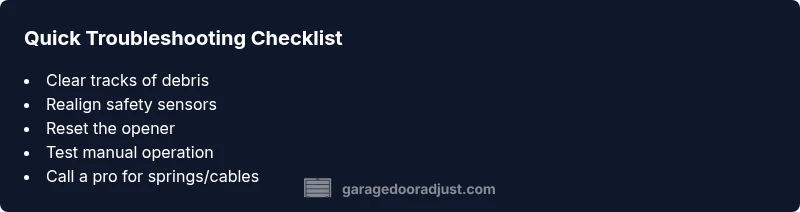
A systematic approach helps you avoid guesswork. Start with the symptom: no movement at all, partial opening, or a door that opens but stalls mid-track. Then consider the most likely causes: power/sensor issues, mechanical binding, or spring/torsion problems. Solutions should progress from easy to hard: debris removal, sensor realignment, opener reset, track lubrication, and finally professional help for springs or cables. This flow minimizes risk while maximizing the chance of a quick fix.
Step-by-step: Fix the most common cause (track obstruction and sensor misalignment)
- Clear the path: Remove any visible debris from the tracks and wipe down the rollers. Lubricate lightly with silicone spray on the tracks only if there is dryness or squeaking. 2) Realign safety sensors: Ensure both infrared sensors face each other with a direct line of sight and no stickers or dirt blocking the beam. 3) Test the door: Use the wall switch to operate the door, then use the remote. If it still won’t open, perform a quick reset of the opener by unplugging for 60 seconds and plugging back in. 4) Inspect for binding: Manually lift and lower the door about 6 inches; if it binds, stop and avoid forcing it. 5) Re-check balance: If you hear grinding or feel heavy resistance, do not continue; this may indicate a spring issue that requires professional service. Tip: Work slowly and keep hands clear of the tracks and springs at all times.
Safety, maintenance, and prevention to avoid future issues
Regular maintenance reduces the frequency of garage door problems opening. Schedule monthly checks to clear debris, lubricate moving parts with a silicone-based lubricant, and inspect the tracks for bending or dents. Keep photo-eye sensors clean and aligned, and replace remote batteries before they fail. If you notice any frayed cables, irregular noises, or slow operation, stop using the door and call a pro. Prevention is safer and often cheaper than emergency repairs.
What to do if you need professional help (when to call a pro)
Some issues exceed DIY capabilities, especially when springs, cables, or a broken torsion rod are involved. If the door opens partially and then drops or you hear creaking from the springs, do not attempt further fixes. A professional from GarageDoorAdjust can assess spring tension, cable wear, and track alignment with proper safety procedures. In urgent situations, avoid attempting hazardous fixes and contact a licensed technician immediately.
Steps
Estimated time: 45-60 minutes
- 1
Power check and safety reset
Verify the unit is powered, unplug the opener for 60 seconds, then plug back in to reset the system. Use the wall switch or remote to test operation.
Tip: Keep hands away from moving parts during tests. - 2
Clear the tracks
Look for and remove any obstructions on the track. Wipe down dust and debris from rails and rollers.
Tip: Do not oil the track if it is dirty; cleaning first is essential. - 3
Align safety sensors
Check both photo-eye sensors face each other, with unobstructed beams. Clean lenses if needed and straighten their brackets.
Tip: A misaligned eye is a common reason doors won’t open. - 4
Test manual operation
Disconnect the automatic opener and operate the door manually to ensure it moves smoothly along the track.
Tip: If manual movement is heavy, stop and seek professional assistance. - 5
Evaluate balance and springs
With the door closed, check spring tension by lifting halfway and noting resistance. Do not try to adjust springs yourself.
Tip: Springs are under extreme tension; improper adjustment is dangerous.
Diagnosis: Garage door won't open
Possible Causes
- highObstruction or debris in tracks
- highMisaligned or dirty safety sensors
- mediumOpener receiver out of sync or power issue
- lowWorn or damaged springs/cables
Fixes
- easyClear tracks, remove debris, and lubricate lightly if needed
- easyRealign safety sensors and ensure beam is unobstructed
- easyReset the opener and re-pair remote and wall switch
- hardInspect springs/cables and call a professional if suspected wear
Got Questions?
What should I check first when my garage door won’t open?
Start by ensuring there is no debris blocking the tracks, confirm the safety sensors are aligned, and reset the opener. If the door still won’t move, move through the diagnostic flow for deeper troubleshooting.
First, check for debris in the tracks, then make sure the safety sensors are aligned, and reset the opener. If it still won’t move, follow the diagnostic flow for more steps.
Can a broken torsion spring cause the door not to open?
Yes. A damaged or worn torsion spring can prevent the door from lifting. This is a hazardous repair and requires a licensed technician.
A broken torsion spring can stop the door from opening and needs a licensed tech to fix safely.
Is it safe to use the wall switch if the door doesn’t open?
If the wall switch also fails, do not force the door. Check for power to the unit and try the remote. If there’s still no response, seek professional help.
If both the wall switch and remote fail to respond, stop and call a pro.
How often should I lubricate the garage door?
Lubricate moving parts every 6-12 months or as needed if you hear squeaks. Use a silicone-based lubricant and avoid oil-based products on tracks.
Lubricate every 6-12 months with silicone-based lubricant and avoid oil on the tracks.
When should I call a professional?
Call a professional if there are broken springs, frayed cables, significant track damage, or persistent opener faults after resets.
Call a professional for springs, cables, or persistent opener faults after trying resets.
Can I prevent future problems opening my garage door?
Yes. Regular maintenance, sensor alignment checks, and clean tracks reduce the chance of future faults and extend the life of the system.
Regular maintenance and sensor checks prevent most future issues.
Watch Video
Quick Summary
- Follow a safe, stepwise diagnostic flow
- Start with debris removal and sensor alignment
- Reset the opener before deeper diagnostics
- Avoid DIY fixes on springs or cables
- Prevent future issues with regular maintenance