What is Wrong When Your Garage Door Won’t Open: Troubleshooting Guide
Learn what is wrong when your garage door won't open and how to diagnose power, sensor, and jam issues. This urgent, step-by-step guide helps homeowners troubleshoot safely before calling a professional.


Most often, a garage door won’t open due to a power issue, sensor misalignment, or a minor mechanical jam. Start with easy checks: confirm the opener is powered, test the wall switch and remote, and listen for the motor sound. If the safety sensors blink or the motor stalls, perform a safe reset. If the door still won’t open, contact a professional.
Why "What is wrong when your garage door won't open" happens (and what to check first)
If you’re asking what is wrong when your garage door won’t open, the most common culprits are power issues, sensor misalignment, or a mechanical jam. The opener needs power, the safety sensors must be aligned so they detect the door path, and the track or springs must be able to move freely. In many cases, the problem is visible and fixable by a homeowner with basic safety precautions. According to GarageDoorAdjust, the majority of opening problems come from simple, non-destructive faults that you can identify with a quick check of power, wiring, and sensors. Start with the obvious: is the outlet live? Is the wall switch functional? Do the remote and keypad respond? If power is fine but the door still won’t move, move to sensor alignment and track condition. As you work, keep safety in mind: never operate a door while you’re underneath it, never remove safety covers on a live system unless you’re fully confident.
Diagnostic Flow: Symptoms, causes, and fast fixes
Use a back-to-basics approach. Observe the symptom (door won’t open) and work through a short list of likely causes in order of ease and safety. If power is suspect, verify outlets, breakers, and the door receiver. If movement occurs but the door stops, the issue is often a sensor or balance problem. Keep a simple rule: fix the easiest item first, then retest. This approach minimizes risk and avoids unneeded disassembly. GarageDoorAdjust emphasizes systematic checks and safe reset steps to avoid accidental injury.
Step-by-Step Fix for the Most Common Cause: Power or Battery Issue
- Verify the opener is receiving power by plugging a small device into the outlet to confirm power. 2) Check the circuit breaker or fuse for the garage circuit. 3) If the opener is battery-powered, test/replacement of the remote battery and re-sync the remote with the receiver. 4) Test the wall switch; if it lights up, the issue might be in the remote or wiring. 5) Perform a simple reset of the opener per the manufacturer’s instructions. 6) Re-test the door and listen for the motor’s response. 7) If nothing changes, inspect for a manual release jam and ensure safety latches are disengaged only if you understand the mechanism. Pro tip: never pull on the door itself while the opener is energized.
Safety Sensors and Alignment: Check and correct
The safety sensors are positioned on each side of the door track, and misalignment can stop opening. Look for misaligned lenses, mis-pointed beams, or dirty sensor eyes. Clear any debris, wipe with a clean cloth, and reset the sensor alignment screws if needed. After adjustment, test the door by using both the wall switch and the remote. If the door closes but reverses or stops mid-way, recheck the sensors and edge safety features. GarageDoorAdjust recommends a fresh sensor alignment whenever you notice intermittent opening or beep codes.
When to Call a Professional: clear thresholds
Call a professional when you suspect a torsion spring or cable issue, a bent track, a broken gear, or a malfunctioning opener mechanism that requires specialized tools. If the door is unbalanced, if there is rapid or heavy resistance, or if you hear grinding or popping noises during operation, discontinue use and contact a technician. Professionals have the right tools and safety equipment to handle springs and high-tension components safely.
Prevention and Regular Maintenance: easy, ongoing care
Set a monthly routine to inspect the track alignment, lubricate moving parts, and test safety features. Clean the tracks to remove dirt and debris, wipe the sensors, and replace worn weatherstripping as needed. Check the fasteners for looseness and ensure the door is balanced by testing manual operation when powered down. Regular maintenance reduces the chance of sudden failures and prolongs the life of the mechanism. The goal is to keep the system clean, aligned, and properly powered.
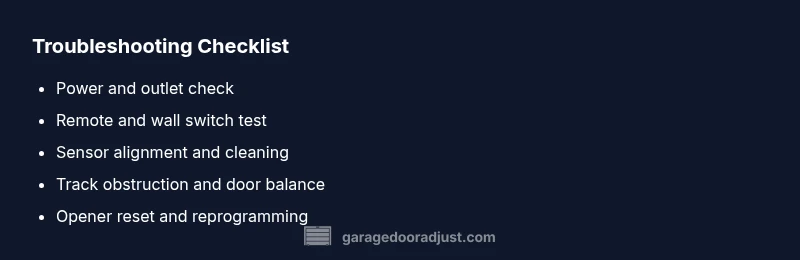
Quick Troubleshooting Checklist: quick-fire steps
- Confirm power to the opener and check the remote battery.
- Test both wall switch and keypad; confirm responses.
- Look for flashing sensor LEDs and clean sensor eyes.
- Listen for motor sounds; a humming or grinding noise may indicate a mechanical issue.
- Reset the opener according to the manual.
- If the door remains stuck, stop and call a professional for safety.
Final safety reminders and best practices
Never attempt to disassemble torsion springs or tension components unless you are trained. Always keep hands and clothing away from moving parts when power is present. Use a sturdy ladder and have another person assist if you need to reach high mounts. If you’re unsure at any step, pause and seek professional help. Following these steps reduces risk and ensures you handle the problem with care.
Steps
Estimated time: 45-60 minutes
- 1
Check power and outlets
Confirm the garage outlet is live by testing with a small appliance. If the circuit breaker has tripped, reset it and re-test the opener.
Tip: A quick outlet test saves time and avoids unnecessary parts replacement. - 2
Test wall switch and remote
Operate the wall switch and the remote, listening for the motor. If only the remote fails, replace the battery or re-sync the signal.
Tip: Keep the remote in a known place and avoid interference from other devices. - 3
Reset the opener
Follow the manufacturer’s reset sequence to clear error codes and re-learn remotes. Power the unit off and on if the manual supports a full reset.
Tip: Document the reset steps for future reference. - 4
Inspect safety sensors
Check both sensor lenses; clean with a soft cloth and re-align until both LEDs indicate proper alignment when the door is closed.
Tip: Misalignment is a common cause of false reversals. - 5
Check tracks and balance
Visually inspect tracks for obstructions and ensure the door moves smoothly by hand when the opener is unplugged.
Tip: Never force the door; if it sticks manually, it may be a sign of a spring issue. - 6
Professional help when needed
If you notice odd noises, stiff movement, or suspected spring or cable problems, pause and call a licensed technician.
Tip: Tension springs are dangerous; professional handling reduces risk.
Diagnosis: Garage door won't open from wall switch, remote, or keypad
Possible Causes
- highPower issue
- highSensor misalignment or obstruction
- mediumTrack, balance, or jam obstruction
- lowFaulty opener or limit switch
Fixes
- easyCheck outlet and circuit breaker; verify power to the opener.
- easyReplace remote battery and re-sync remote with opener.
- easyRealign safety sensors and clean sensor eyes; re-test.
- mediumInspect tracks and balance; remove debris and ensure smooth movement.
- easyReset the opener and reprogram keypad as needed.
- hardIf springs, cables, or gears seem damaged, call a professional.
Got Questions?
What should I check first if my garage door won't open?
Begin with power, wall switch, and remote checks. Verify power at the outlet, inspect the circuit breaker, and test both the switch and remote. If nothing moves, proceed to sensor alignment and track inspection.
Start with power and remote checks, then move to sensors and tracks if needed.
Can a misaligned sensor prevent the door from opening?
Yes. Misaligned safety sensors can prevent the door from opening or cause it to stop mid-travel. Clean and realign the sensors, then test with the door in different positions.
Sensors misalignment can stop the door; realign and test.
Is resetting the opener safe and effective?
Resetting the opener is usually safe and helps clear errors or re-pair remotes. Follow the manufacturer’s instructions precisely and avoid unplugging components mid-sequence.
Resetting is generally safe if you follow the manual.
When should I call a professional?
Call a professional if you suspect a spring, cable, track damage, or if the door remains unbalanced after basic checks. High-tension components can cause serious injury.
Call a professional for springs, cables, or the door feels unbalanced.
What maintenance helps prevent future issues?
Regular lubrication, track cleaning, sensor cleaning, and annual balance checks help prevent failures. Keep fasteners tight and replace worn weatherstripping as needed.
Regular maintenance prevents failures and keeps parts moving smoothly.
What should I avoid doing during troubleshooting?
Avoid forcing the door or attempting repairs on high-tension parts. Do not operate with exposed wiring or damaged components.
Don’t force the door or work on springs yourself.
Watch Video
Quick Summary
- Identify the fault fast by starting with power and sensor checks
- Use a safe, step-by-step reset and re-sync process
- Call a professional for springs, cables, or unclear issues
- Maintain tracks and sensors to prevent future problems