What Is Wrong with Garage Door Opener? A Troubleshooting Guide
Urgent, step-by-step troubleshooting guide for homeowners facing a garage door opener that won’t respond. Diagnose power, remotes, sensors, and wiring with practical, safe steps to restore operation.


The most common reason a garage door opener won’t respond is a simple power issue, a dead remote, or misaligned safety sensors. Begin by verifying the outlet and circuit, then test the wall switch and remote batteries, and check the safety sensors. If basic checks fail, reprogram the remote and contact a pro for a safe repair.
What is wrong with garage door opener and how problems usually present
When a garage door opener stops responding, the underlying issue often boils down to power, control, or safety signals rather than a seized motor. Immediately test for simple causes before diving into mechanical repairs. According to GarageDoorAdjust, many failures start with a basic power check or a mispaired remote. The goal is to rule out the easiest explanations first, then move toward more involved fixes. In many homes, the symptom is clear: the opener does nothing when you press the button, or the door moves only partway and stalls. Understanding the common failure modes helps you triage quickly and safely. You’ll notice cues such as an indicator light on the opener, a blinking beam on the safety sensors, or a remote that suddenly stops working. These cues guide you toward the right category of fixes and help you avoid unnecessary parts replacement.
Homeowners should note whether the safety sensors blink or the wall switch lights illuminate; these cues help identify sensor or wiring issues and avoid chasing motor failures. A systematic approach reduces risk of damage to gears or springs and keeps everyone safe as you work through the diagnostics.
Common causes at a glance
Most non-responsive openers stem from four broad areas: power supply and outlets, control devices (remote, keypad, and wall switch), safety sensors and wiring, and mechanical balance or track alignment. A practical rule is to start with the easiest check and progress to the more involved steps. If the door moves but won’t finish a full cycle, suspect balance or limit switch issues rather than a seized motor. Here are the typical culprits:
- Power issues: Tripped breaker, dead outlet, or unplugged unit.
- Remote/keypad problems: Dead batteries, mispairing, or interference.
- Safety sensor faults: Misaligned or blocked sensors causing false alarms.
- Wiring or control faults: Loose wires at the wall switch or inside the opener.
- Mechanical binding: Bent tracks, worn rollers, or a misadjusted limit switch.
- Drive system wear: Worn drive belt or chain that needs adjustment or replacement.
Safety-first checklist
Tackling a garage door opener problem without proper precautions is risky. Before you touch any components, unplug the opener or switch off the circuit to avoid accidental movement. Wear gloves and eye protection if you’ll be near moving parts, tracks, or springs. Do not attempt to adjust torsion springs or replace parts you’re not trained to handle. Keep children and pets away from the workspace. Finally, read your opener’s manual for model-specific warnings and procedures, and keep a flashlight handy to inspect tiny misalignments or loose screws.
If the opener’s lights blink in a specific pattern, refer to the manual’s diagnostic codes to narrow down the issue without disassembly.
Diagnostic flow overview
This diagnostic flow follows a simple path: observe the symptom, generate likely causes, apply safe fixes, and verify operation. Start with the lowest-risk checks (power, batteries) and move toward sensor alignment and mechanical inspection. If you reach a stage where the door moves unexpectedly, or you’re unsure about a component, stop and call a professional. This approach reduces risk and prevents further damage, while giving you clear next steps based on what you observe.
Record what you tested and what you saw, so you can describe the situation to a technician if needed.
Step-by-step plan (Part 1)
-
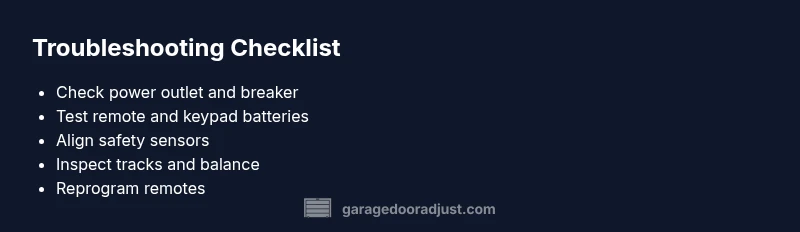
Check power and reset: Confirm the opener is plugged in and the outlet is live. If the outlet is controlled by a switch or GFCI, test with a known working device. Reset a tripped breaker and unplug-replug the unit to ensure the internal logic restarts.
-
Test the wall switch and remote: Use the wall control and the remote to see if either triggers the door. Replace remote batteries and re-pair/learn the remote according to your model’s instructions. If the door responds from one control but not the other, the issue is often in the remote or receiver.
-
Inspect basic safety and wiring: Look at the safety sensors for misalignment or obstruction; verify the wiring at the switch and inside the opener is intact. Clear any debris and re-seat loose connectors. Safety lights on the sensors should blink in a consistent pattern if they’re working.
Step-by-step plan (Part 2)
-
Check tracks and balance: Manually lift the door to feel for rough spots; the door should stay in place when lifted halfway. If it falls or sticks, the springs or tracks may be out of balance, which is a safety concern.
-
Test the limit switches and drive mechanism: If the door stops short of the full travel, adjust the limit screws per the manual. Listen for grinding or binding noises that indicate worn gears or a dry drive chain. Do not force the system beyond its normal travel range.
-
Reprogram and re-test: After you’ve corrected issues, unplug-replug the opener and re-learn the remotes or keypads. Test full open and close cycles, ensuring safety features react correctly. If problems persist, schedule a professional inspection.
Prevention and maintenance tips
To minimize future failures, perform regular lubrication on moving parts, tighten hardware, and clean the track and pulleys every 6–12 months. Inspect safety sensors during maintenance and update the opener’s firmware if available. Keep a maintenance log and replace batteries in remotes every 6–12 months. Remember that a balanced door is safer and easier on the opener, so address balance issues promptly.
Additionally, watch for unusual noises, grinding, or slow response times and address them early to extend the life of your opener. A simple routine can save time and avoid costly repairs.
When to call a professional
If you see damaged tracks, broken springs, hydraulic components leaking lubricant, or if you’re uncomfortable with any step that involves springs or hidden wiring, it’s time to call a professional. An experienced technician can safely handle spring tension, rail alignment, and motor faults without risking injury or further damage. Even if you perform many DIY steps, a professional should verify the final setup and safety features.
Common mistakes to avoid
Avoid interfering with torsion springs, attempting to disassemble the motor housing without power off, or using wrong lubricant products in the wrong places. Do not bypass safety sensors or disable auto-reverse features to quick-fix a problem. Finally, don’t ignore persistent symptoms after several attempts—recurrent failures often signal a deeper issue that requires a professional assessment.
Steps
Estimated time: 30-60 minutes
- 1
Verify power supply
Ensure the opener is plugged in, the outlet is live, and the circuit hasn’t tripped. Reset the breaker if needed and test with a simple device like a lamp to confirm power. This quick check rules out the most common cause.
Tip: Power checks save time—don’t skip the simplest step. - 2
Test controls and batteries
Test both the wall switch and the remote. Replace remote batteries and re-pair the remote to the opener following the manual’s Learn/Programming procedure. If one control works but the other doesn’t, focus on that control.
Tip: Keep track of model-specific pairing steps for faster fixes. - 3
Inspect sensors and wiring
Look at the safety sensors for misalignment or obstruction; clear debris and reseat connectors. Verify the sensor LEDs indicate proper operation. Loose wiring near the wall switch or inside the unit can also cause issues.
Tip: Clean sensors from dust and ensure the beam isn’t blocked. - 4
Check tracks and balance
Manually lift the door to check for smooth movement; the door should stay put when held halfway. If it drops or binds, there may be a balance or track issue that requires adjustment.
Tip: Never force the door—balance problems are a safety risk. - 5
Adjust limit switches and drive
If the door stops short of full travel, adjust the limit screws per the manual. Listen for grinding or binding noises that suggest worn gears or a dry drive chain.
Tip: Make small adjustments and test after each change. - 6
Reprogram and test again
After addressing issues, unplug-replug the opener and re-learn remotes or keypads. Run a full open/close cycle and ensure safety features respond correctly. If problems persist, schedule a professional inspection.
Tip: Document what you tested for easier follow-up.
Diagnosis: Garage door opener won't respond to remote or wall switch
Possible Causes
- highPower issue at outlet or broken breaker
- highDead remote battery or mispaired transmitter
- mediumSafety sensors misaligned or obstructed
- lowWiring fault in wall switch or keypad
Fixes
- easyCheck that the opener is plugged in and reset any tripped breakers or GFCI outlets; test a known live outlet with a lamp
- easyReplace remote batteries and re-pair the remote or keypad to the opener
- mediumRealign safety sensors and remove any obstructions; ensure the sensors’ indicator lights behave as designed
- mediumReseat or repair wiring at the wall switch or keypad; inspect interior wiring connections for looseness
- hardIf issues persist, arrange professional inspection to diagnose internal components or control boards
Got Questions?
Why won't my garage door opener respond to the remote?
Common causes include dead batteries, a mispaired remote, or interference. Start by replacing the batteries and re-pairing the remote to the opener, then test again from both near and far distances. If the issue persists, check the receiver inside the unit for a possible fault.
If the remote won’t work, try new batteries and re-pair the remote. If it still fails, you may have a receiver or wiring issue and should get a professional to help.
How do I reset a garage door opener?
Reset procedures vary by model. Generally, unplug the opener, press and hold the Learn or Reset button for several seconds, then reprogram remotes and keypads according to the manual. Always re-test the full operation after resetting.
To reset, unplug the unit, hold the learn button for a few seconds, then reprogram your remotes and try again.
What safety concerns should I know when troubleshooting?
Always disconnect power before inspecting internal parts. Do not touch springs, cables, or drive gears unless you’re trained. Use safety glasses and keep kids away from the work area. If you’re unsure, call a pro.
Safety first: disconnect power, avoid springs, and call a pro if you’re unsure.
When should I replace my garage door opener?
If the unit is old, unreliable, or the repair cost nears the price of a new opener, replacement is wise. Consider newer models with improved safety features and quieter operation. Consult a professional for a precise cost-benefit assessment.
If it’s old or repeatedly failing, replacing it is often more cost-effective than constant repairs.
Can misaligned sensors cause the door to stop mid-closure?
Yes. Misaligned or obstructed sensors can prevent the door from closing fully as a safety precaution. Check sensor alignment, clear any obstructions, and ensure the indicator lights function correctly.
Yes—misaligned sensors can stop the door. Realign and test to restore proper function.
Is it safe to lubricate the tracks and hinges myself?
Lubrication is generally safe with silicone-based products on rails and hinges. Avoid petroleum-based lubricants and never oil springs or cables. Wipe away excess to keep tracks clean.
Lubricate with silicone lubricant on rails and hinges, but avoid springs and cables.
Watch Video
Quick Summary
- Start with power and battery checks before deeper fixes
- Misaligned sensors are a common non-motor fault
- Reset and re-pair remotes after any wiring or control changes
- Call a professional for spring, track, or motor board issues
- Regular maintenance prevents recurring failures