Garage Opener Won't Work: Urgent Troubleshooting Guide
If your garage opener won't work, follow this urgent, step-by-step guide for power checks, remote/battery tests, sensor realignment, and safe fixes to get your door moving again.


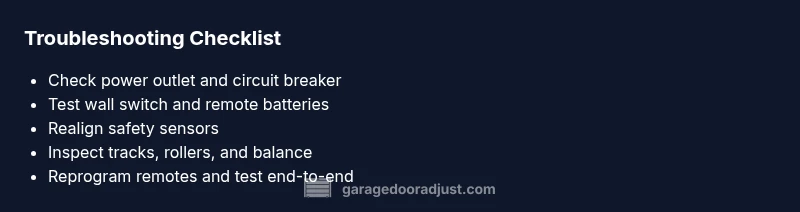
When the garage opener won't work, begin with quick, non-technical checks: confirm power to the unit, test the wall switch, check remote batteries, and inspect safety sensors. If the door moves slightly but stalls, or the motor hums without lifting, try resetting the opener and reprogramming the remote. Most issues resolve with these simple steps before calling a pro.
Immediate safety and quick checks
If the garage opener won't work, start with safety and power basics. First, unplug or switch off the unit at its outlet to avoid electrical shock while you inspect connections. Then verify the circuit is live by plugging in a small device or using a tester. A simple lamp test on the same circuit confirms power. If there's no power, flip the circuit breaker and unplug other devices to reduce load. According to GarageDoorAdjust, many homeowners resolve "garage opener won't work" incidents by validating power and wiring before touching the mechanics. Next, inspect the wall control and the wall switch for a loose connection or a tripped switch. If the button feels soft, sticky, or misaligned, you may have a wiring issue rather than a failed motor. Finally, check the exterior keypad and any remotes in use; misprogrammed or stuck remotes can masquerade as a non-working opener.
Understanding your opener system
Today’s garage door openers come in several belt/chain-drive types with a central logic board and safety sensors. If the garage opener won't work, it's important to distinguish between the remote, the wall switch, and the main unit. Remote signals can fail due to drained batteries, sensor interference, or mispairing after a power outage. The wall switch might be wired incorrectly or share a circuit with other devices. The safety beams, if blocked or misaligned, will prevent operation for safety. Familiarize yourself with how your model handles drive type (belt, chain, or screw) and whether you’re dealing with a traditional torsion spring system or a newer, battery-assisted opener. This background helps you target the right component when diagnosing a malfunction.
Check the power, batteries, and remote signals
Begin with the simplest fixes: replace remote batteries and ensure the remote is clean and free of obstructions. Reprogram or reset the remote and re-pair it with the opener according to the manufacturer’s instructions. If the remote still doesn’t work, test the wall switch—does pressing it move the door? If the wall switch works but the remote does not, you may have a receiver issue or interference from a nearby device. Also test the keypad if you have one. Verify the opener’s power cord is intact and firmly plugged into a live outlet, and check that the outlet hasn’t tripped a GFCI. If you notice a buzzing sound or a motor that hums without lifting, the unit might be in overload or the motor or gears may be wearing out.
Troubleshooting common failure points
Several failure points commonly show up when the garage opener won't work. Start with the safety sensors: misaligned or blocked photoelectric sensors can prevent operation for safety. Realign them so the indicators stay solid when aligned. Next, inspect the travel limits and force settings; if the door isn’t moving fully, these can restrict operation. Check the door’s balance by disconnecting the door from the opener and lifting by hand; it should stay in place if balanced. Track alignment and roller wear can also hamper movement, causing the motor to work harder and stall. Finally, inspect the drive chain or belt for wear; a slipping or stretched belt reduces lifting power. If any component shows fraying, cracking, or obvious wear, it’s time to seek a professional assessment.
Step-by-step diagnostic flow (practical example)
- Symptom: The door won’t open with the wall switch or remote.
- Diagnosis: Power issue or receiver interference.
- Solution: Check outlet, reset GFCI, and re-pair remote to the opener.
- Symptom: Button on the wall control feels unresponsive.
- Diagnosis: Loose wiring or dead wall switch.
- Solution: Inspect the switch wiring; replace if damaged.
- Symptom: Door drops partway or stops before fully open.
- Diagnosis: Safety sensor or travel limit problem.
- Solution: Realign sensors and adjust travel limits per manual.
- If this doesn’t resolve the issue: try replacing the receiver board or contacting a pro.
Maintenance steps to prevent future outages
To reduce future outages when the garage opener won't work, implement a simple maintenance routine. Lubricate moving parts like rails and rollers to minimize friction. Check and replace worn gears, belts, and drive components before they fail. Keep safety sensors clean and aligned; replace batteries in remotes every year or after a power outage. Test the backup power if your system includes one. Schedule annual inspections with a qualified technician if you’re unsure about any component. By staying proactive, you’ll minimize the chance of a breakdown and keep your garage door operating smoothly.
Steps
Estimated time: 60-90 minutes
- 1
Power check and reset
Confirm the opener is plugged in and powered; test the outlet with a small device or lamp. If the outlet is dead, reset the circuit breaker and unplug other devices. Unplug for 10 seconds, then plug back in to perform a soft reset of the opener.
Tip: Always unplug before inspecting wiring; dryness reduces shock risk. - 2
Test wall switch and remote
Press the wall switch to ensure it operates the door. Replace remote batteries and re-pair the remote with the opener. If the wall switch works but the remote does not, the issue may be with the receiver or interference.
Tip: Keep remotes away from devices that can interfere with signals (e.g., wireless routers) during testing. - 3
Check safety sensors
Inspect the photoelectric sensors for dirt, condensation, or misalignment. Clean the lenses and gently realign the sensors until the indicator lights show steady status.
Tip: Even a small misalignment can block operation for safety. - 4
Inspect door balance and tracks
Disconnect the door from the opener and manually lift it to feel for smooth movement. If it drops or binds, the balance, tracks, or rollers may need adjustment or replacement.
Tip: Do not force or slam the door; misalignment can cause injury. - 5
Reset and reprogram
Follow the manufacturer’s instructions to reset the opener’s memory and reprogram the remotes. This often resolves issues when signals aren’t being recognized.
Tip: Document the steps you take in case you need to retrace them later. - 6
Test the system end-to-end
Close the door fully using both the wall switch and remote to confirm the system responds consistently in both modes.
Tip: If either method fails intermittently, there may be a receiver issue. - 7
Call a pro if unresolved
If you hear grinding, smell burning, see damaged wiring, or cannot reset the system, stop and contact a professional technician.
Tip: Electrical and mechanical failures can pose safety risks; don’t push beyond safe limits.
Diagnosis: Garage door won't open or close with opener
Possible Causes
- highPower issue
- mediumSensor misalignment or obstruction
- mediumRemote/receiver interference
- lowMotor overload or worn gears
Fixes
- easyCheck outlet and reset breaker
- easyRealign/clear sensors
- easyReprogram remote and re-pair receiver
- mediumInspect motor, gears, and drive belt; replace if worn
Got Questions?
What should I check first when my garage opener won't work?
Start with power, remote batteries, and safety sensors. Check the wall switch and try resetting the opener.
Start with power, batteries, and sensors; reset if needed.
Why is my remote not working even after replacing the battery?
Remote may be out of sync; reprogramming or receiver pairing might be needed; test from near the opener.
Try reprogramming the remote and checking the receiver.
Can misaligned safety sensors stop the door from opening?
Yes. Realign the photoelectric sensors until the indicator lights stay steady; clean any dirt or obstruction.
Yes, misaligned sensors can stop operation.
When should I call a professional?
If you hear grinding, smell burning, see damaged wiring, or cannot reset the system, stop and contact a pro.
If you hear grinding or see damage, call a pro.
Is regular maintenance necessary to keep the opener working?
Yes. Lubricate moving parts, inspect tracks and springs, and test safety features regularly.
Regular maintenance helps prevent issues.
Watch Video
Quick Summary
- Take quick power and battery checks first
- Distinguish between remote, wall switch, and main unit
- Realign sensors before expensive repairs
- Call a pro for motor or gear issues