My Garage Door Won’t Open: Urgent Troubleshooting Guide
If your my garage door wont open, use this urgent, step-by-step guide to diagnose power, sensor, and track issues and restore safe operation quickly.


Most often, a garage door wont open due to a simple power or safety-sensor issue. Start with the basics: confirm the opener is powered, replace dead batteries in remotes, and use the manual release to test door movement. If the door still won't move, follow these steps for a safe, fast fix. According to GarageDoorAdjust, these checks solve most cases quickly.
Common Causes Behind A Door That Won't Open
Many homeowners encounter a door that refuses to rise or descend. The most frequent culprits are power issues, misaligned safety sensors, or a jammed track. When you hear the motor humming but the door stays put, the problem is usually one of these categories—not a broken motor. As you work through the checks, keep in mind that a failing balance or stretched springs can be hazardous; never push beyond the door’s weight limit. If you notice grinding, unusual noises, or the door feels off-balance, stop and escalate to professional support to prevent injury or further damage. In the context of the phrase "my garage door wont open," ensure you diagnose which subsystem is failing before attempting more invasive fixes.
Safe, Quick Checks You Can Do Now
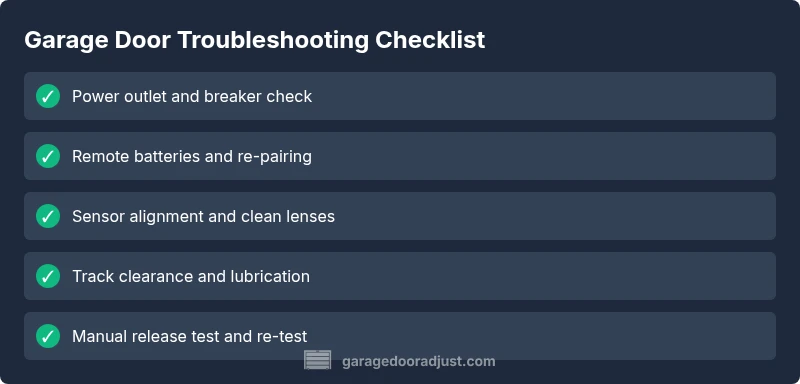
Begin with the least risky steps. Ensure the opener has power at the outlet and that any power strips or surge protectors aren’t interrupting the circuit. Test the wall switch and the remote control by replacing the batteries and re-pairing the remote if needed. Use the manual release handle to disconnect the door from the opener and attempt to lift it by hand—if it’s heavy or sticky, there may be a balance issue or spring problem. Do not force the door to move if you detect resistance; forcing can cause injury or further damage. Finally, clear debris from the tracks and inspect for any obvious obstructions near the hinge area. If the door remains immobile after these checks, move to a deeper diagnostic.
Understanding The Opener, Sensors, And Tracks
A garage door system relies on three interacting subsystems: the opener unit, safety sensors, and the track/roller mechanism. If the opener isn’t activating the door, verify the motor unit is receiving power and that the receiver is functioning. Sensor issues occur when the infrared beams are misaligned or obstructed, triggering an automatic reversal. Track problems show up as binding, unusual sounds, or jerky movement. In the context of "my garage door wont open," you often find a simple misalignment or an obstruction that’s easy to correct. Lubricate moving parts lightly and ensure weatherstripping isn’t catching on the door edge. If the door won’t respond after these checks, a more tailored diagnostic is warranted.
When to Call a Professional and What They Will Do
If your door remains unresponsive after basic checks, professional help is warranted. An expert will verify balance and torsion spring tension, inspect the door’s alignment on the tracks, and test the safety-reverse mechanism. They may also reprogram or replace the remote receiver, reseat safety sensors, or adjust track tension. Don’t attempt to adjust torsion springs yourself; these components store dangerous amounts of energy. For homeowners facing repeated failures or unusual symptoms like grinding noises or uneven door height, scheduling a pro visit is the safest course. The sooner you involve a qualified technician, the lower your risk of injury and expensive damage.
Steps
Estimated time: 45-60 minutes
- 1
Verify Power and Outlet Function
Start by confirming the opener is plugged in and the circuit has power. If the outlet is controlled by a wall switch, ensure the switch is ON. Test with another appliance or device on the same outlet to validate power flow. If there’s no power, reset the breaker and wait a minute before testing again.
Tip: Power issues are the most common cause—don’t skip the basic outlet check. - 2
Check remote and Wall Switch Batteries
Replace batteries in any remotes and re-pair with the opener following the model’s manual. If the wall switch doesn’t respond, test the switch wiring for loose connections at the switch and the receiver. A simple battery swap fixes many no-response problems.
Tip: Keep spare batteries on hand to avoid delays during troubleshooting. - 3
Test the Manual Release
Disengage the opener using the manual release handle and try lifting the door by hand. If it moves smoothly, the issue is likely with the opener’s drive or sensors rather than the door structure. If the door remains stuck, there may be a balance or track problem.
Tip: Never force a heavy door; manual release should move with light effort. - 4
Inspect Sensors and Alignment
Check the safety sensors at the bottom corners of the door for proper alignment and unobstructed beams. Wipe the lenses clean and adjust the sensors slightly if the indicator light is flashing or not steady. Realigning sensors often resolves false reversals that prevent opening.
Tip: Even small misalignments can trigger safety features and stop door operation. - 5
Check Tracks, Hinges, and Rollers
Look for dents, obstructions, or buildup in the tracks. Remove debris, tighten loose screws, and lubricate the rollers and hinges with a light garage-door lubricant. Ensure the door sits evenly in the tracks and glides smoothly without scraping.
Tip: Skip heavy lubrication and use a light, appropriate lubricant to avoid attracting dust. - 6
Test Reassembly and Re-Test
Reconnect power, re-test the door with the opener, and then operate manually. Confirm that the door opens and closes smoothly through its full travel range. If you still can’t open it, stop and contact a professional for a precise diagnosis.
Tip: Document any unusual sounds or moves to share with the technician.
Diagnosis: Garage door won't open
Possible Causes
- highPower supply issue (outlet, breaker, or power strip)
- mediumSafety sensors out of alignment or blocked
- mediumTrack obstruction or debris in rollers
- mediumDoor balance problems or worn springs
- lowFaulty remote receiver or dead battery
Fixes
- easyCheck outlet and circuit breaker; test with another device to confirm power
- easyReplace remote batteries and re-pair the remote to the opener
- easyRealign safety sensors and clean their lenses; ensure path between sensors is clear
- easyClear debris in tracks, tighten hardware, and lubricate rollers lightly
- mediumTest door balance by manual lift; if heavy or binding, stop and call a pro
Got Questions?
What should I do first if my garage door wont open?
Start with power and battery checks, then verify safety sensor alignment. If the door still won’t budge, proceed with the step-by-step guide to diagnose components.
First, check power and batteries, then sensors before moving to deeper checks.
Why does the opener light flash when I try to open the door?
Flashing lights often indicate sensor misalignment or a wiring issue. Realign sensors and ensure the beam path is clear.
A flashing light usually means sensor or wiring trouble.
Is it safe to manually open a stuck garage door?
Manual opening can be safe if you disengage the opener and the door moves freely by hand. If it feels heavy or sticky, stop and call a pro.
Manual release is okay if the door moves easily; if not, don’t force it.
When should I call a professional?
If the door is unbalanced, springs are involved, or the problem persists after basic checks, schedule a professional service.
Call a pro if the door is heavy, unbalanced, or keeps failing after checks.
How can I prevent future garage-door problems?
Regularly inspect tracks, balance, and sensors; keep lubrication light and track clear; replace weak batteries promptly.
Keep up with regular checks and light lubrication to prevent future issues.
What maintenance should I do annually?
Test auto-reverse, inspect springs and cables, clean tracks, and ensure all fasteners are tight.
Do a quick annual check to catch issues before they become problems.
Watch Video
Quick Summary
- Follow a safe, progressive diagnostic flow to pinpoint the cause
- Check power, batteries, and sensors before considering mechanical fixes
- Do not attempt spring or torsion adjustments—call a pro for those steps