How to Get a Garage Door to Close All the Way
Learn a homeowner-friendly, step-by-step approach to fix garage doors that won't close all the way, covering sensors, tracks, balance, and when to call a pro.


To get a garage door to close all the way, start with a safety check, inspect the sensors, test the limit switch, and remove any obstructions from the tracks. If the door still won’t fully close, adjust the opener settings and lubricate moving parts. For persistent issues, check balance and seek professional help if you hear grinding or see damaged springs.
Why a garage door won't close all the way
If you're wondering how to get garage door to close all the way, you're not alone. Many homeowners face closure quirks, and most can be fixed with a systematic approach. According to GarageDoorAdjust, the first place to look is the safety system and limit settings, because these controls tell the opener when to stop the motor. When the safety sensors are misaligned or the beam is dirty, the opener detects an obstacle and reverses before the door reaches the floor. Debris on the tracks, worn rollers, or a door that's out of balance can also prevent the door from latching fully. A balanced door requires the springs and cables to work in harmony with the opener; if one component is weak or aging, the door may settle short of the floor. Understanding these common causes helps you approach the fix confidently and safely.
In practice, most closure issues start with a simple inspection of sensor alignment and track cleanliness. The GarageDoorAdjust team finds that addressing misalignment or obstruction often restored full closure without replacing major parts. Safety should always come first; never bypass safety features or operate a door that feels loose or unstable.
Quick diagnostic checklist for closing issues
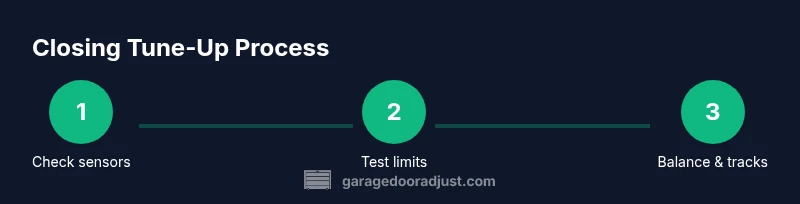
Before you dive into adjustments, run a quick test to identify where the problem lies. Check whether the door closes to within a few inches of the floor and reverses, or stops early with no obvious error message. Inspect the safety sensors up close: clean the beam area with a dry cloth, and confirm both sensors are level and facing each other directly. Look for debris, ice, or leaves on the tracks that could hinder smooth movement. Manually operate the door with the opener unplugged for a simple balance check: if you can lift the door with one hand and it stays put, the balance is likely fine; if it drops or rises, a more serious balance issue exists. Finally, confirm the limits and force are not set too low, which can stop the door short of the floor. This checklist helps pinpoint whether you’re dealing with sensors, obstructed tracks, or a balance problem that requires a professional touch.
Adjusting the opener limit switch and safety sensors
Start by locating the opener’s control panel or power head. Identify the down/close limit screw and gently turn it in small increments while the door is moving to see if closing distance improves. After each adjustment, test the door by closing from a few feet away to observe the final position. On safety sensors, ensure both beams are unobstructed and aligned within inches of the floor; realign if needed and retest using the remote. If the door still won’t close all the way after limit and sensor tweaks, recheck the door balance and attempt a full cycle several times to confirm consistency. Remember to unplug the opener when making sizable adjustments and reconnect only after testing.
Inspect tracks, rollers, and door balance
Carefully inspect each track for dents, warps, or loose screws. Clean tracks with a dry cloth and lubricate the rollers and hinge points with a silicone-based lubricant—avoid petroleum-based products that can attract dust. Check for loose hardware on brackets or tracks and tighten as needed with the correct screwdriver or wrench. If the door sits unevenly or feels heavy to lift, the balance is off. A properly balanced door should stay where you leave it when you test it halfway; if it sinks or rises, the springs or cables may be worn or broken, which is a job for a professional. Never attempt spring replacement or disassembly that risks sudden door movement. Proactive maintenance reduces the chance of repeated closure issues.
When to call a professional and safety warnings
If you’ve completed the basic checks but the door still won’t close all the way, it’s time to escalate to a pro. Problems with torsion springs, cables, or misaligned tracks require specialized tools and training; attempting repairs without proper knowledge can cause serious injury. Schedule service if you hear grinding, see unusual door movement, or notice frayed cables. Regular maintenance—lubricating moving parts, tightening hardware, and testing safety sensors—helps prevent future closure issues. By following a careful, safety-focused approach, you minimize risk and extend the life of your system.
Tools & Materials
- Safety goggles(Protect eyes from dust, debris, and springs.)
- Stepladder(Access tracks and sensors safely.)
- Screwdriver set (Phillips and flat-head)(Tighten screws on tracks, brackets, and hinges.)
- Adjustable wrench(Loosen/tighten nuts on hardware.)
- Silicone-based garage door lubricant(Lubricate rollers, hinges, and tracks.)
- Clean rags(Wipe dust and debris from sensors and tracks.)
- Tape measure(Useful for sensor alignment reference.)
Steps
Estimated time: 45-90 minutes
- 1
Disconnect power and secure the area
For safety, unplug the garage door opener to prevent unexpected movement while you inspect. Stand clear of the springs and the door as you test. Confirm there are no people or pets under the door before starting any adjustment.
Tip: Always have a helper when testing heavy doors; a second person can hold the door steady if it moves. - 2
Test safety sensors and clear the beam path
Wipe the sensor lenses and remove any obstructions within the beam path. Stand about a doorway length away and close the door using the wall switch; the door should reverse when an object is detected. If the beams are misaligned, gently adjust one sensor until both read properly and test again.
Tip: If you see the laser indicators, use them to guide precise alignment. - 3
Inspect and clean tracks and rollers
Check for debris, bends, or gaps in the tracks and ensure rollers roll smoothly. Wipe with a dry cloth and apply silicone-based lubricant to moving parts. Tighten any loose screws on brackets and ensure tracks are parallel.
Tip: Lubricate while door is in the down position to avoid overspray on the floor. - 4
Adjust limit switches and force settings
Locate the down/close limit screw on the opener and make small adjustments while testing. Increase in small increments if the door stops before touching the floor. After each adjustment, run a full close cycle to verify the door ends in the correct position.
Tip: Document your settings so you can revert if needed. - 5
Check door balance and spring condition
With the door unplugged, manually lift the door halfway and release. If it doesn’t stay in place or is very difficult to lift, the balance is off and springs or cables may be worn. Do not attempt spring repair yourself—this is a job for a professional.
Tip: A well-balanced door reduces wear on the opener and improves closing precision. - 6
Reconnect power and run a final test
Plug the opener back in and perform several close cycles from different heights and remote positions. Observe if the door closes fully without reversing early. If it occasionally stops early, re-check the limit and sensor alignment or consider scheduling a professional inspection.
Tip: Record the behavior and any changes to share with a technician if needed.
Got Questions?
What is the most common reason a garage door won't close all the way?
Sensor misalignment or obstruction is the most common cause. The safety system stops the door from closing when beams are blocked or misaligned.
Sensor misalignment or an obstruction is usually the culprit.
How can I test if the safety sensors are working?
Place an object in the sensor beam and try to close the door. The door should reverse or stop. If it doesn't, realign or replace the sensors as needed.
Put something in the beam and observe the door's action.
Can a door balance issue cause incomplete closure?
Yes. An unbalanced door places extra load on the opener and can prevent full closure. Check the balance and springs with caution.
Balance problems can stop a door from fully closing.
Is it safe to adjust torsion springs myself?
No. Torsion springs are dangerous to handle without professional training and tools. Contact a licensed technician for spring work.
Don’t try springs yourself; call a pro.
What should I do if the door stops partway during a close cycle?
Check sensor alignment, limit settings, and track condition. If the problem persists, a professional inspection is recommended.
If it stops mid-close, check sensors, limits, and tracks.
How long should a balance test take?
A quick manual balance test is done by holding the door at halfway; it should stay where you leave it if balanced. If it moves, the balance needs attention.
Hold it halfway; it should stay put if balanced.
Watch Video
Quick Summary
- Identify safety sensor issues first
- Balance and track alignment matter for full closure
- Tighten hardware and lubricate moving parts regularly
- Never attempt spring replacement—call a pro when needed
- Test multiple cycles to confirm full closure