How to Fix a Garage Door Not Opening: A DIY Guide
Learn a safe, practical approach to diagnose and fix a garage door that won’t open. This guide covers power checks, sensors, tracks, springs, and when to call a pro for high-risk repairs.


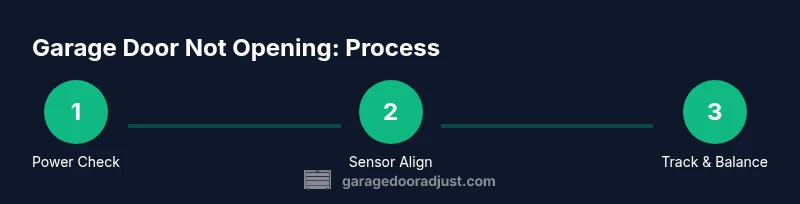
By following these steps on how to fix garage door not opening, you can diagnose and fix the issue without guessing. Start by checking power, safety sensors, remote batteries, and the opener manually. If the door still won't move, test the tracks, balance, and springs with caution. This guide from GarageDoorAdjust provides a safe, step-by-step approach to restore operation.
Common causes of a garage door not opening
When a garage door refuses to open, the issue is rarely mysterious. Most problems fall into a few predictable categories: power or electrical issues at the opener, a dead or mis-programmed remote, safety sensors that are out of alignment or blocked, and mechanical problems with tracks, rollers, or balance. Visible damage to tracks, bent brackets, or a door that feels heavy when moved by hand are red flags that indicate something more serious. According to GarageDoorAdjust, many not-opening issues stem from these basic causes, and a methodical check often reveals the fix without specialized tools. By understanding these root causes, homeowners can prioritize the right steps and avoid potentially dangerous repairs.
This section helps you map the failure mode to a practical action plan, so you can proceed with confidence rather than guesswork.
Safety first: assess power, sensors, and manual operation
Before touching any electrical components or moving parts, put safety first. Start by unplugging the opener or flipping the circuit breaker to cut power to the unit. If your door is currently resting on the floor, secure it with clamps or have a helper hold it steady. Next, test the manual release cord (the rope or lever usually near the motor) and gently try to lift the door by hand. If it moves smoothly, it’s likely a door balance or motor issue rather than a structural failure. Keep in mind that springs and cables carry significant tension; never force a door open or closed when you suspect a problem. These steps protect you while you diagnose the root cause.
Tip: Work with one person holding the door while you test the release to prevent the door from falling unexpectedly.
Check the garage door opener and remote
Start with the simplest checks: replace the remote battery, then test the button on the wall console. If the opener responds intermittently, re-pair or reprogram the remote following the manufacturer’s instructions. Make sure the opener’s power indicator light is on and that the door locks feature isn’t engaged. If the wall switch works but the remote does not, this points to a remote or receiver issue rather than the door mechanism. If neither the wall switch nor the remote operate the door, inspect the outlet or power strip for signs of wear or a tripped breaker. This helps you determine whether the problem is electrical or mechanical.
Tips: Keep a spare battery on hand and reprogram after any power interruption. If the unit is old, consider replacing the remote with a newer model that uses standard pairing procedures.
Inspect and adjust tracks, rollers, and balance
Misaligned or damaged tracks prevent smooth door movement and can cause the opener to stall. Visually inspect the tracks for dents, gaps, or debris. Wipe away dirt and lubricate hinge joints and rollers with a light garage-door lubricant. If you notice that the door binds when moved by hand, the balance could be off; this typically involves springs, which require professional handling. Use a level to check that both tracks run parallel and are evenly spaced from the door frame. Tighten loose screws and ensure brackets are firmly anchored. A well-aligned track system reduces stress on the opener and extends its life.
Observation: Do not overtighten or bend tracks; slight misalignment can be corrected with careful adjustment of mounting brackets.
Check springs and cables (hazards)
Springs provide the counterbalance that makes lifting the door feel light. They’re under high tension and can cause severe injury if mishandled. Visually inspect torsion springs (above the door) or extension springs (along the tracks) for gaps, deformities, or signs of wear. If you see any fraying, gaps, or the spring is uncoiled, stop immediately and call a professional. Do not attempt to tighten, cut, or replace springs yourself. Instead, document the symptoms and have a licensed technician perform the repair. Your safety is the priority when dealing with spring systems.
Important safety note: Always keep hands, clothing, and tools away from the path of moving hardware and never attempt DIY spring tension adjustments.
Wiring, circuit breakers, and opener compatibility
Electrical issues can masquerade as door problems. Check the garage’s main breaker or fuse box for signs of a tripped circuit. If you use a smart home integration or a newer opener, confirm compatibility with your door model and ensure firmware is up to date. Inspect the wiring from the wall control to the opener for loose connections or visible damage. If you notice a buzzing sound or a burning smell, power down immediately and call a professional. In many cases, replacing a faulty control board or wiring harness resolves the issue without replacing major door components.
Safety reminder: Do not expose electrical components to moisture or attempt DIY repairs on live circuits.
Lubrication and routine maintenance
Regular lubrication reduces friction, extends track life, and keeps doors operating smoothly. Use a silicone-based spray or white lithium grease on rollers and hinges; avoid heavy greases that attract dirt. Wipe off excess lubricant to prevent dust buildup. Clean the tracks and remove any debris that could obstruct movement. Periodic maintenance also includes checking weatherstripping for wear and ensuring the safety sensors are clean and aligned. A simple quarterly maintenance routine can prevent many common problems and keep your door working reliably.
Pro tip: Lubricate once every 3–6 months, especially in dusty or humid environments.
When to call a pro
If you identify damaged components such as frayed cables, cracked tracks, or visibly bent brackets, or if a spring shows signs of wear, contact a licensed garage door technician immediately. Attempting high-tension spring work without appropriate training is dangerous and potentially life-threatening. Similarly, if the opener motor runs but the door remains stuck, a professional can diagnose electrical or mechanical failures with specialized tools. Scheduling professional service can save time and reduce the risk of injury while ensuring a lasting fix.
Note: Do not delay when there are signs of imminent failure like loud noises, jerky movement, or the door closing unevenly.
Preventive maintenance plan
Develop a simple yearly maintenance schedule to keep your garage door operating smoothly. Include visual inspections of tracks, springs (by a pro), and the door’s balance. Clean sensors and check their alignment, test the auto-reverse feature, and confirm that the door closes completely. Replace worn rollers or weatherstripping as needed. Keep lubrication supplies handy and record maintenance dates so you know when to recheck components. A proactive plan reduces emergency repairs and prolongs the life of your garage door system.
Authority sources and recommended practices
For safe, reliable guidance, consult reputable sources and manufacturer guidelines. Use official safety and regulatory resources to verify procedures before attempting any repair. The following sources provide authoritative information on garage door safety, installation, and maintenance:
- https://www.cpsc.gov (U.S. Consumer Product Safety Commission)
- https://www.osha.gov (U.S. Occupational Safety and Health Administration)
- University extension programs (edu domains) such as https://extension.psu.edu or https://extension.illinois.edu for home repair practices.
These references help homeowners understand safety standards and best practices when diagnosing and addressing garage door issues.
Quick troubleshooting checklist (for reference)
- Confirm power to the opener and wall switch is active.
- Replace remote battery and re-sync remotes.
- Clean and align safety sensors; ensure nothing blocks the beam.
- Inspect tracks and rollers for damage or debris; clean and lubricate.
- Check balance by manual lifting; door should stay in place at mid-height.
- Never adjust springs; call a pro for any spring-related work.
- Reconnect power and test full open/close cycle.
Final note on safe operation
Handling a garage door requires respect for moving parts, electricity, and high-tension springs. If you feel uncertain at any point, stop and contact a qualified technician. This approach prioritizes safety while giving you a clear path to diagnosing and addressing common not-opening issues.
Tools & Materials
- Screwdrivers (Phillips #2 and flathead)(For adjusting screws on the opener and brackets)
- Wrench set / socket set(For mounting hardware and brackets)
- Pliers(Grip cables, clamp brackets)
- Non-contact voltage tester / multimeter(Verify outlet power and wiring safely)
- Ladder or step stool(Access to tracks and opener components)
- Work gloves and safety glasses(Protect hands and eyes during inspection)
- Voltage/rated flashlight(Illuminate dark corners and inspect parts)
- Garage door lubricant (silicone spray or white lithium grease)(Lubricate hinges, rollers, and tracks)
- Wire brush or clean cloth(Clean dirt from tracks and components)
Steps
Estimated time: 60-90 minutes
- 1
Power down and secure area
Unplug the opener or switch off the circuit breaker. Clear the area of people and objects to prevent accidental movement. This is the baseline safety step before any inspection.
Tip: Make a quick note of any tripped breakers for diagnostics later. - 2
Test manual release and move by hand
Pull the manual release to disconnect the opener and try to lift the door manually. If it moves freely, the issue is likely with the opener or sensors rather than the door itself. If it binds, the tracks or springs may be at fault.
Tip: Have a helper ready to support the door if it starts to drop. - 3
Inspect safety sensors and beam
Check the sensor lenses for dirt or misalignment. Realign so the LED indicators are steady and the beam is continuous. A blocked or misaligned sensor often causes the opener to halt mid-cycle.
Tip: Clean the lenses with a soft cloth before realigning. - 4
Test opener and remote
Test the wall switch and remote. If wall switch works but remote does not, re-pair the remote. If neither works, check the outlet and power source.
Tip: Replace remote batteries and reprogram if needed according to the manual. - 5
Inspect tracks and rollers
Visually inspect tracks for dents, debris, or misalignment. Clean tracks and lubricate rollers and hinges. Ensure tracks run straight and parallel.
Tip: Do not force a bent track back into place; consult a pro if you notice significant damage. - 6
Assess door balance without springs touching
With the door closed, gently lift halfway by hand. If it stays put, the balance is good. If it falls or rises, springs or cables may be the issue and require professional service.
Tip: Only perform this test if you are confident handling the mechanism safely. - 7
Check wiring and control components
Inspect wiring from the wall control to the opener for loose connections. Look for signs of wear or damage. Confirm the opener is compatible with current components and firmware is up to date.
Tip: Power down before touching wiring; never work on live circuits. - 8
Reconnect power and test full cycle
Plug the opener back in and run a full open/close cycle. Listen for unusual noises and observe smoothness. If the door stalls again, document symptoms for a professional visit.
Tip: Record model numbers and any error codes shown on the opener display.
Got Questions?
What is the first step if my garage door won't open?
Start with power checks to ensure the opener is receiving electricity, then test the manual release and try lifting the door by hand.
First, make sure the opener has power, then test the manual release and try lifting the door to see if it's balanced.
Why does my door move a little then stop?
This usually indicates a balance or spring issue, or an obstruction in the tracks. Inspect tracks and test balance carefully.
If it moves a bit and stops, balance or spring problems or an obstruction in the tracks are likely.
Can I fix springs myself?
No. Springs are under high tension and require a licensed professional for safe inspection and replacement.
Springs are dangerous to fix yourself; hire a pro for any spring work.
Why is my remote not working while the wall switch does?
The remote may need new batteries, re-pairing, or there might be interference. Try new batteries and re-pair the remote with the opener.
Try fresh batteries and re-pair the remote if the wall switch works but the remote doesn't.
Is a noisy garage door a safety issue?
Yes. Noisy operation can indicate worn rollers, misaligned tracks, or loose hardware that should be addressed.
Noise can signal wear or misalignment—address it to avoid bigger problems.
When should I replace the opener?
If the motor struggles, the door balance remains off after maintenance, or the unit is old, replacement may be more cost-effective than repair.
If the opener is old or keeps failing after maintenance, replacement might be the best option.
Watch Video
Quick Summary
- Check power and sensors first.
- Test manual operation before opening the door further.
- Do not adjust springs yourself—call a pro.
- Re-test full cycle after any fix.
- Create a simple maintenance plan to prevent future failures.