How to Release a Garage Door Safely: A Step-by-Step Guide
Learn how to release a garage door safely with an emergency release, identify door types, and re-engage the opener. Clear steps, safety tips, and pro recommendations to help homeowners troubleshoot common issues.


According to GarageDoorAdjust, releasing a garage door safely begins with understanding the emergency release and planning for manual operation. This guide explains how to detach the door from the opener, confirm door type, and proceed with a controlled manual release. Before you start, ensure the area is clear, you have adequate lighting, and you can move the door without obstructions.
Understanding the emergency release system
Residential garage doors often operate with an automatic opener connected to a track, balancing system, or a torsion/extension spring setup. The emergency release is a safety feature that lets you disconnect the door from the motor so you can operate manually. The release is typically a lever or a cord attached to a trolley on the rail, or located near the opener housing. When you pull the handle, you sever the connection between the door and the motor, so you regain manual control. Keep in mind that doors with heavy springs may feel difficult to move; do not rely on power when the release is engaged, and keep hands away from moving parts. After release, you control the door’s movement and safety sensors, and you should re-engage the opener only after a full safety check.
Safety considerations before releasing a garage door
Safety comes first. Always clear the area under and around the door, keep children and pets away, and wear gloves if possible. If the door feels heavy or the track looks bent, stop and reassess—attempting to force movement can cause injuries or damage. Stand to the side of the door, not directly in its path, and avoid standing underneath a door that’s raised or unsupported. If you suspect a broken spring, wired components, or a misaligned track, stop and call a professional to avoid a sudden drop or snap.
Different release methods for common door types
Most residential doors use a manual release to disconnect from the opener, but the exact procedure can vary by door type. For standard doors with a ceiling-mounted trolley, locate the emergency release rope or lever attached to the rail and pull it firmly. For doors with torsion springs, the release should still disconnect the door from the opener, but the door may feel heavier to move manually. Extension-spring systems can also be released through the same mechanism, though the door may require more effort to lift or lower. In all cases, ensure you have a stable stance and a firm grip, and avoid sudden jerks that could cause the door to swing.
What to do after the release
Once the door is disconnected, move it slowly by hand to a fully open or fully closed position to stabilize it. If you plan to operate the door later, position it so it won’t drift, and place a temporary prop block under the door edge if needed to prevent accidental movement. Before re-engaging the opener, inspect the track, rollers, and hinges for any damage or obstruction. When you’re ready, re-engage the opener by pulling the release back toward its locked position or by following your model’s re-engagement steps, then test the door with the opener in both directions.
When to call a professional
If you encounter loud noises, unusual resistance, misalignment, visible track damage, or a door that won’t stay in place after release, stop and call a trained technician. A professional can verify spring tension, track alignment, and sensor functionality to restore safe operation. Remember: attempting repairs beyond your skill level can create serious risk. When in doubt, opt for a quick assessment by a pro to avoid injury or property damage.
Tools & Materials
- Ladder or stable stepping surface(use only on flat, stable ground; maintain three points of contact)
- Flashlight(good lighting to inspect tracks and release mechanism)
- Work gloves(protect hands and improve grip)
- Safety glasses(eye protection in case of sudden movements)
- Helper(especially helpful for heavier doors)
- Chair or spacer blocks(propping the door if needed to prevent accidental movement)
- Phone or two-way radio(have a way to call for assistance if needed)
Steps
Estimated time: 15-25 minutes
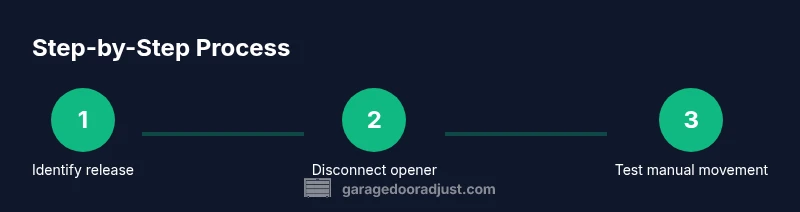
- 1
Identify the emergency release
Stand to the side of the door and locate the emergency release rope or lever on your opener rail or motor housing. Confirm you’re looking at the correct mechanism for your model. If unsure, consult the user manual before pulling.
Tip: Check that the opener rail is not under tension and avoid pulling the release while the door is moving. - 2
Prepare your workspace
Clear the floor area under the door and ensure you have a stable stance. If you have a helper, coordinate movements and confirm you both understand the plan. Have ample lighting and wear gloves for grip protection.
Tip: Never stand directly in the door’s path; keep hands away from hinges and springs. - 3
Release the door from the opener
Pull the emergency release handle or cord firmly to disconnect the door from the operator. Do not yank; use a controlled motion to avoid snapping the rope or lever. Ensure the door can hang freely without the opener’s weight.
Tip: If the door suddenly moves, step away to avoid grab zones and secure your grip. - 4
Move the door manually
With the door detached, grip the bottom rail or the door edge and lift or lower it slowly. If the door feels heavy, stop and reassess—do not force it. Keep the door balanced and controlled, using your legs rather than your back.
Tip: Maintain a steady pace and communicate with your helper if you’re using one. - 5
Stabilize or prop the door
If you need to hold the door in a position, use a wedge block or prop to prevent accidental movement. Avoid placing items on the springs or rails. Confirm the door won’t drift while you plan the next step.
Tip: Only use stable props; avoid improvising with loose objects. - 6
Re-engage the opener and test
Slide the door back toward the opener to re-engage the trolley, or follow your model’s re-engagement procedure. Test the door by operating it slowly in both directions with the opener, then again manually to ensure balance and alignment.
Tip: If the door won’t respond correctly, stop and call a professional.
Got Questions?
What is the emergency release on a garage door?
The emergency release disconnects the door from the opener so you can operate manually. It’s a safety feature to provide control when the opener isn’t functioning.
The emergency release lets you disconnect the door from the opener so you can move it by hand if the motor won’t operate.
Is it safe to release a garage door by yourself?
Yes, with proper precautions: clear the area, wear gloves if possible, and move slowly. If the door is very heavy or the springs feel off, stop and call a professional.
It’s generally safe if you follow steps carefully and have a helper if the door is heavy.
What should I do after releasing the door?
Lower or raise the door slowly, then re-engage the opener following the manufacturer’s instructions. Inspect tracks and sensors before testing again with power.
After releasing, move the door carefully, re-engage the opener, and test it both manually and with power.
Can I release the door if springs are broken?
No. Broken springs require professional service. Do not attempt to bypass safety devices or perform repairs yourself.
If you suspect broken springs, avoid releasing or moving the door and call a pro immediately.
How do I re-engage the opener after manual release?
Return the release to the locked position (or follow your model’s re-engage steps). Then test the door’s movement with the opener and manually to confirm proper balance.
Put the release back in place and test the door with the opener, then by hand to make sure everything works.
Watch Video
Quick Summary
- Identify and locate the emergency release first
- Move the door slowly and maintain control
- Re-engage the opener only after a full safety check
- Call a professional if anything seems unsafe