How to Open a Garage Door Without Remote: A Practical Guide
Learn safe, practical methods to open your garage door without a remote. This comprehensive guide covers wall controls, manual release, troubleshooting, and maintenance to prevent future remote issues.


Bypass your missing remote with safe, tested methods to open a standard garage door. You can use the wall-mounted switch, manual release, or alternative entry options if the opener is malfunctioning. This quick guide gives you step-by-step techniques, safety checks, and when to call a pro if access isn’t possible.
Assessing Why You Might Need to Open Without a Remote
When a garage door won’t respond to its remote, homeowners often face two common causes: a dead or misplaced remote and a malfunctioning opener system. In many cases, the door can still be accessed safely without the handheld device by leveraging built-in controls or the emergency release. This situation is surprisingly common, and knowing the available safe options can save you time and reduce stress. According to GarageDoorAdjust, many households rely on simple, well-documented methods to regain entry when the remote is unavailable or the opener is malfunctioning. Start with low-effort steps, confirm there’s no immediate safety risk, and then move to more involved techniques if needed. Remember: if you feel unsure at any point, pause and seek professional help. The goal is to access your garage door safely and maintain the integrity of the door system for future use. By understanding the typical failure modes and the correct procedures, you’ll reduce the risk of injury or damage to the door or opener.
In this guide, you’ll learn how to use the wall switch, locate and use the emergency release, and steps to reestablish normal operation with the opener. We’ll also cover safety considerations, common mistakes, and maintenance practices to prevent future remote issues. This information is designed for homeowners troubleshooting garage door issues, and it emphasizes practical steps you can take today without specialized tools.
Immediate Safety and Preparation Steps
Before attempting any manual operation, take a moment to ensure your environment is safe and prepared. Clear the area in front of the door; small children and pets should be kept away to prevent accidental injury. If you notice any unusual resistance, creaking, or the door feels unbalanced, stop and reassess—the door could be off its tracks or the springs could be under high tension, which is dangerous to handle without training.
Check that the opener’s power source is functioning. If you have an exterior outlet powering the unit, verify it’s not tripped and that the circuit breaker hasn’t flipped. If there’s a power issue, do not attempt to force the door; instead, restore power and test again. Having a flashlight handy is helpful in dim garages. While you work, wear sturdy gloves to protect your hands from sharp edges, and keep a colleague nearby if the door is heavy or awkward to handle.
If you feel uncertain about any step, skip ahead to the steps that involve the manual release and manual lifting, and consider contacting a pro for a safety check. This approach aligns with best practices for garage door maintenance and minimizes risk of injury or equipment damage. The goal is to restore access without compromising safety or the hardware.
Using the Manual Release: Locate and Use the Release Cord
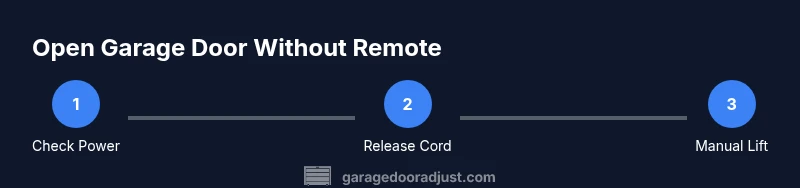
The emergency release cord (often red) is a standard feature for detaching the door from the opener so you can operate it manually. To locate it, look for the cord hanging from the trolley near the top of the door, typically along the door’s track or near the ceiling in the middle of the garage. Pull the cord straight down and away from the door to disengage the door from the opener. This action allows you to lift the door by hand without the motor trying to move it.
Once released, stand to the side of the door to avoid being in the path if the door moves unexpectedly. If your door is heavy, consider enlisting a second person to help you lift. After releasing, ensure the door stays in position and does not roll back unexpectedly if there are any balance issues. The manual release is a safe, standard procedure when you don’t have remote access, provided you follow these precautions. If you hear grinding or feel resistance during release, stop and reassess rather than forcing the door open.
Opening the Door Manually: Safe Lifting Techniques
With the door detached from the opener, you can lift it manually. Stand close to the door with your feet shoulder-width apart and use a smooth, steady motion to lift. Do not jerk or yank, which can destabilize the panels or springs. If the door is heavy, lean on your legs rather than your back and use your core strength to stabilize the lift.
Keep your hands on the door edges, not on the center panels, to maintain balance and prevent bending or damaging the panels. If you have long hair or loose clothing, secure them to avoid entanglement in the tracks. When the door is fully open, test its stability briefly to ensure it can stay in the raised position without assistance. If it drops or sways, stop and seek professional help because the springs or tracks may be compromised. This manual lift is a reliable, low-tech option that works in many typical residential setups.
Reconnecting the Opener and Testing Remote Functions
After you’ve gained access, it’s time to reestablish normal operation with the opener and your remote. Return the door to the closed position gently and ensure there are no obstructions in the path. Reconnect the door to the opener by pulling the emergency release cord once more to re-engage the trolley, then test the wall switch and the opener to confirm it functions correctly. If the remote still does not work, check the batteries in the remote, try re-pairing it with the opener, or refer to the opener’s manual for programming steps.
If you need to re-pair, ensure you’re in pairing mode on the opener and follow the manufacturer’s instructions. For most systems, you’ll press a learn button on the opener and then press the remote button to re-link. Consider replacing the remote’s battery to avoid a recurring issue. Regular maintenance and periodic checks can help prevent future remote failures and keep the system operating smoothly. This approach maintains the balance between manual accessibility and automated convenience.
Troubleshooting If Door Won’t Stay Open or Close Properly
If the door won’t stay open after manual release, it could indicate an imbalance, misalignment, or a problem with the springs or tracks. Addressing these issues often requires a professional assessment, as working with torsion springs can be hazardous. If the door is heavy or makes unusual noises during operation, avoid continuing to use it in that state. Stop and call a technician with experience in door alignment and spring systems.
In some cases, recalibrating the opener after a manual operation can fix small misalignments. Ensure the tracks are clean and free of debris and that hardware is tight. If you notice wear on the cables or tracks, or if the door shifts or binds during movement, discontinue use and contact a pro. This ensures your safety and longevity of the door system.
Maintenance Tips to Prevent Future Remote Issues
To minimize future remote-related problems, schedule regular maintenance like lubricating moving parts, inspecting tracks for obstructions, and checking the door balance. Keep the area around the opener clean and free of dust that can affect sensors and electronics. Replace remote batteries annually or as needed and avoid exposing remotes to extreme temperatures. Consider keeping a spare remote or a smartphone-based control option as a backup to your existing remote.
By integrating routine checks into your annual home maintenance, you can reduce the likelihood of remote failures and extend the life of your garage door system. GarageDoorAdjust emphasizes proactive care as a practical strategy for homeowners who rely on automated openers, alongside safe manual access as a reliable fallback when remote access isn’t available.
Tools & Materials
- Flashlight(Helpful for dim garages; ensures you can see the release cord and track.)
- Gloves(Protect hands from sharp edges and pinch points.)
- Step ladder (optional)(Use if the release point or trolley is overhead.)
- Owner's manual for your opener (optional)(Helpful for specific reprogramming steps or safety warnings.)
- Battery tester (optional)(Check if the remote battery is the likely cause of failure.)
Steps
Estimated time: 15-25 minutes
- 1
Check opener power and wall switch
From inside the garage, press the wall switch and verify the opener responds or motor unit powers on. If there’s no response, inspect the circuit breaker and the outlet powering the opener. Resolve any power issue before proceeding.
Tip: If the outlet has power with a lamp but the opener doesn’t respond, the issue may be the opener itself rather than the power supply. - 2
Locate the emergency release cord
Find the red emergency release cord near the top of the door or along the track. It disconnects the door from the trolley so you can operate manually. Do not yank; keep a firm, steady grip and prepare to guide the door with your body and legs.
Tip: Stand to the side after releasing to avoid being hit by the door if it begins to move unexpectedly. - 3
Disengage the door from the opener
Pull the emergency release cord straight down and away from the door to disengage the door from the trolley. Confirm that the door is freely movable by gently testing its resistance before attempting to lift.
Tip: If you feel stuck or heavy resistance, stop and reassess; you may have a balance issue or a safety mechanism engaged. - 4
Lift the door manually
Stand close to the door with feet shoulder width apart and use an even, steady motion to lift. Do not twist or bend excessively; keep your back straight and use your legs to lift.
Tip: If the door is too heavy for one person, ask for help or pause to consult a professional. - 5
Reconnect and test the opener
Lower the door to the closed position and reconnect the door to the opener by re-engaging the trolley if needed. Test the wall switch and the remote to confirm normal operation. If the remote still doesn’t work, replace batteries or re-pair using your opener’s manual guidance.
Tip: Perform a full cycle (open and close) to confirm reliability before relying on the system. - 6
Address potential issues and plan maintenance
If the door feels unbalanced or makes unusual noises, stop using it and schedule a professional inspection. Regular maintenance including lubrication and track cleaning can prevent future remote issues and keep the door operating smoothly.
Tip: Create a simple maintenance schedule to keep the door in balanced condition and reduce emergency calls.
Got Questions?
Is it safe to open a garage door without a remote?
Opening without a remote can be safe if you follow the offered manual release steps and stay clear of the door’s path. Always inspect for balance or mechanical issues before lifting. If anything feels unsafe, stop and call a professional.
Yes. It’s safe when you follow the manual release steps and stay clear of the door’s path. If you notice any imbalance or noises, stop and seek professional help.
What should I do if the door is heavy to lift after releasing?
A heavy door can indicate an imbalance or spring issue. Do not force it; seek assistance or a professional inspection to avoid injury or damage.
If the door feels heavy, stop and call a professional to assess balance or spring tension.
Can I reprogram the remote after using the manual release?
Yes. Reconnect the trolley, re-test the opener, and follow your model’s pairing instructions to re-link the remote. If your remote still won’t pair, check batteries or consult the manual.
You can reprogram by re-linking the remote with the opener following the model’s instructions. Check batteries if pairing fails.
Why might the door not stay open after manual release?
That typically points to balance or track issues. Stop and consult a professional if the door wobbles, drifts, or won’t hold position for safety.
If it won’t stay open, it might be balance or track problems. Stop and get a professional to check.
Are there alternatives if the door won’t open at all?
If you cannot access the garage, consider contacting a locksmith or a garage door technician for safe entry options and to assess the opener system.
If you can’t access the garage, a professional can help you safely gain entry and inspect the system.
Watch Video
Quick Summary
- Identify safe manual access options first
- Use the emergency release correctly to detach from the opener
- Lift with proper technique to avoid injury
- Re-pair and test the opener to restore full function
- Maintain the system to prevent future remote failures