How to Open a Manual Garage Door: Step-by-Step Guide
Learn to safely open a manual garage door when the opener is unavailable. This guide covers safety, release mechanisms, lifting technique, balance checks, and maintenance tips for homeowners.


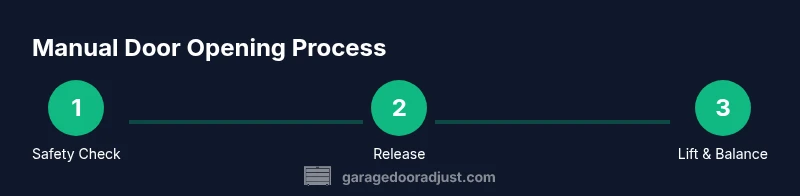
Today you’ll learn how to safely open a manual garage door when the opener fails or is unavailable. Start by ensuring the door is unlocked and the path is clear, then locate and use the manual release, lift with a stable stance, and verify the door’s balance as you raise and lower it. Finish with a quick inspection.
Safety first: prepare and protect yourself
According to GarageDoorAdjust, safety is the top priority when operating a manual door. Before you touch the door, make sure the path is clear of people, pets, and obstacles. Put on protective eyewear and gloves to guard against sharp edges or debris. Never attempt to release torsion springs or adjust cables yourself; those parts are under high tension and can cause serious injury. If you feel uncertain at any point, stop and call a professional. After you finish, re-check the area for hazards and wash your hands. This foundational safety step reduces risk and sets the tone for every action that follows. It also establishes a habit of planning for safety before every manual operation.
Know your door: release mechanisms and types
Most garages use either torsion-spring or extension-spring systems. Manual release handles or cords are typically red and located near the opener or along the door edge. Identify how your system works before attempting operation. If the release is difficult to access or corroded, clean it with a dry cloth and avoid forcing it. This preparation helps prevent accidental releases during lifting. Understanding your door type also informs how you balance and maintain the mechanism over time, reducing surprises during routine checks. GarageDoorAdjust’s practical guidance emphasizes knowing the exact release path before you begin.
Tools and workspace preparation
Before starting, gather the essentials: safety glasses, gloves, a stable ladder if you need extra height, a flashlight, and basic hand tools. Having a silicone-based lubricant and clean rags on hand makes post-opening maintenance easier. Clear the floor, remove clutter inside the garage, and ensure pets and children are away from the doorway. A prepared workspace reduces the chance of slips and injuries. If you have an older door, consider noting model details for parts availability and future service, which GarageDoorAdjust recommends for reliable repairs. Planning ahead minimizes last‑minute scrambling.
Step: disengage the opener and locate the release
To operate manually, first disengage the automatic opener. Locate the release handle or rope (often red) and pull it firmly to disconnect the door from the trolley. If there is a switch, turn it off if accessible. Keep a firm grip and do not yank; a smooth pull prevents the door from swinging unexpectedly. Once disengaged, test the door’s weight with gentle resistance to gauge whether you can safely lift it without the opener attached. Comfort with the release reduces the risk of sudden door movement.
Step: position your body and get ready to lift
Stand with feet shoulder-width apart and knees slightly bent. Tilt the torso slightly and keep your core engaged to protect your back. Keep your hands at a comfortable height on the door edge where you have the most control. Clear the path behind the door in case it shifts toward you when lifting. A stable stance reduces the risk of a slip or strain as you begin to lift. Good posture and a controlled grip are the foundations of a safe manual lift.
Step: lift the door safely and evenly
Grasp the door with both hands at a comfortable height. Use your legs, not your back, to lift, keeping elbows close to your sides for control. Lift slowly until the door clears the floor and remains supported by the tracks. If you encounter resistance, stop and re-check for obstructions. If the door suddenly becomes heavy or starts to swing, stop immediately to prevent injury. Moving slowly and evenly protects you from muscle strain and door imbalance.
Step: verify balance and continue opening
As the door rises, monitor for any sagging, binding, or wobbly movement. A well-balanced door should stay in place when you briefly remove your hands. If it pulls unevenly or feels heavy, do not force it; this indicates a problem that requires professional service. Throughout the process, keep one hand ready to catch the door in case it shifts unexpectedly and never stand directly in the doorway. Regularly checking balance now prevents future jams.
Step: inspect tracks, rollers, and weather seals
With the door open, inspect the tracks for dents, misalignment, or debris. Check rollers and hinges for wear or looseness and ensure weather seals are intact. Wipe away dust and apply a light silicone-based lubricant to moving parts, avoiding over-greasing. If you notice rust, cracks, or missing hardware, stop and seek professional maintenance rather than attempting a DIY fix. A clean, well-lubricated system reduces effort and prolongs life.
Step: close, re-engage safely, and plan maintenance
Lower the door slowly, keeping control with your hands. When fully closed, verify the door seats correctly in the tracks. Re-engage the opener if needed by following your model’s instructions, then test the automatic function briefly. Schedule regular maintenance checks to keep the door operating smoothly. Owning a manual door can be easy and safe when you follow a routine and know when to call a professional, as emphasized by the GarageDoorAdjust team.
Tools & Materials
- Safety glasses(Protect eyes from debris and dust)
- Work gloves(Improve grip and protect hands)
- Stable ladder(Use if door edge is high or you need reach)
- Flashlight(Illuminate release mechanism in dim spaces)
- Flat-head screwdriver(Minor adjustments if needed)
- Phillips screwdriver(Minor adjustments if needed)
- Lubricant spray (silicone-based)(Apply to tracks/rollers after opening)
- Clean rags(Wipe excess lubricant and dust)
Steps
Estimated time: Estimated total time: 15-25 minutes
- 1
Verify area safety
Ensure the workspace is free from hazards and that pets/people are clear of the doorway. Check that lighting is adequate so you can see the release and door edge. A calm start prevents rushed mistakes.
Tip: Have a helper nearby to watch for hazards. - 2
Gather tools and PPE
Collect PPE and the basic tools listed in your plan. Lay them out within arm's reach so you don’t search mid-task. This reduces interruptions and keeps the workflow smooth.
Tip: organizes tools in a suctioned tray or belt. - 3
Locate the manual release
Find the red release handle or rope connected to the trolley. Confirm you are facing a secure, stable surface before pulling. This prevents the door from dropping unexpectedly.
Tip: If you can't locate it, consult your door's manual. - 4
Disengage the opener
Pull the release firmly but smoothly to disconnect the door from the trolley. Do not slam or jerk the handle. Test that the door can move independently without the opener.
Tip: Keep one hand on the door edge as you release. - 5
Position your body
Stand with feet shoulder-width apart and knees slightly bent. Align your hips with the door edge so you can lift with your legs. A stable stance reduces strain and improves control.
Tip: Keep your back straight and core engaged. - 6
Grip and begin to lift
Grasp the door with both hands, near the edge where you have the most control. Begin lifting slowly using the strength of your legs, not your back. Monitor for any resistance or binding as you rise.
Tip: Avoid twisting; move straight up. - 7
Lift and guide the door
Continue lifting until the door clears the floor and sits on the tracks. If the door moves unevenly, pause and re-check for obstructions or misalignment. Maintain a firm grip throughout.
Tip: Keep elbows close to your sides for stability. - 8
Check balance and open further
With the door partially open, test whether it stays in place when you briefly remove your hands. Do not force it if it feels heavy or unstable; this signals a problem.
Tip: If it droops, lower and inspect tracks. - 9
Inspect the doorway and hardware
Once open, visually inspect tracks, rollers, and seals for damage or debris. Clean as needed and apply a light lubricant to moving parts. Avoid over-lubrication which can attract dust.
Tip: Look for loose screws and tighten if safe. - 10
Re-engage and test
Lower the door slowly, then re-engage the opener following your model’s instructions. Test the automatic function briefly to confirm proper operation. Plan regular maintenance to prevent future issues.
Tip: Record the date of maintenance for reference.
Got Questions?
What should I do if the door won’t budge after I release the manual release?
If the door remains stuck, stop and check for obvious obstructions or binding in the tracks. Do not force the door; forcing can cause injury or damage. If the door remains immovable, contact a professional.
If the door won’t budge after releasing, stop and check for obstructions. Don’t force it—call a professional if it still won’t move.
Is it safe to lift a heavy manual garage door by myself?
A heavy or unbalanced door can cause injury. If it feels unusually heavy or unbalanced, stop and seek professional assistance rather than forcing it.
If the door feels heavy or unbalanced, don’t try to lift it alone—get professional help.
Should I lubricate the torsion springs or cables when opening manually?
Do not lubricate torsion springs or cables. Lubrication is for tracks and rollers only. Winding springs require specialized service by a professional.
Do not lubricate springs or cables; lubrication is for tracks and rollers only, and springs need professional service.
How often should I perform manual door maintenance?
Perform a quick check quarterly and a full lubrication and inspection at least once a year. More frequent maintenance benefits older or heavily-used doors.
Do a quick quarterly check and a full annual maintenance. More often if you use the door a lot.
What if the door moves unevenly after opening?
Uneven movement indicates misalignment or wear. Stop using the door and contact a professional for a thorough inspection and adjustment.
Uneven movement means something’s off—stop and call a professional for inspection.
When should I call a professional for a manual door issue?
If you encounter significant resistance, uncertainty about the mechanism, or visible damage, it's safer to call a professional rather than attempting risky DIY fixes.
Call a professional if you feel unsure or see damage. Safety comes first.
Watch Video
Quick Summary
- Clear the area and unlock before starting
- Use the manual release and lift with your legs
- Check balance and track condition after opening
- Lubricate and inspect for safe ongoing operation