How to Put a Garage Door in Manual: Step-by-Step Guide
Learn how to safely put your garage door in manual mode, disengage the opener, and operate it by hand during outages or opener issues. This expert guide from GarageDoorAdjust covers tools, safety, steps, tips, and when to call a professional.


Learn how to put your garage door in manual mode safely by disengaging the opener, then operate the door by hand. This skill is essential during power outages or opener malfunctions. Follow this step-by-step guide to locate the release, disengage correctly, move the door, and re-engage the opener when ready.
Why manual mode matters
During a power outage or when the garage door opener isn’t functioning, being able to put the door in manual mode is a safety-critical, practical skill for homeowners. The GarageDoorAdjust team emphasizes that knowing how to disengage the opener and operate the door manually reduces frustration and keeps access to your garage available. According to GarageDoorAdjust, practicing the disengagement process with your door in a safe, controlled environment helps prevent injury and damage. While it may feel daunting at first, a calm, methodical approach minimizes pinching hazards and ensures you have a reliable way to open or close the door until the opener is restored or repaired. This knowledge also supports you if you ever need to transport the door or perform mid-cycle adjustments without power.
Understanding release mechanisms across door types
Garage doors come in several configurations, and the release mechanism can look different depending on the setup. For most sectional doors with torsion or extension springs, you’ll encounter a release cord (often red) that connects to the trolley on the opener. Some wall switches or panels have a lever you can pull; others use a simple pull rope. The exact path to the release depends on your model and installation. Regardless of type, the goal is to separate the door from the opener so you can move it manually without the motor assisting. If your door has a different setup, consult the owner’s manual for the precise release location and procedure.
Safety first: essential precautions
Safety should guide every manual operation. Clear the area around the door—remove vehicles, pets, and obstacles. Stand to the side of the door, not in its path, and keep hands away from the tracks and spring areas. If the door feels heavy or unbalanced, stop and reassess rather than forcing it. Wearing sturdy gloves can protect your hands from rough metal edges, and working with a helper can provide additional safety for larger doors. If you notice frayed cables, damaged tracks, or obvious spring wear, stop and call a professional rather than attempting repairs yourself.
How to locate the release: common placements and clues
Most release mechanisms are near the top of the door or on the opener itself. Look for a red cord with a handle or a lever on the trolley or track side. On some models the release is a small button you press or a switch you flip. If you cannot locate the release, check the owner’s manual or contact the manufacturer. In a few cases, the release is behind a panel on the opener housing. Take your time to identify the correct mechanism to avoid damaging the door or the opener.
How to operate doors manually once disengaged
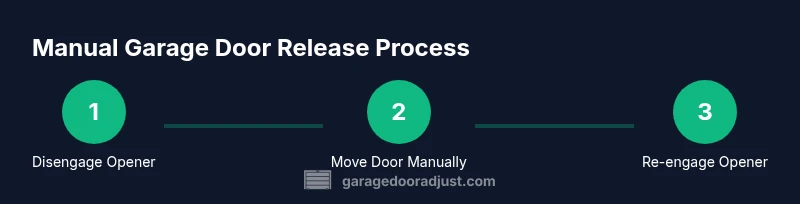
With the release engaged, gently move the door by hand to the desired position. Keep your palms on the door edge and distribute effort evenly to avoid sudden drops. If the door sticks or binds, stop and inspect for obstructions or misaligned tracks. Do not slam the door or attempt to force it along a bent track. When you’re finished, return the door toward the fully closed position before re-engaging the opener if power has been restored.
Re-engaging the opener after manual use
Re-engaging typically requires realigning the trolley with the opener’s carriage and re-coupling the release mechanism. In many systems, you will close the door completely and then re-engage by following the model-specific steps—often returning the release handle toward the opener or pulling the manual release back to its original position. After re-engaging, test the door with the wall switch or remote to ensure the opener operates normally. If you’re unsure, consult the manual or contact a technician; improper re-engagement can harm the opener or the door.
When to call a professional
If the door is unusually heavy, unbalanced, or you notice damaged springs, cables, or tracks, stop and call a professional. Manual operation is safe for most routine situations, but damaged hardware changes risk profiles significantly. If you’re uncomfortable with any step or cannot locate the release, seeking expert help is the safest option. Regular maintenance by a pro reduces future outages and extends the life of your system.
Tools & Materials
- Ladder(Stable, tall enough to reach the release handle safely.)
- Work gloves(Protect hands from pinch points and rough edges.)
- Flashlight(Ensure visibility under fixtures or cloudy garage lighting.)
- Owner's manual (optional)(Helpful if release location varies by model.)
- Phone or camera (optional)(For reference or to contact help if needed.)
- Safety glasses (optional)(Extra eye protection in dusty or busy garages.)
Steps
Estimated time: Estimated total time: 5-10 minutes
- 1
Locate the release mechanism
Identify the correct release for your opener, typically a red cord or a lever near the top of the door or on the opener itself. Confirm whether your model uses a trolley-release or a wall switch. This step ensures you disengage safely without forcing components.
Tip: If you’re unsure, pause and consult the manual before pulling any release. - 2
Prepare the area and helper if needed
Clear the area around the door and set up your ladder in a stable position. If the door is heavy, enlist a second person to assist and guide the door after disengagement to avoid sudden movement.
Tip: Stand to the side of the door rather than in its path to avoid pinch points. - 3
Disengage the opener
Pull the release handle downward (or toward the opener, depending on model) until the trolley releases from the carriage. Maintain a controlled, steady motion and never yank the cord.
Tip: Keep fingers clear of the tracks and moving parts during disengagement. - 4
Move the door manually
With the door free, use both hands to lift or lower it slowly. Balance the door and avoid forcing it; if it sticks, stop and inspect for obstructions or misalignment.
Tip: Test the door at several points along the track to ensure smooth movement. - 5
Re-engage the opener
Close the door completely if possible, then restore the connection between the door and the opener by re-coupling the release mechanism or following your model’s re-engagement steps. Verify the trolley is seated and ready for operation.
Tip: If this step isn’t clear, consult the model’s manual to avoid misalignment. - 6
Test operation and safety check
Power on the system (if it was unplugged) and test the door with the wall switch and remote. Listen for proper click and ensure the door moves smoothly without bouncing or binding.
Tip: Always test in a clear area and watch for any unusual noises.
Got Questions?
Do I need to unplug the garage door opener to disengage manually?
No. You typically disengage the trolley with the release handle attached to the door or track. Unplugging is optional and not required for disengagement.
Usually you don’t need to unplug the opener; use the release handle to disengage.
Can I manually operate any garage door?
Most sectional doors with springs can be moved manually, but weight, balance, and spring condition affect safety. If in doubt, stop and consult a professional.
Most doors can be moved manually, but if it’s heavy or unbalanced, call for help.
What if I can’t find the release handle?
Look for a red cord or lever near the top of the door or opener. If missing, check the user manual or manufacturer’s website for guidance on your model.
Look for the red cord or lever, or check the manual for your model.
How do I re-engage after manual operation?
Close the door fully and re-engage the trolley according to your model’s steps. Then test with the wall switch to ensure normal operation.
Close the door and re-engage as your model specifies, then test with the switch.
What safety steps should I follow?
Keep hands clear of tracks and springs, stand to the side, and avoid forcing the door. If anything feels off, stop and inspect or call a professional.
Keep clear of pinch points and don’t force the door.
When should I call a professional?
If the door is heavy, imbalanced, or if you notice damaged springs, cables, or tracks, seek professional service. Regular maintenance reduces risk and extends life.
Call a pro if you see worn springs or damaged parts or if you're unsure.
Watch Video
Quick Summary
- Identify the release mechanism before you need it.
- Disengage smoothly to prevent door drift.
- Test manual movement in a clear area.
- Re-engage the opener only after the door is fully closed and secure.