Manual Garage Door Opener: Use, Override, Maintain
Discover how to safely operate a manual garage door opener, override it during power outages, and perform basic maintenance. Practical steps, safety tips, and troubleshooting to keep your garage accessible.


A manual garage door opener allows you to lift or lower a garage door without electricity by using a hand crank or external pull rope. This concise guide gives you the essential steps and safety checks to handle the door during outages.
Why a Manual Garage Door Opener Matters
According to GarageDoorAdjust, a manual garage door opener provides a reliable fallback when electricity is out or the automatic system malfunctions. Your home access should never be entirely dependent on power, especially during storms or outages. The GarageDoorAdjust team found that homeowners who practice basic manual operation stay safer and regain entry faster when the opener fails. This guide explains how to use and maintain a manual option without compromising safety or convenience. By understanding the core concepts, you can reduce emergency stress and keep your garage usable in a pinch.
Key takeaway: a well-understood manual option keeps your home accessible even when the power is unavailable.
What Is a Manual Garage Door Opener?
A manual garage door opener is any device or mechanism that allows you to lift or lower the door without relying on the electric motor. In most cases, this means a hand crank, a pull cord, or a lever that disengages the opener from the door. Manual operation is not only a fallback during outages but also a useful skill when you need to perform quick maintenance or troubleshooting. This section covers common configurations and how they interact with your existing tracks, springs, and safety sensors.
For homeowners who prefer redundancy, a properly configured manual system can reduce downtime and frustration during power interruptions.
Safety First: Before You Touch the Door
Safety should always come first when dealing with heavy doors and high-tension springs. Before attempting to move the door by hand or test the override, clear the area of people and pets, wear gloves, and stand to the side of the door rather than in its path. Make sure children and pets are kept away, and never place hands under the door as it moves. Inspect the door and hardware for obvious damage or obstruction. If anything feels off, contact a professional rather than forcing movement.
This is not a casual task; improper handling can cause injury or damage. The primary goal is to verify safe conditions before engaging any manual mechanism.
How to Locate and Use the Manual Override
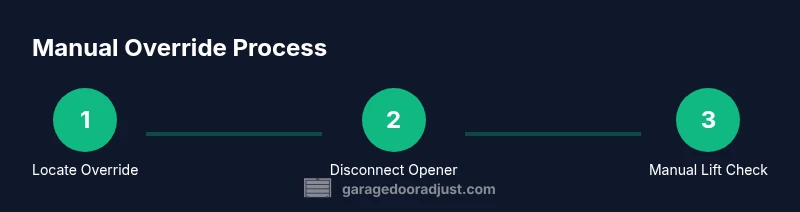
Most manual overrides are a red pull cord or a lever connected to the opener rail. Locate the override at the ceiling mount or near the control panel. When you pull the cord or switch the lever, the door disconnects from the motor, allowing you to lift and lower the door by hand. Always test the override in a controlled manner and ensure the door remains supported as you work.
If the door feels heavy or balks at movement, stop and reassess. The issue could be a misaligned track, a stiff hinge, or a spring problem that requires professional attention. After disconnecting, lower the door slowly to confirm balance and smooth operation.
Common Issues and Troubleshooting Without Power
Without power, common issues include a stiff track, misaligned rollers, or rusted hinges. Listen for unusual creaks, and check for obvious obstructions along the tracks. If the door sticks at any point, do not force it; instead, disengage and inspect the hardware. In many cases, lubrication or minor alignment adjustments can restore smooth operation. If the door falls open or slams shut, this may indicate a balance issue with the springs, which is dangerous to adjust yourself.
Maintenance Basics for a Manual System
Regular maintenance helps a manual system stay reliable. Periodically lubricate hinges, rollers, and track joints with a silicone-based lubricant. Wipe away excess to prevent dust buildup. Inspect weather stripping and seals to prevent moisture intrusion, which can accelerate wear. Keep the rails clean and free of debris, and test the override annually to ensure it still disengages smoothly. Document any adjustments so you can notice trends over time and plan professional service when needed.
Upgrading or Replacing Components: What to Consider
If your manual system feels outdated or unreliable, consider upgrading to a more resilient setup that still offers a manual override. Look for sturdier tracks, reinforced hinges, and a clearly labeled override mechanism. When deciding on replacements, prioritize compatibility with your current door type (panel, sectional, or tilt) and the door weight. A pro can help with evaluating balance and spring health to ensure safe operation under load.
What to Do Next and How to Practice
Practice makes this skill second nature. Schedule a quarterly drill to disengage the opener, lift the door manually a few inches, and re-engage the trolley. This builds familiarity and reduces hesitation during actual outages. Keep the necessary tools nearby and review your manufacturer’s guidelines for your specific model. The goal is a safe, quick response that preserves accessibility without compromising safety.
Tools & Materials
- Stepladder(Stable, 2-3 steps for reach near ceiling components)
- Flashlight(Bright, handheld for low-light situations)
- Work gloves(Grip and protect hands during manual operations)
- Adjustable wrench(For loosened bolts or brackets (if needed))
- Pliers(Optional for pin removal or grip assistance)
- Owner's manual for your model(Locate override location and safety labels)
- Rags or shop towel(Clean any debris from tracks)
Steps
Estimated time: 60-90 minutes
- 1
Locate the manual override
Identify the override point on your opener. It’s usually a red cord or a lever near the ceiling or at the motor head. Note its exact position before attempting any action.
Tip: Take a photo of the override location for quick reference later. - 2
Prepare the area
Clear the space beneath the door and around the tracks. Ensure pets and kids are away. Have a helper available if the door is heavy to lift.
Tip: Wear gloves and stand clear of the door path when testing movement. - 3
Disconnect the opener
Engage the override to disconnect the door from the motor. This frees the door so you can move it by hand without the opener’s force.
Tip: Test the manual ailment by attempting a gentle lift after disconnecting. - 4
Check door balance by hand
Lift the door to about shoulder height and hold. If it doesn’t stay in place, the springs or balance system may need adjustment by a professional.
Tip: If it drops when you release, stop and call a pro. - 5
Open and close slowly by hand
Move the door smoothly along the tracks. Listen for resistance or grinding and stop if you feel binding.
Tip: Do not slam; controlled movement reduces risk of damage. - 6
Lubricate moving parts
Apply silicone-based lubricant to hinges, rollers, and tracks. Wipe away any excess.
Tip: Lubrication reduces friction and prolongs life of components. - 7
Re-engage the opener
Lower the door, then re-engage the trolley with the opener if you plan to use the electric function again.
Tip: Test the wall button and remote to confirm proper operation. - 8
Test safety features
Ensure any safety sensors and safety edges function properly after re-engagement. Clean sensors and recheck alignment.
Tip: Misaligned sensors can cause nuisance beeps or safety shutdowns. - 9
Document and schedule maintenance
Record what you did and when. Set a reminder for periodic checks and potential professional inspections.
Tip: A simple log helps catch issues before they become major repairs.
Got Questions?
What is a manual override on a garage door opener?
The manual override disconnects the door from the motor, allowing you to lift or lower the door by hand. Use it during power outages or opener malfunctions and re-engage when ready.
The manual override disconnects the door from the motor so you can operate it by hand during outages or when the opener fails.
How do I know if my door is properly balanced?
A balanced door stays where you lift it to about mid-height. If it drifts up or down, the springs or tracks may be out of spec and require a professional service.
If the door stays in place when you test it mid-height, it’s balanced; if it moves on its own, call a pro.
Can I operate the door manually during a power outage?
Yes, you can operate it manually after disconnecting the opener. If you feel resistance or danger, stop and seek professional help.
Yes—disconnect first, then lift by hand, but don’t force parts that feel stuck.
How often should I lubricate the moving parts?
Lubricate moving parts as part of regular maintenance, focusing on hinges, rollers, and tracks with a silicone-based lubricant.
Lubricate moving parts during routine maintenance to keep everything moving smoothly.
What safety precautions should I take with the manual override?
Stand clear of the door, wear gloves, and avoid placing your body under the door while it’s moving. If you feel unsure, pause and call a pro.
Stay clear of the door path, wear gloves, and don’t put your body under the door when it moves.
Is DIY repair safe for a garage door?
Non-structural maintenance can be done by homeowners, but major components like springs and cables require a licensed professional.
You can handle some upkeep, but avoid working on springs or cables yourself.
Watch Video
Quick Summary
- Learn how to safely disengage the opener for manual operation
- Regularly inspect balance, tracks, and hardware
- Lubricate moving parts to extend life
- Practice a quick, safe manual test during outages