What to Do If a Garage Door Opener Is Stolen: A Quick Guide
Learn immediate steps, security tips, and replacement options if your garage door opener is stolen. A practical homeowner guide from GarageDoorAdjust with safety-focused, step-by-step instructions.


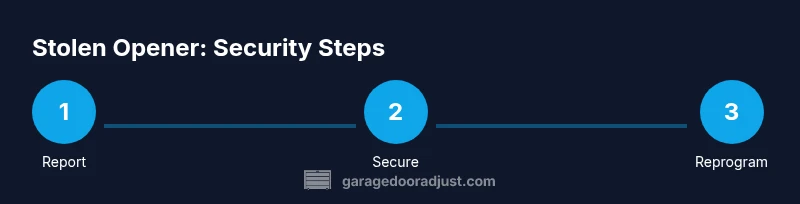
To handle a stolen garage door opener, act quickly to prevent unauthorized access. Immediately report the theft to local police, secure the property, and detach or disable all remotes. Reprogram the opener and any keypads to a new code, and replace or reset connected smart devices. Then contact a professional for secure replacement and installation.
Immediate actions after theft
If you discover your garage door opener has been stolen, the first minutes matter. The primary goal is to prevent unauthorized access and to preserve evidence for authorities and your insurer. According to GarageDoorAdjust, prompt and deliberate actions dramatically reduce the risk of a break-in and make the reconfiguration process smoother. Start by contacting your local police to file a theft report, then secure the area around your garage and home. If your opener is still powered, switch off the unit at the breaker to cut power to the motor and prevent remote activation. Do not attempt to chase or confront a thief; instead, focus on securing entry points and gathering information. Finally, note the time, location, and any details you remember about the theft for future reference.
Gather information and document evidence
Collect as much information as you can while remaining calm. Write down the exact location and time you noticed the theft, and note any suspicious activity or persons nearby. Gather model numbers, serial numbers, and photos of the opener and any remotes you have. If you have a smart opener or app-linked devices, capture account emails and device IDs. Keep receipts, warranties, and proof of ownership in a secure place. Document the scene with photos of the garage door hardware and the keypad area. This information will be vital for both police reports and insurance claims. Remember, the more precise your notes, the easier it will be to prove ownership and request replacements.
Secure access: reprogramming and disabling access
The core defense after theft is to make sure the thief cannot re-enter using any previously paired remotes or keypads. Power down the garage door opener and disconnect it from the network if possible. Reprogram or reset the opener to a new rolling-code, then re-pair or replace remotes and any wall keypads. If your system supports it, remove all linked devices from your account and disable remote access via the mobile app. After reprogramming, test every remote and keypad to confirm that old codes no longer operate the door. This step is essential to close the security gap created by the theft.
Replacing remotes and keypad options
After securing access, plan to replace the stolen remotes and add a fresh keypad or wall console. Choose rolling-code remotes and ensure compatibility with your specific opener model. Consider upgrading to a keypad with multiple user codes and a strong privacy mode to prevent unauthorized re-pairing. If your opener supports it, enable app-based access with two-factor authentication. Keep spare remotes in a secure location, and never leave them in cars or unattended areas where a thief could grab them. A physical security upgrade, like a lockable wall mount or safe storage, can prevent future loss.
Safeguard your home and notify others
Beyond reprogramming, enhance your security posture: install or verify outdoor lighting, consider a door sensor or camera near the garage, and share information with trusted neighbors so they can alert you to suspicious activity. If you live in a community with an HOA, inform them of the theft and any planned security upgrades. Review insurance coverage for theft-related losses and understand what documentation is needed for a claim. Keeping neighbors informed reduces the chance of a double loss and improves overall security in your block.
Insurance, police report, and record-keeping
File a formal police report and contact your homeowner's or renter's insurance company to report the theft. Provide the incident number, a list of stolen items (openers, remotes, and keypads), and any documentation you collected. Ask about reimbursement for reprogramming costs, replacement hardware, and any security upgrades. Maintain copies of police reports, insurance correspondence, and receipts for replacements. If you receive any temporary housing assistance or cost reimbursements, document those as well. Staying organized helps streamline claims and future audits.
Prevent future incidents: best practices
Use this event as a learning opportunity. Store spare remotes in a secure, locked location and keep ownership documents accessible only to trusted household members. Maintain strong, unique passwords for any connected devices, and enable push notifications for unauthorized app access. Schedule regular checks of your opener’s security settings, and consider a professional security audit if you notice any suspicious activity in your neighborhood. Regular maintenance and awareness are your best defense against theft and tampering.
Choosing a professional for reinstallation and upgrades
If you decide to upgrade or replace your opener, hire a licensed technician with experience in garage door systems and smart integrations. Ask for a written estimate, verify warranty terms, and request a demonstration of the reprogramming process. A reputable pro will ensure proper calibration, safety reversal testing, and secure pairing of all remotes and keypads. Always verify credentials and read reviews or references. A professional installation reduces the risk of future failures and ensures long-term security.
Tools & Materials
- Police report (digital and physical copies)(Keep ready for claims and police follow-up)
- New rolling-code remote kit(Ensure compatibility with your opener model)
- Wall keypad or solid-state console(Prefer models with secure pairing features)
- Reprogramming tool or reference to manual(Use official instructions or manufacturer support)
- Owner verification documents(Proof of ownership for replacement and claims)
- Flashlight and camera(For documenting the scene and evidence)
- Lockable storage for remotes(Prevents future misplacement)
- Smart security devices (camera, sensor)(Optional upgrades to monitor the area)
Steps
Estimated time: 75-105 minutes
- 1
Call police and file a theft report
Notify local law enforcement about the theft and provide all known details. This creates an official record and can help with investigations and insurance claims. Do not rely on memory alone; write down what you observed and any suspect activity.
Tip: Keep the report number handy for later insurance submissions. - 2
Document theft details and scene
Take clear photos of the garage door hardware, and note any missing items, serial numbers, and model numbers. Save screenshots from any linked apps showing access logs or device IDs. A well-documented timeline speeds up both police and insurance processes.
Tip: Photograph the area from multiple angles to capture all relevant details. - 3
Power down and disable access
Turn off power to the opener at the circuit breaker to prevent remote activation. Disconnect the opener from the network if it’s a smart device, and disable any remote access in the app.
Tip: Do not attempt to move the garage door manually while power is blocked. - 4
Reprogram remotes and keypad
Reset the opener to a new rolling code and re-pair remotes and the keypad. If you’re unsure, consult the manufacturer manual or contact a technician for proper pairing procedures.
Tip: Test each remote and the keypad to ensure old codes no longer work. - 5
Plan replacement and security upgrades
Choose rolling-code compatible hardware and consider adding a keypad with user-specific codes or two-factor app access. Decide whether you want to upgrade to a smarter system with camera integration or motion alerts.
Tip: Keep spare remotes in a locked location and avoid leaving them in vehicles. - 6
Test operation and confirm security
Open and close the door to verify proper safety reversing and sensor alignment. Confirm that you can control the opener via the app and that notifications function correctly.
Tip: Document test results and retain logs for insurance. - 7
Notify neighbors and monitor ongoing risk
Inform trusted neighbors about the incident so they can report anything unusual. Review home security practices and implement regular checks on all entry points.
Tip: A neighborhood watch approach reduces future theft risk.
Got Questions?
What should I do first if my garage door opener is stolen?
Immediately contact local police to file a theft report and secure the garage area. Disable all remotes and keypads, then begin the reprogramming process for a new rolling code. This quick sequence minimizes risk and creates an evidence trail for claims.
First, call the police and secure the area. Then disable remotes and reprogram the opener to a new code.
Will I need a professional to reprogram the opener?
Many openers can be reprogrammed by homeowners using the manual, but a technician can ensure correct pairing and safety tests. If you have a smart system, professional setup may be recommended to verify app access is secure.
You can reprogram it yourself with the manual, but a professional ensures proper pairing and safety checks.
Can I still lock or secure my door after theft?
Yes. Manually securing the door and reinforcing other entry points can reduce risk while you address the opener. Consider temporary manual operation and strengthen lighting and cameras around the garage.
You can manually secure the door and improve lighting and cameras while you fix the opener.
How do I report theft for insurance purposes?
File a claim with your insurer, attaching the police report, receipts for replacements, and documentation of the theft. Providing a detailed incident timeline improves the likelihood of coverage.
File a claim with your insurer using the police report and replacement receipts.
What if I can't locate the opener models or serial numbers?
Provide whatever identifying details you have (photos, approximate model numbers, purchase dates). The insurer and technician can often work with limited information, but having as much as possible helps.
If you can't find serials, share photos and approximate model numbers to help with claims and reprogramming.
Is it safe to wait for a replacement?
Waiting increases risk of unauthorized access. If you cannot complete reprogramming immediately, use manual securing measures and temporary locking strategies until a replacement is installed.
Waiting can be risky; secure things manually until you replace the opener.
Watch Video
Quick Summary
- Report theft promptly to authorities and insurer.
- Reprogram and upgrade access controls to close security gaps.
- Document details thoroughly for claims and any investigations.
- Plan and implement ongoing security improvements to prevent recurrence.