What to Do If You Lost Garage Door Opener: A Step-by-Step Guide
A homeowner-friendly guide to regaining garage door access after losing the opener. Learn manual entry, reprogramming remotes, keypad setup, and safety tips to prevent future lockouts.


If you’ve lost your garage door opener, you can regain access and restore control by following a few safe, proven steps. This quick answer outlines the actions you’ll take: locate a usable manual entry method, secure the area, and prepare to reprogram remotes or replace a keypad. You’ll also learn when to call a pro for complex issues.
What to do if you lost garage door opener: immediate safety and access
If you’re wondering what to do if you lost garage door opener, your priority is safety and gaining secure access. According to GarageDoorAdjust, the first steps after losing the opener are safety-first and access-oriented. Start by locating the manual release and preparing a clear workspace. This sets the stage for a controlled manual entry and prevents accidental operation of the door while you troubleshoot. If weather or lighting is poor, use a flashlight and work with a helper to ensure the door stays balanced. Document the door’s current position with a quick note or photo so you can resume normal operation later. Keeping children and pets away from the door during this process minimizes risk and prevents unintended movement.
Verify the manual release and plan your approach
Manually releasing the door typically involves a cord or lever connected to the trolley or trolley release mechanism. Confirm you’ve located the release handle, rope, or lever according to your model’s manual. If the release is inside a recessed compartment, retrieve it carefully and keep the door slightly supported as you detach the opener from the door. The goal is to create a safe path for the door to move freely by gravity or light manual effort, without forcing the mechanism. This step is critical because forcing the door can bend tracks, damage springs, or injure you. If you’re unsure, pause and review the user manual or seek guidance from a professional.
Open the door manually with proper support
With the release engaged, you should be able to slide the door along its tracks manually. Do not yank upward; apply smooth, steady pressure and keep your feet planted on a stable surface. Use a sturdy ladder if you must reach higher portions of the door, and ensure the door is balanced before you attempt to move it further. If the door is heavy or binding, stop and reassess—calling a pro is the safest option. This step ensures you can regain entry to your garage, which is essential for retrieving tools, keys, or other items stored inside.
Power status and model information: what you need to reprogram
Power down the operator only if you’re working near the electronics and it feels safer to do so. Locate the opener’s model and serial number on the unit, then check if you have a spare remote or keypad. If your remote battery is dead or the keypad is unresponsive, you’ll need to reprogram or replace them. Having the model number handy makes it easier to find the exact reprogramming procedure in the user manual or on the manufacturer’s site. This information helps you avoid mixing up remotes or accidentally re-pairing to a different system.
Test remotes and keypad to confirm what works
Check any remaining remotes to see if they respond when you press the button from a short distance. If a keypad exists outside the garage, determine whether it still communicates with the opener. If your remotes still don’t work after attempting reprogramming, you may be dealing with a failed receiver, a dead battery in the remote, or a need to reset the opener’s memory. A quick diagnostic test can save time and help you decide whether to continue troubleshooting or call a pro. Always confirm the door’s closed position after testing to avoid a partial open scenario.
Reprogram remotes and keypad: safe, model-specific steps
Using a spare remote or keypad is often the simplest path to restoring control. Follow the exact sequence for your model: power the unit, locate the learn button, press and hold it to initiate pairing, then press the remote button or enter a code on the keypad. Do this with the door in a known, safe position and clear of obstructions. If you use a keypad, ensure you’re entering a secure four-digit code or a model-specific code as described in the manual. Avoid sharing codes publicly and consider changing codes after you regain control.
Resetting and reseating: when a full memory reset is needed
Some openers benefit from a full memory reset, which erases all paired remotes and resets the code to factory defaults. This is a strong option if remotes can’t be reprogrammed or if you suspect the memory has become corrupted. After a reset, re-pair all remotes and keypad entries carefully in a controlled sequence. This step minimizes the chance of future misalignment and ensures the system functions with all intended controls. Check for any LED indicators or beeps that confirm successful pairing.
When to call a professional: signs you should not DIY
If the door binds, leaves or rises unevenly, or if you suspect a spring, cable, or track misalignment, it’s safer to stop. Garage doors under load can fail suddenly and cause injuries or property damage. If you have no manual release, or the door can’t be moved at all even after following the steps above, a professional inspection is warranted. A trained technician can diagnose issues with the torsion spring, tracks, or the opener’s logic board and perform necessary repairs with proper safety protocols.
Long-term prevention: keeping access reliable
Once you’ve regained access, implement a simple maintenance routine to reduce future lockouts. Regularly test remotes, replace batteries before they fail, and record the pairing steps in a safe location. Consider adding a keypad outside your garage and labeling the release mechanism for quick access in an emergency. Finally, schedule periodic inspections of the tracks, rollers, springs, and hardware to ensure the system remains balanced and safe, particularly in extreme weather.
Final checks and next steps before closing the door
Before you resume normal use, recheck the door’s closed position with the opener test and verify that the door responds to all controls. Confirm manual release works again after reassembly and ensure the door remains balanced on its tracks. If you observe any abnormal sounds or resistance during movement, stop and consult a professional. By following these steps, you minimize risk and improve reliability in future use.
Conclusion without final summary: when you can't regain access quickly
If the door still doesn’t operate after trying the steps above, you should arrange a professional service. The goal is to restore safe, reliable operation without risking personal injury or door damage. A GarageDoorAdjust-trained technician can assess the entire system and provide a tailored solution.
Tools & Materials
- Manual release rope or lever(Locate per model; ensure you know whether release is inside or outside)
- Flashlight(Use for low-light areas around the door and opener)
- Ladder(Only if you need to reach high components safely)
- Spare remote and/or keypad(Keep batteries fresh; note model number for reprogramming)
- Screwdriver set(Phillips and flat-head for panel access if needed)
- Model/serial number of opener(Helps locate the correct reprogramming steps)
- Smartphone or tablet(Access manuals and manufacturer support online)
- Pen and paper(Document codes and steps taken)
Steps
Estimated time: 45-90 minutes
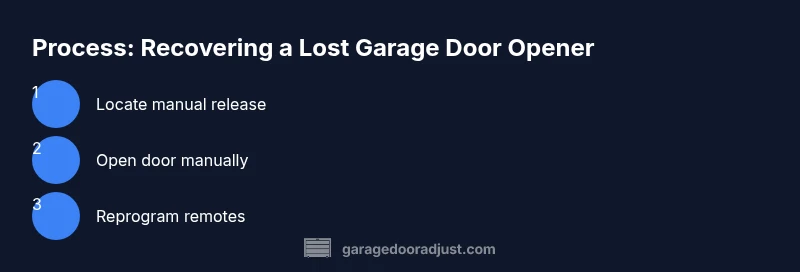
- 1
Locate the manual release
Identify the release handle, rope, or lever for your model and prepare the workspace. This prevents sudden door movement and ensures a controlled manual entry.
Tip: Inspect all release points; if unsure, consult the model manual before pulling. - 2
Open the door manually
With the release engaged, slowly guide the door along the tracks using controlled pressure. Keep your feet planted and avoid sudden jerks that could bend tracks.
Tip: Have a helper stand clear in case the door shifts unexpectedly. - 3
Check door balance and clearance
Ensure the door opens without binding and that nothing obstructs the tracks. If binding occurs, stop and reassess to prevent damage.
Tip: If the door feels heavy or binds, do not force it—call a pro. - 4
Locate the opener model and power status
Find the model/serial number on the unit and confirm the opener is powered. This information is essential for correct reprogramming.
Tip: Take a photo of the label to reference later. - 5
Test existing remotes
Press each remote from a short distance to verify communication. If no response, the remote battery or memory may be the issue.
Tip: Only test remotes you trust; avoid pressing random buttons near the door. - 6
Reprogram a spare remote or keypad
Follow your model’s learn or programming sequence to pair the remote or keypad with the opener. Do this close to the unit and with the door in a safe position.
Tip: If codes are three or four digits, choose a unique code not used elsewhere in your home. - 7
Reset memory if needed and re-pair
If remotes still fail, perform a memory reset and re-pair all devices. This clears conflicts and ensures clean operation.
Tip: Document which remotes are paired after the reset. - 8
Test all controls and secure the system
Test the wall button, remotes, and keypad in sequence. Confirm the door fully closes and returns to rest position when commanded.
Tip: Run a full cycle test from inside and outside the garage. - 9
Plan for professional help if needed
If you cannot regain reliable operation, schedule a professional inspection to assess springs, tracks, and the operator’s electronics.
Tip: Keep your model information handy for a faster service visit.
Got Questions?
What is the manual release on a garage door opener and why is it important?
The manual release disconnects the door from the opener so you can operate it manually. This is essential for gaining entry during a loss of the opener and for performing safe troubleshooting.
The manual release lets you disconnect the door from the motor so you can open it by hand, which is vital for entry during a loss of the opener.
Can I program a new remote without the original remote?
Yes, many openers allow keypad or wall-button initiated programming to pair a new remote. Follow the model-specific steps found in the user manual.
You can usually program a new remote using the keypad or wall button if your model supports it.
What if the door is hard to move manually?
If the door binds or is hard to move, stop, and inspect for track or spring issues. For safety, avoid forcing it and call a professional if you’re unsure.
If the door is hard to move, don’t force it—check tracks and springs and consider calling a pro.
Is it safe to leave the door open while I troubleshoot?
Leaving a door open can expose the garage to weather and security risk. Only do this temporarily and ensure the area is secure.
Leaving the door open should be temporary and safe; secure the area to protect your home.
How long does it typically take to regain control?
Time varies with the system. If you follow the steps and re-pair devices, you can regain control in a short session, but if issues persist, professional help may be needed.
It varies, but following the steps can usually restore control quickly; consult a pro if problems persist.
Watch Video
Quick Summary
- Always locate the manual release first and work safely.
- Use the manual path to regain entry before rebooting systems.
- Reprogram remotes and keypad carefully to restore control.
- Call a pro if the door won’t operate safely after troubleshooting.