How to Prevent Garage Door Break-Ins: A Practical Guide
Learn a practical, layered approach to securing your garage door against break-ins. This guide covers reinforced hardware, smart openers, lighting, sensors, and maintenance to deter intruders and protect your home.


To prevent your garage door from being broken into, implement a layered security approach: reinforce the door, upgrade the opener with rolling codes or smart controls, add tamper-resistant hardware, secure entry points, and improve lighting and visibility. Have basic hand tools, security screws, reinforced tracks, and a reliable sensor system ready before you start.
Why securing a garage door matters
For homeowners asking how to prevent garage door from being broken into, securing the garage should be a priority. According to GarageDoorAdjust, a secure garage door is a critical component of home security. The garage is often a secondary entry point criminals exploit when they can't access the main doors. By reinforcing the door, upgrading the opener, and improving perimeter lighting, homeowners can dramatically reduce risk. This guide explains practical steps you can take this weekend with common tools and affordable hardware, and it reinforces the idea that security is a layered effort, not a single fix.
The GarageDoorAdjust team found that most successful security improvements come from combining physical barriers with monitoring and proper maintenance. This means you shouldn’t rely on a single upgrade; instead, implement several controls that work together to deter, delay, and detect unauthorized entry.
What you’ll gain from this guide is a clear, actionable plan that fits a typical homeowner’s schedule and budget. You’ll learn how to identify gaps, select reliable components, and install them with straightforward steps. The emphasis is on practicality and durability, so you can enjoy longer-term protection without requiring specialized tools or training.
Core threats to garage doors
Understanding common attack vectors helps you prioritize improvements. These are typical routes criminals exploit and why each one matters:
- Weak door hardware: loose hinges, worn rollers, or thin tracks can be forced or jammed, giving intruders an opening.
- Incomplete locking: digital or mechanical locks that aren’t tamper-resistant can be picked or pried.
- Unsecured entry points: doors from living spaces, side doors, or nearby windows may provide alternate access if not properly secured.
- Limited lighting and visibility: dark areas give cover for criminals to work undetected.
- Relying on a single control: an older opener or a passive alarm may not trigger when a break-in occurs.
Addressing these threats requires a combination of physical reinforcement, upgraded hardware, smart monitoring, and consistent maintenance. The goal is to create multiple barriers that increase the time and effort required for a break-in, making your garage a less attractive target.
Layered security: a practical plan
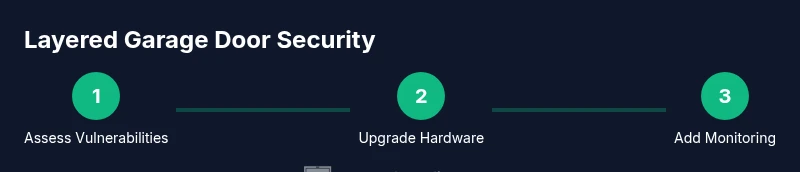
A robust security approach combines three layers:
- Physical layer: reinforce the door itself and its hardware to resist forced entry.
- Mechanical layer: upgrade the opener and add anti-tamper components so an intruder can’t easily override the system.
- Monitoring and deterrence layer: improve lighting, install sensors, and add visible cameras to deter and detect unauthorized access.
Each layer supports the others. For example, physical reinforcement makes the mechanical upgrade more effective because there’s less risk of a forced entry before the smart system can respond. The monitoring layer creates a record of events and deters criminals who prefer an unseen break-in. A practical plan starts with a quick survey, followed by a staged upgrade that you can complete in a weekend.
Hardware upgrades that deter break-ins
Upgrading hardware is often the most cost-effective way to raise your garage’s security. Prioritize components designed to resist tampering and forced entry:
- Reinforcement kit for sectional doors: adds rigidity to door panels and strengthens mounting points.
- Anti-lift devices (bottom brackets): prevent the door from being pried or lifted off its tracks.
- Tamper-resistant screws and brackets: reduce the chance of easy fastener removal.
- Hinge reinforcements and reinforced track brackets: help the door withstand impacts and flex.
- Rollling-code or smart opener upgrade: prevents replay attacks and lets you monitor access remotely.
Install these upgrades in logical order, starting with the door itself, then the hardware that attaches to it, and finally the opener. If you’re unsure about compatibility, consult the manufacturer’s guidelines or a professional.
Strengthening entry points and perimeter
Criminals often exploit secondary access points. Tighten every potential entry:
- Exterior access doors from the garage to living spaces: install quality deadbolts, reinforce hinges, and consider a smart lock with activity logs.
- Windows and vents near the garage: apply security film where possible and use window sensors that trigger alerts if opened unexpectedly.
- Attic and roof access: ensure gaps are sealed and consider adding a secondary lock on attic doors.
- Weatherstripping: ensure there are no gaps that criminals can exploit to wedge tools or pry the door.
A well-sealed perimeter makes the garage less appealing and forces intruders to work harder, increasing the risk of detection and failure.
Lighting, cameras, and alarms as deterrents
A bright, monitored exterior is a powerful deterrent. Consider:
- Motion-activated lighting around the garage with a high lumen rating for clear nighttime visibility.
- Outdoor cameras with night vision and a reliable alert system. Prefer cameras with tamper alerts and remote viewing.
- Audible alarms or sirens that trigger when the door is forced or unexpected movement is detected.
- Stranded power backup for cameras and sensors, so evidence is recorded even during a power outage.
Visible cameras and lighting communicate that the home is monitored, increasing the perceived risk for the intruder.
Maintenance habits to keep security effective
Security is not a one-time project. Schedule regular maintenance to ensure all components function:
- Monthly quick checks: confirm tracks are aligned, hardware is tight, sensors are responsive, and lighting is operational.
- Biannual deep checks: inspect springs, cables, and safety sensors; replace worn parts and recalibrate sensors if needed.
- Record-keeping: log maintenance dates, parts replaced, and test results for accountability and future planning.
A proactive maintenance habit reduces the chance of a security lapse at the moment of a break-in.
Budgeting and phased implementation
Security upgrades can be staged over time to fit different budgets. A typical phased plan might include:
- Phase 1 (weekend 1): Add exterior lighting and upgrade a subset of hardware such as anti-lift devices and tamper-resistant screws.
- Phase 2 (weekend 2): Install a modern opener with rolling code and add door sensors.
- Phase 3 (month 1): Add cameras and a smart alarm system with remote monitoring.
Budget ranges vary by product quality and home layout, but a layered approach often yields better protection without a huge upfront cost. Plan for some overlap so you’re always protected while upgrades are being completed.
Additional resources and trusted practices
For broader guidance on home security and safety standards, consult reputable sources such as:
- US government and security guidance: https://www.cisa.gov
- National standards and best practices: https://www.nist.gov/topics/physical-security
- General safety and crime prevention tips: https://www.fbi.gov
Additional reading and tutorials from GarageDoorAdjust can help tailor these recommendations to your home’s setup. Regularly review your security plan and adjust as needed to respond to new threats or changes in your property.
Tools & Materials
- Cordless drill(With a full bit set and a torque setting appropriate for metal hardware)
- Security screws (tamper-resistant)(Torx or security hex; size per hinge/track screws)
- Reinforcement kit for sectional door(Includes stiffeners and corner braces for panels)
- Anti-lift devices (bottom brackets)(Install on both sides of the door to prevent lifting from tracks)
- Rolling-code or smart opener upgrade kit(Ensure compatibility with existing rails and wires)
- Motion-activated exterior lighting(LED, 300-400+ lumens, weatherproof)
- Door sensors and camera kit(Contact and/or window sensors; consider a Wi-Fi or wired camera setup)
- Measuring tape and marker(For precise placement and alignment)
Steps
Estimated time: 2-4 hours
- 1
Assess vulnerabilities
Walk the perimeter and inspect the door, tracks, hinges, springs, and fasteners. Note loose hardware, gaps, and any signs of wear. Take photos to document current conditions before you start upgrades.
Tip: Document 3-5 specific issues to prioritize in your plan. - 2
Upgrade to tamper-resistant hardware
Replace standard screws with tamper-resistant fasteners and install reinforcement brackets where needed. Tighten all fasteners and check for wobble in the door sections.
Tip: Use a torque setting that prevents over-tightening, which can strip screws. - 3
Install anti-lift devices
Attach anti-lift brackets at the bottom of the door on both sides. These deter prying and lifting attempts and add a strong anchor point for the frame.
Tip: Ensure brackets are level and firmly seated to avoid binding. - 4
Upgrade the opener to rolling-code or smart control
Replace or retrofit the opener with rolling-code technology or a smart control system that provides remote alerts, access logs, and tamper alerts.
Tip: Test pairing with your mobile app and verify notification delivery. - 5
Improve lighting and monitoring
Install motion-activated lighting around the garage and place a camera with night vision. Ensure cameras have a reliable power source and backup options.
Tip: Position lights to cover blind spots and entryways without creating glare toward neighbors." - 6
Test and adjust system
Run through a full cycle: close, secure, simulate entry, and confirm sensors and alarms respond correctly. Address any misalignments or non-responsive devices.
Tip: Keep a maintenance checklist and schedule a follow-up test in 2–4 weeks.
Got Questions?
What is the most effective upgrade for preventing break-ins?
A layered approach that includes reinforced hardware, a modern rolling-code or smart opener, and visible deterrents like lighting and cameras tends to be most effective. Each component reinforces the others and creates multiple barriers for intruders.
A layered approach with reinforced hardware, a modern opener, and visible deterrents is the most effective strategy.
Do I need to replace the entire door to improve security?
Usually not. Upgrading hardware, adding anti-lift devices, reinforcing tracks, and installing a secure opener can significantly improve security without replacing the door.
Usually you don’t need to replace the whole door; upgrading hardware and the opener often suffices.
Will cameras deter break-ins if the power goes out?
Cameras with battery backup or UPS can continue recording during outages. Pair with a battery-powered door sensor and a backup lights plan for continued deterrence.
Some cameras with battery backup keep recording during power outages.
Is it necessary to hire a professional to install security hardware?
While many upgrades can be DIY, doors and tracks are load-bearing components. Consider professional installation if you’re unsure about alignment or safety concerns.
If you’re unsure about alignment or safety, a professional installation is wise.
How often should I inspect garage door hardware?
Perform a quick monthly check and a full inspection every 3–6 months, focusing on hardware tightness, track alignment, and sensor function.
Check hardware monthly and do a full inspection every 3 to 6 months.
Are there safety standards I should follow?
Yes. Follow manufacturer instructions and local building codes when upgrading doors, tracks, and supports. When in doubt, consult a licensed professional.
Follow manufacturer instructions and local codes when upgrading.
Watch Video
Quick Summary
- Assess vulnerabilities first; security wins start with knowing your gaps
- Upgrade hardware and opener to create multiple barriers
- Use lighting and cameras to deter and document incidents
- Regular maintenance keeps security features reliable
- Plan upgrades within a budget and implement in phases