Safety Sensor Issue Garage Door: Quick Troubleshooting Guide
This urgent, step-by-step guide helps homeowners diagnose and fix safety sensor issues on garage doors, offering a clear diagnostic flow, practical fixes, and safety-first tips.


The most likely cause of a safety sensor issue garage door is misaligned or obstructed safety beams. Start with a quick fix: realign the sensors, remove any debris, and clean the lens surfaces. If the door still won’t close or stops short, check for damaged wiring or a faulty sensor module before calling a pro.
Problem Overview: Understanding the Safety Sensor Issue on Your Garage Door
A safety sensor issue garage door is a common problem that triggers the door to reverse or refuse to close. The safety beam system uses infrared sensors mounted near the floor on each side of the door opening. When the beam is interrupted or misaligned, the opener stops to prevent injury or damage. This guide helps homeowners troubleshoot quickly and safely, focusing on practical steps you can take before calling a technician. According to GarageDoorAdjust, sensor faults are one of the top calls from homeowners in 2026, and most fixes are simple alignment or cleaning tasks. The goal is to get your door back to reliable, safe operation without unnecessary risk.
Quick Visual Checks You Can Do (No Tools)
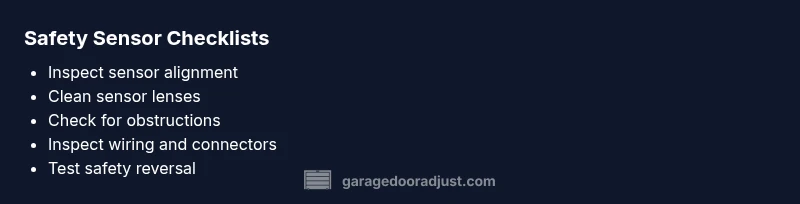
Before you touch wiring or replace parts, perform basic visual checks. Look for two sensors on opposite sides of the opening; ensure both are level and facing each other directly. Check for obvious obstructions on the floor, dust, spider webs, or dirt covering the sensor lenses. Wipe the lenses with a soft, dry cloth and avoid cleaners that could smear residue. If the indicators show a red or blinking light, note the pattern—the manual for your model will explain what each blink means. These quick checks often resolve a safety sensor issue garage door without tools.
Common Causes of Safety Sensor Errors
Many safety sensor issues stem from simple conditions. Misalignment occurs when mounting screws loosen over time or after impact, causing the beams to misfire. Dirt, dust, or spider webs on the sensor lenses can obscure the beam, triggering false alarms. Damaged or frayed wiring and loose connectors also disrupt signal transmission. Finally, a failing sensor module or control board can produce intermittent faults. Understanding these causes helps you prioritize fixes and avoid unnecessary replacements. GarageDoorAdjust notes that the most frequent failures are alignment and cleanliness, not sensor death.
How the Beams Work with Your Garage Door Opener
The infrared beams create a safety perimeter across the doorway. If a beam is broken, the opener automatically halts and reverses the door. Real-time feedback from the sensors is essential for safe operation, so even small misalignments or temporary obstructions can trigger a fault. Proper mounting gives the beams a clean, unobstructed line of sight. If your system uses LED indicators, a steady green typically means alignment is correct, while blinking or red signals call for attention. Understanding this helps you diagnose issues quickly.
When to Call a Professional
If you notice persistent beam faults after cleaning and realignment, there could be hidden wiring damage, a faulty sensor, or a control-board issue. Working near electrical components or inside the opener can present shock hazards; do not bypass safety features or attempt invasive repairs without professional training. A certified technician can test sensor circuits, replace faulty modules, and ensure the door balance is safe. Timely intervention can prevent injury and expensive later repairs.
Prevention: How to Maintain Safe Sensor Operation
Establish a routine to prevent future sensor problems. Regularly wipe lenses, check sensor mounting screws, and ensure the path between sensors is clear of debris. If you have a concrete floor, keep it clean and dry to avoid photoelectric misreads. Periodically test the door’s safety reversal with a small obstruction to confirm the system works as expected. Keeping a simple maintenance habit reduces the chance of a recurring safety sensor issue garage door.
Steps
Estimated time: 20-45 minutes
- 1
Power down and prepare the area
Disable the opener at the wall switch or unplug the unit to prevent accidental operation while you work. Keep children and pets away from the door. This step reduces risk and ensures you can inspect safely.
Tip: Double-check the power source before touching any wiring. - 2
Realign sensors and tighten mounts
Loosen the mounting screws slightly to adjust the sensors so they’re facing each other with a clear line of sight. Gently nudge until the alignment indicator (if present) shows a stable signal. Tighten screws securely without over-tightening.
Tip: Use a level to ensure the sensors sit evenly for consistent operation. - 3
Clean lenses and inspect path
Wipe both sensor lenses with a soft, dry cloth. Clear the floor area between sensors of dust, dirt, or any small objects that could interrupt the beam. Recheck for any obvious obstruction after cleaning.
Tip: Do not use solvents or water on lenses; moisture can damage optics. - 4
Test the door with safety in mind
Turn the power back on and run a close cycle with a small, non-permanent obstruction to confirm the door reverses as intended. If it does not reverse, stop and reassess alignment and beam path.
Tip: Keep hands and feet clear of the closing path during tests. - 5
Check wiring and connections
If faults persist, switch off power again and inspect wiring from the sensors to the opener. Look for loose connectors, frayed insulation, or damaged harnesses. Re-seat connectors and secure with zip ties where appropriate.
Tip: Do not pull on wires; handle gently to avoid internal damage. - 6
Decide on replacement or professional help
If tests indicate a faulty sensor module or persistent faults after all checks, plan for sensor replacement or contact a professional. Ensure you use compatible components for your model.
Tip: Using the wrong sensor can cause continued faults and safety concerns.
Diagnosis: Garage door won’t close or reverses before reaching the floor; safety sensors indicate a fault.
Possible Causes
- highMisaligned sensor units
- highDirt, dust, or obstructed beam path
- mediumDamaged wiring or loose connectors
- lowFaulty sensor module or control board
Fixes
- easyRealign sensors so they face each other directly and re-tighten mounting screws.
- easyClean sensor lenses with a soft, dry cloth and remove any debris in the beam path.
- mediumInspect wires and connectors for wear or damage; reseat and secure connections.
- hardReplace sensor module or board if the fault persists after above steps.
Got Questions?
What is causing my garage door to reverse when closing?
A common cause is a misaligned or obstructed safety beam. Dirt on the lens, misalignment, or a damaged sensor can trigger the door to reverse as a safety precaution.
Most reversals are due to misaligned or dirty sensors. Start by cleaning and realigning the beams, then test the door again.
How do I realign garage door safety sensors?
Gently adjust the sensors until they face each other squarely with a clear line of sight. Tighten mounting screws and re-test the beam path using a small object below the door.
Realign the sensors until the beams are square and unobstructed, then test the door to confirm proper operation.
Can a faulty sensor stop my opener from working?
Yes. A defective sensor can prevent the opener from closing for safety reasons. If the sensors test faulty after cleaning, replacement may be required.
A faulty sensor can block opening in safety mode; replacing it usually fixes the issue.
Is it safe to bypass the safety sensors?
No. Bypassing sensors is dangerous and could cause injury. If sensors fail, repair or replace them and restore safe operation.
Do not bypass the sensors—keep safety features active to protect people and pets.
How often should I replace garage door safety sensors?
Replacement is usually needed only if components fail or are irreparably damaged. Regular maintenance can extend sensor life, but follow manufacturer guidance for replacement intervals.
Sensors are reliable but should be replaced if they fail or show persistent fault signals.
Watch Video
Quick Summary
- Realign and clean sensors to resolve most faults
- Do not bypass safety sensors under any circumstances
- Test door operation with safety in mind to prevent injuries
- If faults persist, inspect wiring and consider professional replacement