Garage Door Over Closing: Troubleshooting and Fixes
Learn how to diagnose and fix garage door over closing safely. This urgent, step-by-step guide covers travel-limit resets, sensor checks, and when to call a pro to protect people and property.


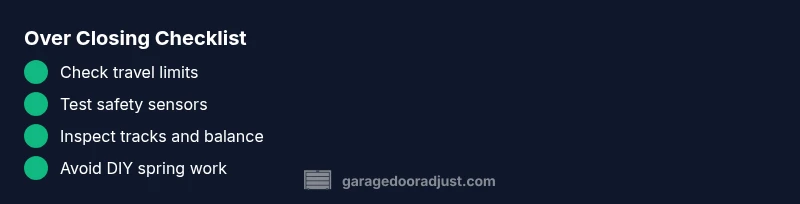
Travel-limit misadjustment is the most common cause of garage door over closing. Begin by resetting the up-and-down travel limits on your opener, then test the door through several cycles. If it still overshoots, check safety sensors alignment and track ends; avoid DIY spring work and call a pro if needed.
What does garage door over closing mean?
Garage door over closing describes a situation where the door travels lower than the standard bottom-out position or fails to stop at the floor, continuing to move downward. This poses a serious safety risk to people, vehicles, and belongings. According to GarageDoorAdjust, safe operation hinges on properly calibrated travel limits and aligned safety sensors. In many homes, the root cause is a misadjusted travel limit or a misaligned sensor, especially with newer models that rely on electronic end stops. If you notice the door closing too far or taking too long to stop, address it promptly. This guide offers a practical diagnostic flow and a clear, step-by-step fix for the most common causes, plus safety checks, preventive tips, and guidance on when to call a pro to protect tracks, springs, and the opener.
Why over closing happens: common causes you’ll likely encounter
There are several frequent culprits behind garage door over closing. The top reason is a travel limit that has been set too aggressively, causing the opener to shut off after the door has already bottomed out. End stops wear or misalignment can let the door travel beyond the intended stop. Sensor issues are another common factor: a misaligned photo-eye or a dirty lens can trick the opener into thinking the path is blocked, but when combined with a faulty limit, it can still result in overshoot. Debris on the tracks, bent track sections, or uneven spring tension can also contribute to improper stopping. While some tweaks are safe for a capable homeowner, others require professional service to avoid injury or equipment damage.
Quick safety checks you can perform today
Before you touch any mechanical components, unplug the opener and keep kids and pets away. Check the safety sensors for alignment and clean the lenses with a soft cloth. Look for obvious obstructions on the horizontal tracks and ensure the door is balanced and moves smoothly by hand. If the door sticks or binds, don’t force it—this can indicate a bent track or worn rollers. Run a few controlled cycles with the door fully closed and open, observing where it stops. If the door continues to overshoot, move on to adjusting the travel limits and inspecting the end stops.
How travel limits affect closing distance
Travel limits tell the opener where to stop on each travel direction. If the downward travel limit is set too far past the bottom edge, the door will over close. Conversely, an overly conservative limit can cause a premature stop but not typically overshoot. Travel limits interact with end stops and spring tension; if any of these are out of sync, you’ll see inconsistent stopping points. The goal is precise, repeatable stopping at the ground line, with the door fully closed but not pressed into the floor. Keep in mind that electronic limits vary by model, so consult your manual or the manufacturer’s website for model-specific steps.
Step-by-step fix for travel-limit recalibration (most common cause)
- Locate the travel limit screws or the on-device control for your model. Power off the unit and wait a few seconds before you touch anything. 2) If there are external screws, use the manufacturer’s instructions to slowly reduce the downward travel by a small increment (usually a quarter-turn). 3) Restore power and run 3-4 test cycles, watching the door as it approaches the floor. 4) If the door stops too far past the floor, adjust again in the same small increments until it closes correctly. 5) Re-test with different loads (door empty, door with light debris) to ensure consistent behavior. 6) If the problem persists, check end stops and ensure the tracks are straight and undamaged. 7) Never attempt spring adjustments yourself; this is a high-risk repair best left to a licensed tech.
Checking sensors, tracks, and hardware
Beyond travel limits, inspect the safety sensors for alignment and clean the lenses. Misaligned sensors can cause the opener to misread the path, but when combined with a faulty limit, it can still result in overshoot. Inspect tracks for loose bolts, bent sections, or debris that could interfere with travel. Ensure rollers roll smoothly and that the door is balanced when moved manually. If you notice binding, looseness, or uneven resistance, stop and arrange professional service to avoid further damage or injury.
When to call a pro and what to expect
If the over closing persists after travel-limit recalibration and sensor realignment, or if you notice damaged springs, warped tracks, or worn cables, contact a licensed garage door technician. A pro can safely reset springs, verify balance, and confirm proper end-stop calibration without risking injury. Expect the technician to test after each adjustment and provide a clear explanation of the changes made, along with a maintenance plan. Regular professional tune-ups can prevent future issues and extend your system’s life.
Preventative maintenance to avoid future over closing
Schedule seasonal checks of tracks, rollers, springs, and the opener’s settings. Lubricate moving parts as recommended by your manufacturer, and keep sensors free of dust and grime. Periodic balance tests by manually lifting the door help identify sagging springs or worn components early. Document any changes you make so future technicians have a reference. Regular maintenance reduces the chance of dangerous over closing and prolongs equipment life.
Common mistakes to avoid during DIY fixes
Avoid rushing through calibration without verifying safety. Don’t adjust springs or cables yourself unless you’re trained and licensed. Using crude tools to force the door or making large changes to travel limits in one go can create unpredictable behavior. Always re-check all safety sensors after any adjustment and test the door with the opener unplugged to verify manual operation is smooth. When in doubt, call a pro for a safe, compliant repair.
Steps
Estimated time: 25-40 minutes
- 1
Identify travel limits on the opener
Find the travel limit screws or the on-device control for your model. Read the manual or manufacturer site to locate the exact controls. Make sure the unit is unplugged when you begin.
Tip: If unsure, pause and consult the manual or look up your model’s guide online. - 2
Reset downward travel in small increments
With the opener unplugged, slowly turn the downward limit screw in small increments. Reapply power and run a test cycle to observe where the door stops.
Tip: Small changes yield better control; don’t overshoot in a single adjustment. - 3
Test cycles and adjust further
Run 3-5 cycles from fully open to fully closed. If the door closes too far, tweak the limit slightly and re-test. Stop if the door behaves unpredictably.
Tip: Document each adjustment so you can revert if needed. - 4
Inspect safety sensors
Check for misalignment, dirty lenses, or mispointed sensors. Clean lenses with a soft, dry cloth and adjust alignment until both lights show stable indicators.
Tip: Sensors must clearly face each other with no obstructions. - 5
Check tracks and balance
Rollers should move smoothly; inspect for bends or debris on tracks. If the door is unbalanced when raised by hand, do not reuse the DIY fix—call a pro.
Tip: A balanced door reduces strain on the opener and improves stopping accuracy. - 6
Final safety test
With the door closed, replug the opener and perform 2-3 controlled close/open cycles. Confirm the door stops precisely at the floor and does not overshoot.
Tip: Always supervise initial cycles until confident in the fix.
Diagnosis: Garage door over closing (door stops past floor or keeps moving downward)
Possible Causes
- highTravel limits misadjusted
- mediumEnd stops wear or misalignment
- lowSafety sensor misalignment or obstruction
- lowDamaged tracks or components causing drag
Fixes
- easyReset travel limits using the opener’s dial/menu and test cycles
- mediumRecalibrate end stops and inspect tracks for damage
- easyRealign or clean safety sensors and clear obstructions
- hardIf overshoot persists, consult a licensed professional for springs/cables
Got Questions?
Why does my garage door over close after a recent maintenance?
Over closing after maintenance is commonly caused by travel-limit changes or sensor misalignment. Recheck limits, sensors, and tracks. If it persists, have a pro inspect springs and cables.
Over closing after maintenance usually points to limits or sensors. Recheck those, and call a pro if the issue remains.
Can I adjust travel limits myself?
Yes, many openers let you adjust travel limits. Always unplug first and make small adjustments, testing after each change. Refer to the manual or manufacturer site for model-specific steps.
You can adjust limits, but do it in small steps and test each time.
Is over closing dangerous?
Yes. Over closing can crush objects or injure someone beneath the door. Don’t bypass safety features and ensure sensors are aligned and clean.
It can be dangerous. Keep safety features active and sensors clean.
When should I call a pro?
If travel limits can’t be calibrated safely, if the door is unbalanced, or if springs/cables show wear, call a licensed technician. They’ll restore safety and provide a maintenance plan.
Call a pro if springs or cables are involved or the issue remains after basic fixes.
Could dirty tracks cause over closing?
Yes. Debris or stiffness in tracks can affect stopping accuracy. Clean tracks, lubricate as recommended, and check for damage.
Dirty tracks can affect where the door stops; keep them clean.
Watch Video
Quick Summary
- Reset travel limits carefully to fix overshoot
- Align sensors and inspect tracks to prevent recurrence
- Do not DIY spring work—call a pro for balance issues
- Regular maintenance reduces future over closing risk