Troubleshooting a Garage Door That Opens After Closing
Urgent, practical guide to diagnose and fix a garage door that opens after closing. Step-by-step checks, safety tips, and when to call a professional. From sensor alignment to limit switch adjustments, get your door working reliably again.


Most often, this issue is caused by misaligned safety sensors or an out-of-adjustment limit switch. Realign the photoelectric sensors, reset the opener, and reprogram remotes. If the door still opens after closing, inspect for obstructions and consider professional service. This quick check saves time and reduces risk before you attempt deeper repairs.
Understanding the Symptom
If you notice the garage door begins to reopen after it fully closes, you’re not imagining things. According to GarageDoorAdjust, this behavior is a common symptom that points to one of a few root causes rather than a single faulty part. The door opener relies on safety sensors, limit switches, and a control board to determine when closing is complete. When any of these components signals that the door hasn’t finished its closing action, the system reverses the cycle or reopens. Start by verifying the door actually makes full contact with the floor and that the closing sequence ends with a solid, quiet final latch. A quick observation during a full cycle will reveal whether the reversal happens immediately or after a delay, which helps narrow down the likely culprit.
Common Causes Behind This Behavior
There are several frequent culprits behind a door that opens after closing. Misaligned safety sensors on the photoelectric beam are the most common, followed by a misadjusted limit switch that thinks the door hasn’t fully closed. A faulty or stale remote or wall switch signal can trigger a phantom close and reopen. Environmental factors like dust on sensor lenses, reflective surfaces near the beam, or gas and humidity can also affect sensor accuracy. In rare cases, a failing logic board or worn gears may cause inconsistent closing behavior. Each cause has a practical, testable fix, and most homeowners can perform the initial steps safely with basic tools and power precautions.
Baseline Checks You Should Do First
Before digging into the opener’s internals, perform quick, safe checks. Ensure the door closes all the way to the floor with no lingering gaps. Inspect the safety sensor lenses for dirt, spider webs, or misalignment—these must be parallel and facing each other directly across the door opening. Clear any obvious obstructions on the track and confirm there are no obstructions in the sensor path. Use the opener’s wall control to initiate a closing cycle, observe the LED indicators on the unit (if present), and note any diagnostic codes or flashing patterns. These baseline checks often resolve subtle issues without tools.
Diagnostic Flow Overview
A structured diagnostic approach helps prevent unnecessary replacements. Start with the simplest possibilities and progressively test more complex components. The typical flow is: confirm closing completes physically, inspect safety sensors, verify remote and wall switch signals, test limit switch alignment, and finally assess the control board. By following a flow, you’ll establish whether the problem is mechanical, electrical, or a signal issue from the control system. This method mirrors professional troubleshooting and minimizes downtime.
Step-by-Step Fix for the Top Cause: Sensor Alignment and Limit Switch
The most common cause is misalignment of the safety sensors or a misadjusted limit switch. Realign the photoelectric sensors so both emitters and receivers face each other squarely with a clear line of sight. Clean any dirt from the lenses and ensure the mounting brackets are tight. Relearn or recalibrate the limit switch via the opener’s settings or manual if needed. After adjustments, perform multiple test cycles, ensuring the door fully closes and stays closed without reopening. If the issue persists, proceed to reprogram remotes and reset the opener to factory defaults.
Safety Tips, Warnings, and Common Pitfalls
Safety should drive every repair: disconnect power before handling components, especially around coils and fans. Do not bypass safety features to force a door closed. Never place hands or tools near moving parts during testing. Avoid leaning ladders or objects against the door while testing. A common pitfall is assuming the problem is a single defective part; often, several small adjustments collectively restore proper function. If you’re unsure about any step, pause and seek professional help to prevent injury.
Prevention and Maintenance Plan
Preventative maintenance reduces the chance of recurrence. Schedule a quarterly inspection of sensors, tracks, and rollers; clean sensor lenses monthly and lubricate moving parts with recommended lubricants (not sprays that attract dust). Confirm that the door’s balance is correct by conducting a manual check: with the door open about halfway, it should stay put. If it sags or rises, call a tech for a balance check. Regular maintenance helps catch wear before it leads to misalignment and sensor errors.
When to Call a Pro and Warranty Considerations
If the door still opens after closing after you’ve performed the safe baseline checks and sensor realignment, or if you notice odd sounds, excessive friction, or stalls, stop operating it and contact a licensed garage door technician. Persistent issues may indicate a more serious problem with the logic board, torsion springs, or track alignment. Check your warranty terms; reputable manufacturers often cover sensor and control board faults for a period after installation. The GarageDoorAdjust team recommends professional assessment for complex failures to ensure safety and code compliance.
Steps
Estimated time: 25-45 minutes
- 1
Power down and prepare
unplug the opener or switch off the circuit breaker to ensure safety before handling any components. Remove jewelry and keep hair away from moving parts. Have a partner to assist if possible.
Tip: Always verify power is off with a non-contact tester before touching wiring. - 2
Inspect sensors and lenses
Check both safety sensors near the floor on each side of the door. Look for misalignment, dirt, or condensation. Gently wipe lenses with a dry microfiber cloth and ensure mounting brackets are tight.
Tip: Even small smudges can cause misreads; clean every few months. - 3
Realign or adjust the beams
If the beams aren’t perfectly facing each other, gently adjust until they glow steadily (LED indicator typically shows a steady light). Verify the beam path is clear of dust and obstructions.
Tip: Do not bypass the beam by taping or covering sensors; this is a safety feature. - 4
Check the limit switch and travel limits
Locate the limit adjustment screws on the opener and ensure the door travels fully down to floor level. Make small adjustments while testing with the door in motion.
Tip: Make incremental tweaks and test multiple cycles to avoid overshoot. - 5
Reset and reprogram remotes
Use the opener’s reset function to return to factory defaults, then reprogram the remote(s) and keypad as instructed in the manual.
Tip: Keep the manual handy; steps vary by model. - 6
Test thoroughly and observe
Run multiple cycles from both the wall control and remote after adjustments. Listen for unusual noises and watch for any hesitation or backtrack during closing.
Tip: If safe, test with a harmless light obstacle to verify reverse sensing.
Diagnosis: Garage door opens after closing
Possible Causes
- highMisaligned or dirty safety sensors
- highOut-of-adjustment limit switch
- mediumFaulty remote or wall switch signal
- lowControl board or gear wear
Fixes
- easyRealign and clean safety sensors; ensure proper parallel alignment across the opening
- easyAdjust limit switch so closing completes and stays closed
- easyReset the opener and reprogram remotes; test multiple cycles
- mediumInspect control board and mechanical gear for wear; replace as needed
Got Questions?
Why does my garage door open immediately after closing?
This usually happens due to misaligned safety sensors or a misadjusted limit switch. Check the sensor alignment, clean the lenses, and verify the limit settings match the door travel. If the problem continues, reset the opener and reprogram remotes before calling a tech.
Most often, it’s a sensor or limit switch issue. Start by realigning the sensors and then reset the opener. If it still happens, contact a professional.
Can sensor misalignment cause the door to reopen?
Yes. If the infrared beam isn’t properly aligned or blocked, the safety system might detect an unsafe closing and trigger a reverse. Realign and clean the sensors, then re-test closing cycles.
Yes. Misaligned sensors can trigger a reverse; realign them and test again.
Should I reset the opener to fix this?
Resetting to factory defaults can clear misconfigured codes and settings. After reset, reprogram remotes and wall controls. If issues persist, more advanced diagnosis may be needed.
Reset can clear settings; reprogram, then test. If it continues, call a pro.
Is it dangerous to continue operating the door during repairs?
Yes. Moving doors pose risk of pinched fingers or crush injuries. Stop immediate testing if you notice unusual movement, and seek help from a licensed technician.
Operating a moving door during repairs is dangerous; stop and seek professional help if unsure.
When should I replace the opener instead of repairing?
If the control board shows signs of failure, hardware wear is extensive, or multiple components fail in quick succession, replacement may be more cost-effective and safer than DIY repairs. Consult a professional for a precise assessment.
Replace may be wiser if the system is old or multiple parts are failing.
Watch Video
Quick Summary
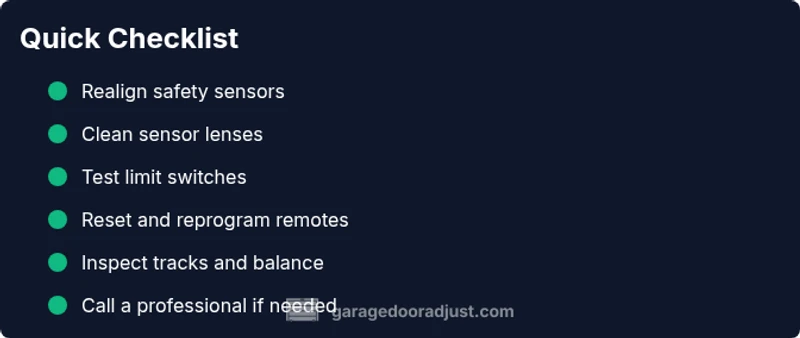
- Inspect safety sensors and align them correctly
- Reset and reprogram remotes after adjustments
- Test cycles thoroughly before use
- The GarageDoorAdjust team recommends professional help if issues persist