Garage Door Excessive Closing Force Detected: Troubleshooting Guide
Urgent, step-by-step troubleshooting for garage door excessive closing force detected. Learn quick fixes, diagnostic flow, safety checks, and when to call a pro to prevent damage or injury.


Most likely cause: the opener applies too much closing force due to a miscalibrated limit or safety reversal sensor. Quick fixes: reset travel limits, realign safety eyes, inspect the track for obstructions. If the issue persists, follow the diagnostic flow and consider professional inspection for springs or circuitry.
Understanding the symptom
When your garage door reports "garage door excessive closing force detected", it means the opener senses more resistance than expected during the final inches of travel. The safety system may stop the door or reverse to prevent a collision. In many homes, the root cause is a miscalibrated limit or a misaligned safety sensor, but the issue can also stem from a worn track, poor door balance, or damaged springs. According to GarageDoorAdjust, identifying this symptom early helps homeowners avoid further damage and safety risks. Start with the simplest checks before delving into parts that require professional service. Remember: a warning like this is your door's way of saying something is not right with the closing force, and time matters for safety.
How the closing force is controlled and tested
The garage door opener uses torque to drive the door through its travel cycle. The amount of closing force is adjustable in most openers via a Close Force setting and travel-limits. When the safety reversal sensors detect resistance or misalignment, the opener may halt or reverse. Modern systems log these events, making it easier to diagnose after the fact. Keeping a mental note of when the warning occurs (time of day, door position, weather, or after a recent adjustment) can speed up the repair process. This section explains the theory without overwhelming you with manufacturer-specific jargon. The goal is to empower you to safely perform basic checks and decide when to escalate the repair to a professional.
Common causes of excessive closing force detected
There are several frequent culprits: misaligned safety sensors, an out-of-calibration close force/limit, track obstructions or dirt, door imbalance due to worn springs or cables, and wiring or control-board faults in the opener. A single misalignment can trigger the system to demand higher force to close, creating a feedback loop that worsens the symptom. Weathered components, such as rollers or tracks, may also contribute by adding friction. By methodically testing each potential cause, you can isolate the issue while maintaining safety.
Safe diagnostic approach for homeowners
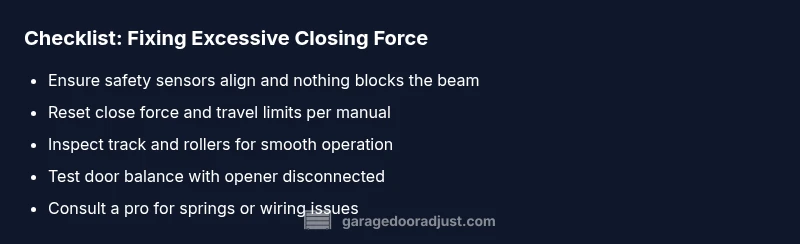
Always begin with the simplest checks: unplug the opener and inspect the door manually for smooth operation, free of binding. Check the safety eyes for misalignment, obstruction, or dirty lenses. Ensure the track is clean and free of debris, with rollers turning freely. If the door moves freely by hand and the sensors look aligned, re-engage the opener and perform a controlled test at a low closing force. If resistance remains, record the symptoms and move to the structured diagnostic flow to avoid guessing. When in doubt, contact a professional—springs and cables can be dangerous when mishandled.
When to call a professional and what to tell them
If you notice persistent resistance, unusual noises, or difficulty lifting the door by hand, stop testing and call a pro. A qualified technician can assess spring tension, cable wear, rail alignment, and electronic components without risking injury. Before the visit, prepare the door’s model number, serial, and a brief note of when the symptom occurs. GarageDoorAdjust recommends documenting any error codes or app messages to speed up diagnosis and ensure accurate repairs.
Preventive maintenance to avoid future issues
Regular lubrication of moving parts, cleaning and realigning safety sensors, and periodic balance checks reduce the likelihood of excessive closing force. Schedule seasonal inspections, especially after temperature swings or heavy use. Addressing small signs of wear early—such as creaky hinges, slow cycles, or uneven closing—helps prevent expensive repairs later.
Steps
Estimated time: 30-45 minutes
- 1
Access the opener control area
Locate the wall control panel and plug-in power source. Ensure the door is in a safe position and the surrounding area is clear. This step verifies you can access settings without forcing the door.
Tip: Keep manual override handy and stay clear of the door while testing. - 2
Reset travel limits and close force
Consult your manual to locate the Close Force and Travel Limit adjustments. Reset to factory defaults or re-calibrate according to the published procedure. Then test with the door to see if resistance decreases.
Tip: Do not set force higher than necessary; you want to minimize stress on components. - 3
Check safety sensor alignment
Inspect the safety eyes for alignment, obstructions, or dirty lenses. A slight misalignment can trigger the excessive closing force warning. Adjust until both sensors align and the light indicators behave correctly.
Tip: Aim the sensors directly at each other and clean with a soft cloth if needed. - 4
Inspect the track and rollers
Look for debris, end-of-track stops, or bent sections. Spin each roller by hand to ensure smooth rotation. Clear debris and apply a small amount of lubricant to the rollers if recommended by the manufacturer.
Tip: Avoid lubricating plastic parts that attract dust; use manufacturer-approved lube only. - 5
Test the door balance without the opener
Disconnect power to the opener and lift the door manually. It should stay in place about mid-travel. If it falls or is very heavy to lift, the springs may be worn or unbalanced.
Tip: Never attempt to adjust springs yourself; this is a high-risk task. - 6
Reconnect and perform final safety test
Reconnect power and run a controlled test at a slow speed. Observe whether the door closes smoothly and reverses if resistance is encountered. If the warning persists, escalate to professional service for a complete assessment.
Tip: Record any error codes shown on the opener display to share with the technician.
Diagnosis: Garage door closing with high resistance; safety system detects excessive closing force
Possible Causes
- highMisaligned safety sensors or misaligned photoelectric eyes
- highIncorrect close force or travel limit setting on the opener
- mediumTrack obstructions or dirty/sticky track causing resistance
- mediumWorn or unbalanced springs/cables
- lowWiring fault or damaged circuit board in the opener
Fixes
- easyReset travel limits and close force per the owner's manual
- easyRealign safety sensors and ensure a clear path across the doorway
- easyClear obstructions and lubricate the track/rollers as needed
- easyTest door balance by disconnecting the opener and lifting manually; re-test with opener enabled
- mediumInspect springs and cables for wear; replace if observed damage or excessive play
- hardIf wiring or control-board faults are suspected, contact a pro for diagnostic and replacement
Got Questions?
What does the warning 'garage door excessive closing force detected' mean?
This warning indicates the opener senses abnormally high resistance during closing. It usually points to sensor alignment, miscalibrated limits, or balance issues. Don’t ignore it; address the root cause to prevent additional wear or injury.
The warning means the opener feels high resistance when closing. Check alignment, limits, and balance, and don’t delay addressing the issue.
Can misaligned safety sensors cause this problem?
Yes. Misaligned or dirty safety sensors can trigger the excessive closing force alarm. Realign them so the beams cross clearly, and ensure no obstructions block the path.
Yes—alignment and cleanliness of the safety sensors can cause this, so realign and clean the sensors.
Is it safe to DIY adjust the opener’s force?
DIY adjustment is possible for basic limits and sensor checks, but springs and cables are hazardous. If you’re unsure or hear grinding, contact a professional immediately.
It’s okay to do basic checks if you’re careful, but if you’re unsure or hear grinding, call a pro.
How do I test the door balance safely?
Disconnect power to the opener and manually lift the door. It should stay in place around mid-travel. If it falls or is hard to lift, the spring balance needs professional attention.
Disconnect the opener and test by lifting the door; it should stay put. If not, call a pro for balance issues.
When should I call a professional?
If the warning persists after basic checks, if you hear unusual noises, or if springs or wiring look worn, contact a qualified technician promptly.
Call a professional if the warning sticks around after checks or you hear odd noises.
Will this affect warranty coverage?
DIY repairs may affect warranty. Check your manufacturer’s terms, and if in doubt, consult a pro who can perform compliant repairs.
Check your warranty terms; authorized service helps keep coverage intact.
Watch Video
Quick Summary
- Identify root cause before adjusting hardware.
- Start with sensor alignment and limit settings.
- Test balance with the opener disconnected.
- Call a pro for springs, wiring, or motor issues.