Automatic Garage Door Closer: A Step-by-Step Guide for Safe Closure
Learn to select, install, and test an automatic garage door closer for safer, smarter closure. This guide covers compatibility, tools, wiring basics, step-by-step installation, troubleshooting, and safety considerations for homeowners.


Installing an automatic garage door closer creates a safer, quieter closing cycle and helps prevent doors from staying open. You’ll upgrade to a timer-driven closer that engages with the opener, includes safety sensors, and offers a manual override. This guide covers compatibility, required tools, wiring basics, and a step-by-step installation for a reliable, code-compliant fit.
Why an Automatic Garage Door Closer Matters
According to GarageDoorAdjust, adding an automatic garage door closer significantly reduces the risk of a door remaining ajar after daily activities. A closer provides a reliable closing cycle, helps seal out drafts, and strengthens security by ensuring the door fully closes when you pull away. An open garage can invite pests, weather intrusion, and potential injuries from a door in motion. If you already own an opener, many closer kits retrofit to the door or track without a full replacement, but compatibility depends on door type, mounting space, and track configuration. The GarageDoorAdjust team emphasizes choosing a closer rated for your door weight and height, then calibrating the timer and closing force per the manufacturer instructions.
Key takeaway: Compatibly and proper setup are the foundations of a safe, effective closer system.
How an Automatic Garage Door Closer Works
An automatic garage door closer integrates with your existing opener to command a timed closing cycle. After the opener finishes its drive cycle, the closer activates via a mounting arm and a compact motor that pulls the door into its final seal. Common features include a user-adjustable timer (seconds to minutes), safety reversing sensors, and a manual override for emergencies. Most units plug into the garage’s 120-volt circuit or use a low-voltage supply, depending on the model. A well-designed kit works with standard residential doors, but always confirm track type and mounting space. The benefits include predictable closure, better energy efficiency, and enhanced security. When wiring, follow the manufacturer diagram, connect to the opener accessory terminal if required, and secure all connections to prevent shorts.
Safety standards and compatibility considerations
Safety is the core driver for automatic door closers. Look for UL or equivalent listings and ensure the kit supports your door’s weight, gauge, and track style. Check that the closer can operate with your current opener brand and that the mounting brackets fit the door without interfering with rollers or springs. Local codes or homeowner associations may have specific requirements for automatic closure and sensor placement, so review rules before installation. If your door is unusually heavy, tall, or has a non-standard track, consider a higher-capacity closer or professional assessment. The aim is a secure, reliable seal without compromising mechanical balance.
Key features to look for when choosing a closer kit
When selecting a kit, prioritize closing timer range, safety sensor integration, and compatibility with your existing opener. Adjustable closing force helps protect the door from strain on windy days, while a hold-open option can be set for a temporary pause in closing. Look for quiet, low-power operation and a robust mounting system that fits standard hinges and tracks. Some kits offer battery backup for power outages, which can be valuable in busy garages. Ensure the kit includes clear wiring diagrams and a straightforward calibration procedure so you can achieve a proper seal without over-tightening or binding the door.
Step-by-step installation overview
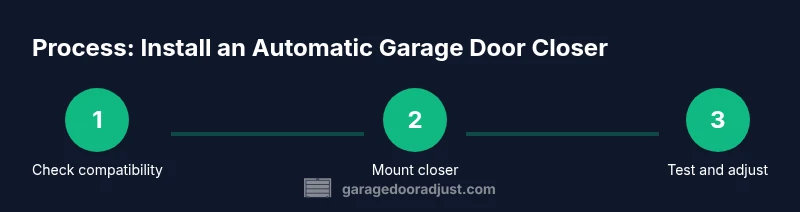
This overview provides a practical sense of the workflow before you begin. Start by verifying compatibility and powering down the opener to prevent accidental movement. Mount the closer’s bracket to the door or header, then attach the arm to the door and to the opener arm or track according to the kit instructions. Connect any wiring to the opener accessory terminal if required, and install the safety sensors in their standard positions to maintain obstruction protection. Finally, configure the timer and closing force, restore power, and run a geometry-check test to verify smooth, complete closure without binding.
Maintenance, troubleshooting, and adjustments
Regular maintenance extends the life of the closer and preserves safety. Periodically inspect mounting hardware for looseness, ensure sensor LEDs are visible and unobstructed, and test a few closing cycles to confirm consistent timing. If the door closes with a strong slam or stops short, recalibrate the closing force and timer; verify linkage alignment and inspect for track binding or weather intrusion at the seal. Weatherstripping should be intact, and lubrication of moving parts may be needed sparingly on hinges and joints. If you notice erratic behavior or sensor failure, consult the manufacturer’s troubleshooting guide before making deeper adjustments.
Authority sources and further reading
For safety guidelines and best practices related to garage doors, refer to official resources and standards from recognized authorities. The following sources provide credible guidance on door safety, electrical considerations, and performance expectations:
- OSHA.gov
- energy.gov
- nfpa.org
Tools & Materials
- Automatic garage door closer kit(Includes mounting brackets, arm, fasteners, and wiring diagram)
- Screwdriver set(Phillips and flathead as needed)
- Drill with bits(For pilot holes and mounting screws)
- Tape measure(To ensure proper bracket alignment)
- Wire stripper and electrical tape(For wiring connections)
- Voltage tester(To safely confirm power is off)
- Ladder or step stool(Access to door header and tracks)
- Safety goggles and gloves(Personal protection during installation)
- Silicone or weather sealant(Seal gaps around mounting points if needed)
- Level(Ensure closer and track alignment is true)
Steps
Estimated time: 1-2 hours
- 1
Verify compatibility and power
Check that the closer kit is rated for your door weight and track style. Confirm you have a suitable power source and access to the opener's terminal strip if required. Prepare all tools and ensure the area is clear of obstacles before beginning.
Tip: Double-check the door’s weight rating and the track type to avoid overloading the closer. - 2
Power down and secure the door
Turn off the garage door opener and unplug or switch off the circuit to prevent movement during installation. Secure the door in the closed position using clamps if you have a manual opener.
Tip: Never work under a garage door that could move unexpectedly; keep people clear. - 3
Remove or reconfigure existing hardware
If replacing an old closer, remove it carefully and discard mounting screws. If retrofitting, save original hardware that may be compatible with the new kit.
Tip: Take photos of your current setup for reference during reassembly. - 4
Mount the closer bracket
Position the bracket on the door header or track according to the kit diagram. Use a level to ensure it sits straight and mark drill holes. Drill pilot holes and secure the bracket firmly.
Tip: Avoid overtightening to prevent bracket distortion. - 5
Attach the closer arm and linkage
Connect the closer arm to the door arm and thread it through the linkage as specified. Ensure the arm moves freely without rubbing on the door or frame.
Tip: Check for smooth range of motion before wiring. - 6
Wiring and sensor integration
Connect any required wires to the opener accessory terminal or to a dedicated power source per the diagram. Install safety sensors in their standard positions, ensuring clear visibility and alignment.
Tip: Keep wiring tidy and secure to prevent snagging. - 7
Calibrate timer and closing force
Set the timer to a conservative closing delay and adjust the force so the door seals without binding. Use small incremental changes and test after each adjustment.
Tip: Start with a longer delay and shorten only after successful tests. - 8
Test operation and safety checks
Power the system and run multiple cycles, including obstruction tests. Confirm the door reverses on contact and closes fully without hesitation. Verify the hold-open feature if present works as intended.
Tip: If the door won’t reverse on contact, recheck sensor alignment and wiring. - 9
Finalize and document your setup
Tidy wiring, re-check all fasteners, and record the timer setting and wiring path for future maintenance. Reconnect the power and perform one final full-cycle test.
Tip: Keep the instruction manual in an accessible place for future adjustments.
Got Questions?
Do I need to disconnect power to the garage door opener during installation?
Yes. Power down the opener and unplug or switch off the circuit before handling mounting hardware or wiring to prevent accidental movement.
Power off the opener and unplug before starting any wiring or mounting work.
Will an automatic closer work with all types of doors?
Most kits work with standard sectional doors, but some track configurations or heavy doors require a higher-capacity closer. Always check the weight rating and track type before buying.
Check the door type and weight rating to ensure compatibility.
Should I hire a professional to install an automatic closer?
If you lack basic electrical and carpentry skills, or the door is unusually heavy or complex, hiring a pro is safer and can ensure code compliance.
For unusual doors or uncertain wiring, consider a professional installation.
What should I set for the closing timer?
Start with a longer delay to verify safe closure, then reduce gradually while testing obstruction sensors and hold-open features.
Begin with a longer timer and adjust after testing safety features.
How do I test the safety sensors after installation?
Place an object in the door path and run a few cycles to verify the door reverses on contact. Ensure the sensor LED indicators show proper alignment.
Test by placing an object in the path and confirming reversal on contact.
What maintenance is required after installation?
Periodically inspect mounting screws, sensor alignment, and track seals. Lubricate hinges if the manufacturer recommends it and re-test safety features after adjustments.
Inspect screws and sensors, and re-test safety features regularly.
Watch Video
Quick Summary
- Plan compatibility and power before buying a kit
- Follow the wiring diagram precisely to avoid shorts
- Calibrate timer and force for smooth closure
- Test with safety sensors to ensure reliable safety responses
- Keep documentation for future maintenance