Garage Door Manual Close: A Homeowner's Step-by-Step Guide
Learn how to safely perform a garage door manual close when the opener fails. This comprehensive guide covers safety, tools, step-by-step actions, maintenance, and when to call a professional for reliable, long-term results.


A garage door manual close is a controlled method to lower a door when the opener won’t operate. You’ll disconnect power, release the door, and guide it to a safe closed position with proper helpers and safety precautions. This quick guide highlights essential steps and safety checks for a safe manual close.
Assessing when to use the garage door manual close
A garage door manual close is a controlled approach to bring a door to rest when the electric opener fails or you cannot safely operate the door with the switch. It is essential to understand when this option is appropriate to avoid injury or damage. According to GarageDoorAdjust, a manual close should be used only when you can do so without forcing the door or risking injury. If you feel unsure at any point, pause and seek professional help. In most cases, you can perform a manual close with a clear workspace, sturdy footing, and a helper if the door is heavy. Always move slowly and keep hands clear of the hinge and spring areas. This approach minimizes the risk of springs snapping or the door slipping off its tracks.
In addition, evaluate whether external forces such as wind or misaligned tracks could jeopardize control during a manual close. If the door is already wedged or binding, attempting to force it down can be dangerous. Before proceeding, ensure that all safety devices remain in place and that no one stands in the door’s path. A deliberate, unhurried pace reduces the likelihood of accidents and equipment damage.
The goal is to achieve a controlled descent that ends with the door resting on the floor or on a secure surface. A failed attempt can cause sudden movement or unintended re-engagement of the opener, which can be hazardous. Remember that this is not a substitute for routine maintenance; use manual close as a safe interim measure when the primary opener is inoperative.
Safety first: essential precautions before manual closing
Before attempting a garage door manual close, set the stage for safety. Make sure the area beneath the door is clear of people, pets, and objects. Wear gloves and safety glasses to protect hands and eyes. If your door is attached to a power-operated opener with a safety reversing feature, deactivate power to prevent unexpected movement. Do not attempt a manual close if the door is unbalanced or the tracks show obvious damage. If you notice creaking, binding, or misalignment, stop and call a technician. Ensure the door has stable support, and keep bystanders at a safe distance while you perform the release and lowering actions. A calm, methodical approach reduces risk and helps you complete the task safely.
Step-by-step approach to a controlled manual close
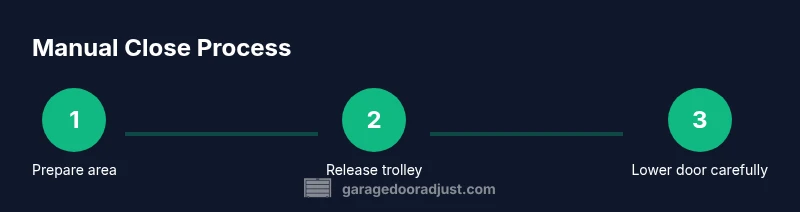
Follow these steps to bring the door down safely. Step 1: Stand to the side of the door and verify the path is clear. Step 2: Locate the emergency release cord and pull straight down to disengage the trolley. Step 3: With the door released, support it with your hands as you slowly guide it toward the floor. Step 4: If the door feels heavy or unbalanced, stop and return to the open position; do not force it. Step 5: Once the door is closed, reconnect power/restore the opener and test a gentle open and close to confirm safe operation. Tip: keep your body clear of the spring area at all times.
Common issues and how to handle them when closing manually
Several situations can complicate manual closing. A door that travels unevenly may indicate track or roller wear. If the door stalls or binds near the floor, pause and recheck the path for obstructions or debris. In some cases, resetting the opener after manual closing requires restoring the trolley to its default position and re-calibrating the opener limits. If you hear grinding or see misalignment during release, stop immediately and avoid forcing the door. Document any recurring symptoms to share with a technician during a service visit.
Aftercare: restoring safe operation and preventing future jams
After successfully closing manually, perform a quick inspection of hinges, rollers, tracks, and springs for signs of wear. Lubricate moving parts with a light lubricant suitable for garage doors, but avoid over-lubing springs or cables. Reconnect the opener and run a full cycle to verify safe function; check safety sensors and alignment. Consider scheduling a professional balance check and track alignment every 6–12 months, especially if you notice unusual noises or slow response. Regular maintenance reduces the likelihood of needing a manual close in the future.
Troubleshooting tips for stubborn doors
If the door refuses to descend smoothly, do not force it. Inspect for foreign objects, misaligned tracks, or damaged rollers. Ensure the safety reverse feature is functioning properly by testing with a small obstacle. If the door continues to resist manual closing, seek professional assistance rather than risking injury. A stubborn door may indicate a more serious issue with springs, cables, or torsion hardware that requires specialized tools and knowledge.
When to call a professional vs DIY
DIY manual closing is acceptable for doors with straightforward spring systems and good balance. If your door is heavy, unbalanced, or if you hear grinding or observe uneven movement, call a professional. Complex torsion springs, inspects of cables, or doors that repeatedly drift after manual closure warrant expert help to avoid injuries. Regular professional maintenance also helps catch issues early and reduce emergency situations.
A quick maintenance plan for ongoing reliability
Create a simple maintenance routine that includes monthly visual checks of tracks and rollers, biannual lubrication of moving parts, and annual balance tests. Keep a basic toolkit handy, including a flashlight, gloves, and a small ladder. Record any odd noises, binding, or changes in door behavior and address them promptly. A proactive approach minimizes the need for manual closes and keeps your garage door operating smoothly.
Tools & Materials
- Flashlight(Bright, preferably LED, to inspect hardware in low light)
- Work gloves(Grip and protect hands during release and movement)
- Safety glasses(Protect eyes from debris or sudden door movement)
- Ladder or stable step-stool(Use to reach hardware and ensure safe release points)
- Marker or tape(Label release positions or springs for later reference)
- Adjustable wrench(Have on hand if minor adjustments are needed)
- Plywood or wood block(Can stabilize door if imbalance is detected)
Steps
Estimated time: 25-35 minutes
- 1
Prepare the area and safety checks
Clear the doorway, remove pets and people from the path, and ensure you have a clear plan before touching the door. Verify you have adequate lighting and a stable stance. This initial setup reduces surprises during the manual close process.
Tip: Stand with your feet shoulder-width apart and keep hips aligned to avoid strain. - 2
Power down the opener
If possible, switch off or unplug the garage door opener to prevent automatic movement while you work. This reduces the risk of the door moving unexpectedly as you prepare to release it.
Tip: If you cannot unplug, switch off at the wall control and keep the door in a fixed position. - 3
Engage the emergency release
Locate the red emergency release cord near the opener trolley and pull straight down to disengage the trolley. This allows you to lower the door manually without the opener interfering.
Tip: Do not yank; a smooth, controlled pull minimizes wear on the trolley. - 4
Lower the door with control
With the door released, support and guide it downward slowly. Keep fingers away from hinges and springs and move your hands along the door’s surface to avoid pinch points.
Tip: If the door feels heavier than expected, stop and reassess the path for obstructions. - 5
Ensure the door settles securely
Lower the door to resting position on the floor or a stable surface. Verify the door cannot roll up or drift away from the closed position.
Tip: Do not leave the door halfway closed or uncontrolled. - 6
Re-engage and test the opener
Reconnect the opener to restore powered operation and run a test cycle to ensure safety sensors and limits are correctly set.
Tip: Watch for smooth operation and sensor alignment during the test. - 7
Document and plan follow-up
Note any issues observed during the manual close and plan a maintenance visit if needed. Schedule balance checks and track alignment to prevent future manual close scenarios.
Tip: Keeping a record helps with future troubleshooting and service visits.
Got Questions?
When should I manually close a garage door?
Use manual closing when the opener fails or presents a safety risk, provided you can do so without forcing the door or risking injury. Always assess surroundings first and prefer professional help if the door is unbalanced.
Use manual closing only when the opener is not working and it’s safe to do so; assess surroundings and avoid forcing the door.
Is it safe to manually close a garage door by myself?
It can be safe for light, balanced doors with proper technique and protective gear. If the door is heavy, unbalanced, or you hear grinding, stop and call a professional.
It's only safe if the door is balanced and you use proper safety gear; otherwise get help.
What does the emergency release cord look like and do?
The emergency release cord is typically a red cord near the opener trolley. Pulling it disengages the door from the opener, allowing manual operation.
Look for the red cord by the opener; pulling it disengages the mechanism so you can manually control the door.
What if the door starts to drop too fast during manual close?
Stop immediately, re-check for obstructions, and avoid forcing the door. If the door continues to drop rapidly, seek professional assistance.
If it drops faster than you can control, stop and call a technician.
How do I re-engage the opener after manual closing?
Reconnect power to the opener and perform a full open/close cycle to recalibrate the system and ensure safety sensors work.
Plug the opener back in and run a test cycle to verify everything is back to normal.
What maintenance helps prevent needing a manual close?
Regular lubrication, track alignment checks, balance assessments, and sensor alignment are key to reducing the need for manual closes.
Keep up with lubrication, balance checks, and sensor alignment to prevent future issues.
Watch Video
Quick Summary
- Disconnect power before manual closing
- Release the door with a controlled, steady motion
- Lower the door slowly and keep hands away from pinch points
- Test safety sensors after restoration of power
- Schedule regular balance and track maintenance