Zeeland Garage Door: Step-by-Step Repair & Installation Guide
Learn to diagnose, repair, and install Zeeland garage doors safely with this expert, step-by-step guide from GarageDoorAdjust. Includes tools, procedures, safety tips, and when to call a professional for best results in Zeeland.


With this guide, you will diagnose, repair, and install a zeeland garage door safely and efficiently. You’ll learn symptom checklists, the exact tools you need, and a clear step-by-step process to restore reliable operation. By following GarageDoorAdjust’s proven method, homeowners can reduce downtime and avoid costly service calls. This quick-start snapshot helps you begin on the right foot.
zeeland garage door basics
A zeeland garage door refers to the common sectional or tilt-up doors found in Zeeland communities, where local weather and coastal humidity influence performance. The zeeland garage door you own is typically a layered assembly: door panels, tracks, rollers, springs (torsion or extension), hinges, weather seals, and an electric opener with safety sensors. In Zeeland, salt air, humidity, and temperature swings can accelerate wear on metal components and weatherstripping. Understanding how the door is supposed to operate helps you spot issues early and plan safe fixes. In this guide, we emphasize practical, homeowner-friendly steps grounded in real-world experience fromGarageDoorAdjust. Regular inspections focused on balance, movement, and seals prevent small problems from ballooning into costly repairs. Keeping the term zeeland garage door in mind helps you tailor maintenance to your local climate, ensuring smoother operation year-round.
Top components of a zeeland garage door
The core components of a zeeland garage door include the door panels that form the barrier, the tracks and rollers that guide movement, and the springs that balance the load. Torsion springs sit above the door on a torsion bar and provide the primary lifting force, while extension springs run along the sides of the tracks. Hinge connections and rollers must be in good condition to prevent binding. Tracks should be plumb and free of debris; rust or dents can cause binding and noisy operation. Weather seals at the bottom help insulate against Zeeland's damp climate. The opener, photoelectric sensors, and manual disconnect provide safety and convenience. If any component shows wear—cracked hinges, a bent track, or frayed cables—address it promptly to avoid a sudden failure. GarageDoorAdjust’s findings indicate that proactive component checks significantly reduce unexpected breakdowns in Zeeland homes.
Safety first: essential precautions
Before you touch any part of a zeeland garage door, prioritize safety. Disconnect the door's power at the opener and, if applicable, switch off the circuit breaker feeding the door system. Wear protective gloves and eye protection, and keep bystanders (especially children) away. Only perform tasks within your skill level; never attempt spring adjustments or high-tension work without training. Use a sturdy ladder on solid ground if you need access to the tracks or torsion springs, and never place any body parts under a door that could close unexpectedly. By adhering to safety fundamentals, you minimize risk and protect your home and family. GarageDoorAdjust emphasizes safety as the backbone of any successful repair or maintenance project.
Diagnosing common symptoms in Zeeland environments
Common symptoms of zeeland garage door issues include slow or jerky movement, door binding along the tracks, unusual grinding or squeaking, or doors that reverse before closing. Start with a visual inspection: clean the tracks, check for obstructions, and test balance by disconnecting the opener and lifting the door manually. If it remains heavy, aligns poorly, or doesn’t stay in place when lifted, the problem may be springs, cables, or balance issues. Inspect hinges and rollers for wear; replace worn parts before they fail entirely. Weather stripping should be intact to prevent drafts and rust, especially in damp seasons. Regular lubrication of moving parts with a silicone-based spray reduces noise and wear. Following a structured diagnostic flow helps you identify the root cause without guessing.
Maintenance routines to extend life of your zeeland garage door
Proactive maintenance extends the life of Zeeland garage doors by reducing friction and exposure to elements. Schedule a monthly quick check and a deeper quarterly service. Keep tracks clean and straight; remove debris and ensure screws are tight. Lubricate hinges, rollers, and torsion springs (if applicable) with a silicone-based product designed for high-tension hardware. Replace weather seals as needed to maintain energy efficiency. For salt-prone coastal areas, wipe metal surfaces to remove salt buildup and inspect for rust. Finally, verify safety features, sensors, and auto-reverse function monthly to ensure reliable operation. Regular care saves time and money over the door’s lifespan.
Troubleshooting flow for zeeland garage door symptoms
Start with power and safety checks, then move through a logical sequence of tests: 1) is the door balanced, 2) are tracks aligned and clear, 3) are rollers and hinges in good condition, 4) is the opener responding to controls, 5) are safety sensors aligned. With each step, document results and stop if you encounter high-tension components you are not trained to handle. A well-documented flow reduces guesswork and speeds repairs. For persistent issues, consult the manufacturer’s manual and consider a professional assessment if the door shows signs of wear on springs or cables.
When to call a pro vs. DIY in Zeeland
Certain tasks are suitable for DIY execution, especially basic maintenance or simple part replacements like weather seals or lubricating moving parts. However, high-tension springs, track re-alignment, or electrical work with the opener should be handled by a qualified technician. If you notice bedrock issues like a door that won’t stay balanced or falls when released, stop and call a pro immediately. Local climate and corrosion due to salt air can accelerate wear; a professional assessment can prevent further damage. The goal is safe, reliable operation with minimal downtime.
Zeeland garage door installation overview (high-level)
Installing a new zeeland garage door involves selecting a door type (sectional or tilt-up), confirming rough opening dimensions, choosing a compatible opener, and planning for weather sealing. The installation requires accurate height and width measurements, track mounting alignment, and tensioning of springs by trained personnel. While some homeowners complete minor installations, major installs should follow manufacturer instructions and local codes for safety and warranty compliance. A professional installation ensures proper balance, safe operation, and long-term performance in Zeeland conditions.
Common mistakes to avoid during maintenance and repair
Avoid over-lubricating, which can attract dirt and create buildup on tracks. Never work on springs or cables without disconnecting power and using proper safety equipment. Do not force a door out of misalignment; instead, re-check track mounting and rollering first. Misdiagnosing a balance issue as a loose bolt can lead to wasted time and deeper damage. Finally, forgetfulness about safety steps or skipping manufacturer instructions can void warranties and increase risk. Learn from these pitfalls to protect your investment.
Tools & Materials
- Safety gear (gloves and eye protection)(Non-slip gloves, ANSI-rated safety glasses)
- Ladder (6-8 ft)(Stable, on level ground; watch for slippery rungs)
- Wrenches and sockets set(Combination wrenches; 1/4" to 3/4" range)
- Screwdrivers (Phillips #2, flat-head)(Magnetic tips help prevent dropping screws)
- Pliers (needle-nose)(Use for gripping and guiding small parts)
- Silicone-based lubricant spray(Apply to hinges, rollers, and tracks; wipe excess)
- WD-40 or similar solvent(Use sparingly for stubborn grime on tracks)
- Voltage tester(Verify power off when dealing with openers or wiring)
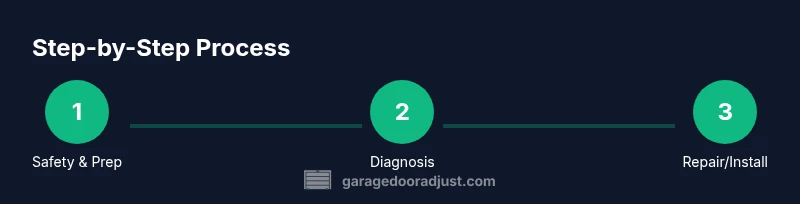
Steps
Estimated time: 60-120 minutes
- 1
Verify safety and power off
Disconnect power to the opener or switch off the breaker feeding the door system. Confirm the door is in a closed position by hand before any inspection. This prevents accidental movement and injuries during inspection.
Tip: Double-check power is off at both the wall outlet and the breaker; test the opener switch with a non-contact tester. - 2
Inspect mounting hardware
Look for loose screws on brackets, tracks, and hinges. Tighten gently with the appropriate screwdriver or wrench, avoiding overtightening that could strip threads. Check for bent tracks and repair or replace as needed.
Tip: Use a level to confirm tracks are plumb before tightening; misaligned tracks cause binding. - 3
Check tracks, rollers, and hinges
Clean debris from tracks, inspect rollers for wear, and replace any damaged hinges. Lubricate moving parts with silicone spray, avoiding over-application that can attract dust.
Tip: Discard cracked rollers; a failed roller can cause door to derail from track. - 4
Assess door balance and spring safety
If you suspect balance issues, do not attempt to adjust springs. Instead, test the door balance by lifting it halfway and letting go. If it moves up or down, this indicates a balance problem requiring a pro.
Tip: Never release the door while assisted by a spring mechanism; springs store dangerous energy. - 5
Test opener response and sensors
Reconnect power and test the opener using the remote. Ensure the safety sensors align and stop the door if an obstacle is detected. Re-check after adjustments.
Tip: Keep the sensor eyes clean and aligned with a straight line between them. - 6
Finalize with a full door test
Cycle the door through several open/close iterations to verify smooth operation. Listen for unusual noises and monitor for any resistance or sticking points.
Tip: If you hear grinding, pause and re-inspect tracks and rollers before continuing.
Got Questions?
What are the most common Zeeland garage door problems?
The most common issues include noisy operation, rough or jerky movement, doors that won’t stay balanced, and sensors that misread obstructions. Regular lubrication, track cleaning, and weather seal replacement can prevent many of these problems. If springs or cables show wear, seek professional help.
Common problems are noisy doors, binding tracks, and misaligned sensors, which can often be addressed with lubrication, cleaning, and weather seal replacement. For springs or cables, call a pro.
How often should I lubricate my Zeeland garage door?
Lubricate moving parts every 6 to 12 months, or more often in coastal areas with higher moisture. Focus on hinges, rollers, and track joints with a silicone-based spray. Wipe away any excess to prevent dirt buildup.
Lubricate every six to twelve months, more often in damp coastal areas. Use silicone spray and wipe off extra.
Can I install a new opener myself?
Installing a new opener can be a DIY project if you follow instructions carefully and stay within your skill level. However, ensure safe handling of electrical connections and verify the door balance. If unsure, hire a pro to ensure safety and warranty compliance.
You can, but make sure you understand the electrical steps and door balance. If not confident, hire a pro.
What should I do if my door is off its tracks?
If the door is off its tracks, stop using the door and consult a professional. A door off track can slip unpredictably and cause injury. Do not attempt to realign tracks without proper guidance.
If it’s off track, stop and call a professional. Don’t try to realign it yourself.
Is a Zeeland garage door installation best handled by a pro?
For a first install, a pro ensures proper sizing, torque, and safety compliance. If you’re comfortable, you can perform non-load-bearing steps under manufacturer guidance. Always follow local codes and warranty requirements.
A pro helps with proper sizing and safety, but some non-load steps can be DIY with guidance.
How do I know when to replace springs or cables?
Signs include persistent imbalance, visible wear or corrosion on springs, frayed cables, or frequent spring-related failures. Since springs carry high tension, replacement should be done by a trained technician.
Look for wear and balance issues; spring work is dangerous, so professional replacement is recommended.
Watch Video
Quick Summary
- Inspect safety, balance, and seals before repairs
- Use the correct tools and follow safety protocols
- Know when DIY ends and professional help begins
- Regular maintenance saves time and money
- Document symptoms to aid effective fixes