Superior Garage Door Repair: A Step-By-Step Guide for Homeowners
Learn safe, proven steps for superior garage door repair. This guide covers diagnosis, common fixes, maintenance tips, and when to hire a professional, with guidance from GarageDoorAdjust.


You’ll learn how to diagnose and safely perform common garage door repairs, from realigning tracks to testing openers and sensors. This guide walks homeowners through a practical, step-by-step process, with safety checks and clear decisions about DIY versus professional help. By following these steps, you can achieve reliable results and minimize the risk of injury or further damage.
Introduction to Superior Garage Door Repair
Superior garage door repair begins with a plan and a safety-first mindset. Homeowners often underestimate the time and care needed for even small fixes. According to GarageDoorAdjust, most issues stem from a few practical causes: misalignment, worn hardware, safety sensor miscalibration, or simple lack of lubrication. The GarageDoorAdjust team found that success comes from a disciplined diagnostic approach: verify power, inspect the mechanism, and stage fixes methodically. In this guide you’ll understand the philosophy behind effective repair, how to assess the problem, and how to decide whether you can tackle it yourself or if you should call a pro. You’ll also see how proper safety practices protect you and your family while you work. By the end you’ll have a clear plan for diagnosing symptoms, prioritizing fixes, and maintaining your garage door so it runs reliably for years.
This article is designed for homeowners who want to tackle common tasks safely and effectively. The information aligns with best practices used by technicians and reflects GarageDoorAdjust’s emphasis on careful planning and verification before any repair work. The goal is to help you fix what’s broken, not create new problems, and to give you the confidence to decide when professional help is warranted.
Assessing Symptoms and Diagnostics
When your garage door behaves badly, start with a simple checklist to distinguish common culprits from more serious failures. Common symptoms include doors that won’t open or close reliably, doors that drift or fall, loud grinding or binding noises, uneven movement, and misaligned tracks. Diagnostics should begin with safety and a visual inspection, followed by targeted tests. Ask yourself: Is the door lopsided or binding on one side? Do the rollers show excessive wear or flat spots? Are the springs corroded, stretched, or damaged? Is the opener responding consistently to remote signals and wall controls? A structured diagnostic helps you prioritize fixes and avoid unnecessary parts replacement. GarageDoorAdjust recommends documenting symptoms with photos or notes; this makes it easier to track changes as you work and communicate with a professional if you need one. In this section you’ll learn how to categorize issues and decide on the right repair path.
Safety Considerations and Protective Gear
Before touching any garage door components, establish a safety-first routine. First, unplug the opener or switch off power at the wall to prevent accidental movement. Wear sturdy gloves and safety glasses to protect hands and eyes from pinch points, flying debris, or unexpected springs release. Keep children and pets away from the work area and avoid standing directly under a door while testing. Make sure the door is fully supported when you are loosening or adjusting hardware. If you must work at height, use a stable ladder and have a second person assist you. Always keep a clear exit path in case the door moves unexpectedly. These precautions are non-negotiable; they reduce the risk of serious injury and protect your home’s electrical system. According to GarageDoorAdjust, consistent safety practices are the first line of defense in superior garage door repair.
Quick Wins You Can Try Before Calling a Pro
Some issues can be resolved with simple, low-risk adjustments. Try these quick wins if you’re comfortable:
- Tighten loose mounting brackets and track screws with a properly sized screwdriver and a cordless drill.
- Clean the tracks and rollers to remove dirt and debris that impede smooth movement.
- Lubricate moving parts with a garage-door approved lubricant, avoiding the tracks themselves.
- Realign safety sensors by wiping sensor faces and re-centering their brackets so the beam stays aligned.
- Manually test balance by disconnecting the opener and lifting the door midway; if it does not hold, there may be a balance issue needing professional attention.
These steps won’t replace worn springs or damaged structural components, but they can restore function and help you understand what needs professional care. As always, if any step feels risky, pause and seek expert help. GarageDoorAdjust’s guidance emphasizes making safe, incremental improvements before escalating to professional service.
Replacement Parts: Springs, Tracks, and Opener Components
Understanding the major components helps you identify what’s failing. The door uses tracks, rollers, hinges, and mounting brackets to guide movement. Springs (torsion or extension) store and release the energy needed to lift the door; they are under significant tension and can cause serious injury if mishandled. Tracks should be vertical and true; bent or damaged tracks impede safe operation. The opener is the motor and control system that powers door movement; it can develop electrical or programming issues over time. When you spot obvious damage—cracked or bent tracks, worn rollers, frayed cables, or a broken spring—avoid DIY fixes on high-tailure parts. Replacement parts should be matched to your door’s weight, height, and spring type. If you’re unsure, consult a pro. Regular maintenance and timely replacements keep a door reliable and safe and reduce the risk of cascading failures that lead to bigger costs. The GarageDoorAdjust team notes that the right parts, installed correctly, extend the door’s life and performance while minimizing repair downtime.
Step-by-Step Troubleshooting Framework
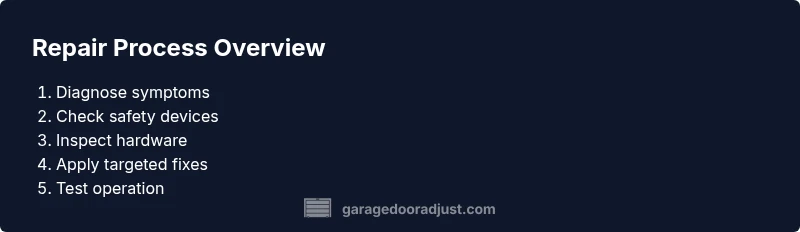
A robust troubleshooting framework helps you stay organized and reduces guesswork. Start with safety, then verify power and control responses, followed by mechanical checks. Use a simple decision tree: if the door is unresponsive, inspect the opener and sensors; if the door moves but is noisy, inspect tracks, rollers, and lubrication; if the door is unbalanced or heavy, test spring systems and balance. Document each finding and test, so you can see patterns emerge. This block provides a structured approach you can adapt, with clear decision points on when to call a professional. The key is to stay methodical, test after each adjustment, and avoid overcorrecting. GarageDoorAdjust’s guidelines emphasize keeping a log and stopping when something feels unsafe or uncertain.
Maintenance Practices for Longevity
A well-maintained door is a reliable door. Create a seasonal maintenance routine that includes: cleaning and lubricating moving parts; inspecting hardware for wear; testing safety features; replacing weatherstripping as needed; and recalibrating sensors after any alignment work. Lubrication should be applied to hinges, rollers, bearings, and springs’ attachment points, avoiding the track surfaces. Inspect weather seals and replace cracked weatherstripping to improve energy efficiency and door balance. Regular inspections help you catch issues before they cause major damage. The key is consistency: set reminders and stick to a cadence so problems don’t accumulate.
The GarageDoorAdjust team stresses that small, proactive checks reduce downtime and improve performance over the door’s life.
When to Hire a Pro: A Cost-Benefit Perspective
Deciding whether to DIY or hire a professional depends on the issue’s complexity, safety risks, and your comfort level. Simple tasks like tightening screws, cleaning, and lubrication are often good DIY candidates. Complex problems—such as significant spring wear, frame damage, or electronic control issues—raise safety concerns and may require specialized tools and training. If you suspect a broken spring, a bent track, or a dead safety sensor alignment, it’s wise to call a pro to avoid injury and prevent further damage. The cost-benefit perspective emphasizes that while DIY can save money for minor tasks, professional service reduces the risk of accidental injury and costly missteps. GarageDoorAdjust analysis shows that timely professional intervention for high-tension components yields safer operation and longer door life. If you’re unsure, start with a professional inspection to scope the work and then decide on subsequent steps.
This section helps homeowners weigh benefits against risks, so you can make an informed decision that protects your family and home.
DIY Project Checklist and Quick Reference
Use this quick reference to guide your DIY tasks:
- Verify power and reset openers before any work.
- Inspect tracks, rollers, hinges for wear or damage.
- Realign tracks if gaps appear and tighten brackets.
- Check safety sensors and recalibrate if misaligned.
- Lubricate moving parts and ensure door balance manually.
- Test operation with the opener after adjustments.
- Reconnect power and run multiple test cycles.
This compact checklist helps you stay organized and ensures you cover essential safety and functional checks. Remember: if anything feels unsafe, stop and call a professional. The goal is to improve reliability while protecting people and property.
Common Pitfalls and How to Avoid Them
Even experienced DIYers can trip up on subtle issues. Common pitfalls include rushing through tests without safety confirmations, over-tightening hardware, and neglecting lubrication. Avoid using the wrong lubricant on tracks, which can attract dust and cause sticking; use manufacturer-approved products. Another pitfall is misjudging the door’s balance; moving too quickly from component inspection to replacement can waste time and money. A calm, stepwise approach minimizes risk and improves outcomes. The most important rule is to place safety above all else—if you’re not confident, stop and call a pro. This mindset aligns with GarageDoorAdjust’s philosophy of safe, deliberate repair.
Tools & Materials
- Power drill with bit set(For bracket tightening and screw removal)
- Screwdriver set (Phillips and flat-head)(Use the correct size to avoid stripping screws)
- Wrench set(Crescent or adjustable wrenches can be handy)
- Level(Check track alignment accurately)
- Pliers(Grip and hold components during adjustments)
- Tape measure(Assess track and door alignment distances)
- Safety glasses(Protect eyes from debris and tensioned parts)
- Work gloves(Protect hands and provide grip)
- Garage-door approved lubricant(Lubricate hinges, rollers, and springs’ attachments)
- Rags or microfiber cloth(Clean tracks and sensor lenses)
- Replacement components (as needed)(Springs, rollers, or weatherstripping as needed and only if you’re sure about handling)
Steps
Estimated time: 60-90 minutes
- 1
Disconnect power and secure the door
Turn off power to the opener at the wall or unplug the unit. This ensures the door cannot move unexpectedly, protecting you while you work. Confirm the door remains stable by manually supporting its weight at the bottom edge.
Tip: Double-check there is no residual power by attempting a short test pull on the wall control after disconnecting. - 2
Inspect tracks, rollers, and hinges
Look for bent tracks, loose brackets, worn rollers, or missing fasteners. Tighten screws carefully to avoid over-tightening, and note any components that appear damaged or misaligned. A gentle nudge should reveal if a track is true or binding.
Tip: Use a level to confirm tracks are perfectly vertical; even small deviations can cause binding. - 3
Check springs and balance
Identify the type of spring (torsion or extension) and assess wear. Do not attempt to unwind or adjust tension yourself if you suspect damage; high-tension springs can cause severe injury. If the door feels heavy or won’t stay up, spring evaluation should be performed by a professional.
Tip: If you hear loud banging or observe gaps in coils, stop and call a pro immediately. - 4
Test safety sensors and wiring
Clean sensor lenses and ensure alignment so the IR beam is uninterrupted. Test by placing an obstacle in the path; the door should reverse on contact. If the light isn’t steady or the beam is blocked intermittently, adjust brackets.
Tip: Avoid touching electrical wiring; keep hands dry and use insulated tools if you must handle wires. - 5
Lubricate moving parts
Apply a garage-door-approved lubricant to hinges, bearings, and joints. Wipe away excess to prevent dust accumulation. Do not spray lubricant directly on tracks as this can cause slipping.
Tip: Lubricate every 6 months or after a period of heavy use. - 6
Test door balance manually
With the opener disconnected, lift the door halfway and release. If it falls or rises, there’s an imbalance that likely involves springs or pivots. Do not force the door; seek professional evaluation if it doesn’t hold position.
Tip: Have a helper ready to assist with manual support if needed. - 7
Inspect weather seals and weatherstripping
Check the bottom seal and side weatherstrips for cracks or gaps. Replace worn strips to improve energy efficiency and reduce debris intrusion. A good seal also reduces noise from drafts and improves door alignment.
Tip: Clean tracks after removing weatherstripping to prevent contamination. - 8
Reconnect power and run test cycles
Reconnect the opener and perform several open/close cycles using the remote and wall button. Listen for unusual sounds, watch for binding, and note any irregularities. If the door operates smoothly, you’ve completed a safe, thorough check.
Tip: If any cycle fails, retrace steps to identify the source and avoid compounding the issue.
Got Questions?
Is it safe to fix a garage door spring by myself?
Springs are under high tension and can cause serious injury. Unless you have training and proper tools, avoid DIY spring work and contact a professional.
Springs are dangerous; for safety, hire a pro for spring work.
When should I replace versus repair my garage door?
If the door is worn, moves unevenly, or multiple components are failing, replacement may be more cost-effective than ongoing fixes. Age and overall condition matter.
If the door is old or continually failing, replacement might be best.
How long does a typical garage door repair take?
DIY fixes can take from about one to a few hours depending on the issue and parts. Professional repairs may take longer when parts or inspections are required.
Most repairs take a few hours, but complexity matters.
What maintenance steps prevent future problems?
Regular lubrication, inspection of tracks and hardware, sensor cleaning, and weatherstripping checks help prevent future failures and extend door life.
Keep up with lubrication and sensor checks to prevent issues.
Can I fix my opener programming myself?
Many openers include a manual with programming steps. Follow the manufacturer’s instructions precisely; if issues persist, consult a pro for safety reasons.
You can usually reprogram with the manual, but call a pro if you’re not sure.
What costs should I expect for DIY vs professional repair?
Costs vary based on parts and labor. DIY costs depend on replacement parts you buy; professional service covers labor and parts, with rates varying by region.
Costs depend on parts and labor; it varies widely.
Watch Video
Quick Summary
- Safety first, always.
- Diagnose before replacing parts.
- Decide between DIY or pro help based on risk.
- Regular maintenance extends door life.