Garage Door Job: Step-by-Step Home Repair Guide
Learn to diagnose, repair, and maintain a garage door with a safe, step-by-step approach. This home repairs guide covers common issues, essential tools, safety practices, and maintenance to keep your door reliable and quiet.


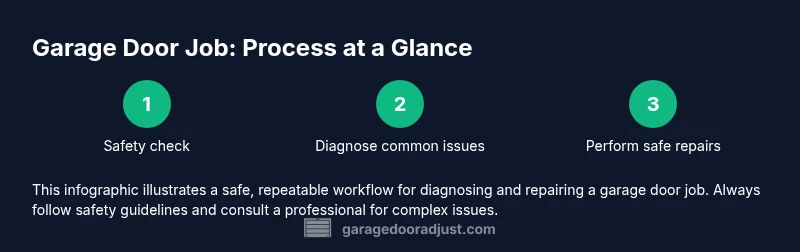
This guide helps homeowners complete a safe, effective garage door job—from diagnosing common causes to performing repairs and maintenance with the right tools. You’ll follow a clear, step-by-step workflow, learn essential safety precautions, and know when to call a pro. This approach minimizes injury risk, prevents further damage, and reduces repair costs for homeowners.
Why a careful garage door job matters
According to GarageDoorAdjust, a methodical approach reduces risk and saves money on home repairs. The GarageDoorAdjust team found that many homeowners underestimate the complexity of even minor adjustments, leading to skipped safety steps and further damage. This article walks you through a complete, safe garage door job, from diagnosis to maintenance, with practical steps you can perform yourself and clear warnings about when professional help is needed. By treating the problem as a system rather than isolated parts, you preserve balance, improve security, and extend the life of components such as springs, cables, rollers, and the opener itself. A well-executed job also minimizes noise and prevents sudden failures that could trap you or family members inside or outside the garage. The goal is to empower homeowners with confidence, a clear plan, and the right tools so you can complete tasks safely, efficiently, and with measurable results. Over the years, we’ve seen that following a structured process reduces rework and frustration, turning a potentially risky project into a manageable DIY maintenance task. This guide uses plain language, real-world examples, and checklists you can print or save on your phone.
Safety First: Protect Yourself and Your Family
Garage doors operate under tension and move with surprising speed when activated incorrectly. Before you touch anything, disconnect power to the opener and lower the door manually to a stable position. Wear safety glasses and sturdy gloves, and keep children and pets away from the workspace. Use a helper when testing balance, sensors, or testing door movement; a second person can hold a support while you adjust hardware. Keep a clear workspace, remove trip hazards, and never place yourself under an overhead door that is being held only by cables or springs. If you suspect damage to springs, cables, or tracks, stop immediately and consult a professional—these parts store energy that can cause serious injuries. When you work on the door, avoid using metal tools near the rollers or tracks where chips or bends could create sharp edges. Finally, if the door has a battery-powered opener, unplug it or switch off the circuit breaker to prevent accidental movement. With safety aligned, you can proceed with confidence knowing you’ve reduced common hazards associated with a garage door job.
Common Causes of Garage Door Problems and How to Diagnose Them
Most garage door problems fall into a few categories: worn springs or cables, misaligned tracks, worn hinges or rollers, and a failing opener. Based on GarageDoorAdjust analysis, the most frequent causes involve springs and track alignment rather than the motor alone. Start by manual testing: lift the door halfway with one hand and feel for resistance; it should stay balanced if the springs are in good condition. Check the tracks for dents, rust, or obstructions, and verify that screws securing the tracks are snug. Inspect the rollers for flat spots or separation and examine the hinges for looseness. If the door feels heavy or binds as it travels, or if there are odd noises such as grinding, scraping, or squealing, you likely have an aging component in one of these areas. Keep a simple record of what you observe—photos help you track which parts were worked on and what adjustments were made. Remember, some symptoms may be interrelated: a misaligned track can cause rollers to wear faster, and worn rollers can make misalignment worse. The GarageDoorAdjust team emphasizes that early diagnosis saves time and money.
Tools, Materials, and Prep for a Garage Door Job
Before you begin, gather essential tools and materials so you don’t disrupt progress with trips to the hardware store. A cordless drill, a set of wrenches and pliers, screwdrivers (flathead and Phillips), a tape measure, and a level are non-negotiable for many repairs. Safety gear—glasses, gloves, and a sturdy ladder—is required to protect you during all phases. Silicone-based garage door lubricant helps quiet squeaks and reduce wear on hinges, rollers, and tracks. Keep a few spare fasteners (screws, bolts) and track shims on hand, as misalignment can require tiny adjustments. If you anticipate working with springs, wind bars and locking pliers become essential for controlled tensioning, so handle with extreme care or leave spring work to a pro. Finally, label components as you remove them and keep the hardware organized to simplify reassembly and future maintenance.
Quick Diagnostic Checklist You Can Run Before Starting
Perform a lightweight pre-check to save time and avoid wasted effort. Walk around the door structure and inspect tracks for dents or bends, verify that mounting screws are snug, and confirm the door closes and opens smoothly by hand. Test safety sensors: place an obstacle in the path and confirm the opener reverses as required. Listen for unusual noises—grinding or scraping often signal worn components or misalignment. Check balance by lifting the door halfway and releasing gently; it should stay in place. If the door falls quickly or rises unevenly, there’s likely a balance or spring issue that needs attention. Document observations with notes or photos to guide future maintenance and communicate with any professional you hire.
Step-by-Step Repair Scenarios You Might Encounter
You may face several repair scenarios, from lubricating moving parts to realigning tracks or replacing worn rollers. If the door is noisy but moves smoothly, lubrication and minor hinge tightening could be enough. For roll-up doors, a bent track or a worn roller can cause binding; realign the track by loosening mounting screws, moving the track to restore alignment, and retightening. If you notice uneven door movement or a heavy door, inspect torsion springs and cables and test balance again after adjustments. When in doubt, begin with non-destructive maintenance steps—lubrication, tightening, and cleaning—before pursuing component replacements. For complex issues like spring or torsion system problems, contact a licensed technician to prevent injury and ensure safety.
Preventive Maintenance to Extend Lifespan
Developing a simple maintenance habit dramatically extends the life of a garage door system. Schedule a quick quarterly check: inspect springs and cables for wear, test balance, clean and lubricate moving parts, and verify safety sensors operate correctly. Clean tracks and rollers to remove dust and debris that can cause friction and abnormal wear. Tighten nuts and bolts a little at a time to avoid over-tightening, which can crack tracks or strip fasteners. Consider replacing worn hardware before it fails to prevent sudden breakdowns. Document dates and tasks completed so you can track trends and plan replacements before they become emergencies. A consistent routine reduces noise, improves performance, and keeps the door's balance and safety features in top condition.
When to Seek Professional Help and Final Safety Note
Some garage door tasks exceed typical DIY scope, particularly torsion-spring work, structural track realignment, or cable replacement. If you notice visible track deformation, cables slipping, a door that won’t stay balanced, or persistent unusual noises after basic maintenance, call a pro. This is not a value judgment of your abilities but a safety precaution that protects you and your family from serious injury. The GarageDoorAdjust team recommends scheduling an annual professional inspection in addition to your routine DIY checks. They can verify spring tension, cable integrity, and sensor alignment, and perform major repairs with the correct tools and experience. Remember, safety always comes first in any garage door job.
Tools & Materials
- Cordless drill/driver(With #2 Phillips bit and 1/4-in hex bit)
- Set of metric and SAE wrenches(Open-end and box-end; include 7mm-15mm range)
- Pliers (needle-nose and locking)(For gripping and clamping isometric parts)
- Flathead and Phillips screwdrivers(Assorted sizes)
- Tape measure (25 ft or longer)(For alignment and balance checks)
- Level(Helps ensure tracks are true)
- Ladder(Stable and tall enough to reach tracks)
- Safety glasses(Eye protection during all steps)
- Work gloves(Grip and protect hands)
- Silicone-based garage door lubricant(Use on metal hinges, rollers, and tracks)
- Lubricant applicator or brush(Optional for precise application)
- C-clamps or locking pliers(For safe holding during adjustments)
- Winding bars (for springs)(Necessary for spring adjustments; handle with care)
- Wire cutters(Useful for trimming after replacements)
Steps
Estimated time: 120 minutes
- 1
Secure the door and disconnect the opener
Power off the opener at the wall switch and unplug the motor if possible. Manually raise the door to a comfortable height and support it with a secure brace. This prevents unexpected movement during inspection. If you don’t have a helper, use wedges on the tracks to minimize shifting.
Tip: Always confirm power is off before touching the opener housing or potentiometers. - 2
Test safety sensors and emergency release
Confirm that the auto-reverse feature works by placing an object in the door path and observing reversal. Practice using the emergency release handle to operate the door manually in case the opener fails. This ensures you can operate the door safely if power is interrupted.
Tip: Have a second person available to assist during sensor tests. - 3
Inspect tracks, rollers, and hardware
Look for dents, bends, or loose screws along the rails. Rollers should roll smoothly without sticking or excessive wobble. Tighten loose mounting screws and replace visibly worn components. A misaligned track can cause uneven wear and binding.
Tip: Work from one side to the other and test movement after each minor adjustment. - 4
Check door balance by manual lift
With the door still braced, lift to about halfway and release slowly to see if it stays put, rises, or falls. A properly balanced door should stay in place or move with minimal resistance. If it drops, there may be spring or cable wear that needs professional attention.
Tip: Do not place any body weight under the door while testing balance. - 5
Lubricate moving parts
Apply silicone-based lubricant to hinges, pivots, rollers, and the track where metal-to-metal contact occurs. Wipe away excess to prevent dust buildup. Lubrication reduces friction and noise and helps components wear evenly over time.
Tip: Avoid over-lubricating, which can attract dirt and impair performance. - 6
Realign tracks if needed
Loosen track mounting screws slightly, tap the track back into true alignment, then retighten screws gradually. Ensure the track sits plumb and centered over the door. Misalignment can cause uneven wear and repeated jams.
Tip: Use a level to confirm tracks are perfectly vertical during realignment. - 7
Address springs and cables with caution
If springs appear worn, مر inspect cables for fraying, or you notice irregular tension, stop and do not attempt a DIY spring replacement. Springs store a lot of energy and can cause severe injury. If you suspect any spring issue, call a certified technician for safety.
Tip: Never wind or unwind torsion springs without proper training and equipment. - 8
Test the opener and limit switches
Reconnect power, test the door with the opener, and observe the travel limits. Adjust the limit screws if the door stops short or overshoots. Confirm the door closes smoothly and reverses when encountering resistance.
Tip: Test multiple cycles to ensure consistent performance across open and close actions. - 9
Document maintenance and set a plan
Record the tasks performed, parts replaced, and any adjustments made. Set reminders for quarterly checks and annual professional inspection. Keeping a log helps you monitor wear and plan proactive maintenance.
Tip: Keep a copy of the observations with photos for reference.
Got Questions?
Can I fix torsion springs myself, or should I hire a professional?
Torsion springs are under extreme tension and can cause severe injury if mishandled. DIY spring replacements are not recommended for most homeowners. Hire a licensed technician for spring work and related safety checks.
Torsion springs are dangerous to work on yourself. It's best to hire a licensed technician for spring work and safety checks.
Is lubrication really necessary for a garage door?
Yes. Proper lubrication reduces friction, extends component life, and minimizes noise. Use silicone-based lubricant on metal hinges, rollers, and tracks; avoid over-lubrication and never spray lubricant on nylon or rubber parts.
Lubrication is important; use silicone-based lubricant on metal parts and avoid overdoing it.
How long does a typical garage door job take?
Average DIY tasks can take from under an hour to a few hours depending on complexity. More involved repairs, especially those involving springs or tracks, may require professional service and longer timelines.
Most simple tasks take under a few hours, more complex repairs may need a pro and more time.
Should I disconnect power before starting?
Yes. Always disconnect power to the opener before inspection or repairs to prevent accidental movement. If you cannot safely disconnect, stop and seek professional help.
Yes, always disconnect power before starting any checks or repairs.
What maintenance should I perform monthly?
Open and close the door slowly to test balance, clean tracks, lubricate moving metal parts, and check safety sensors' alignment. Keep a simple log of maintenance actions.
Do a quick monthly check: balance test, track cleaning, lubrication, and sensor alignment.
When is track misalignment unsafe to ignore?
Visible bending, grinding noises, door binding, or uneven operation indicate unsafe misalignment. Stop work and seek professional assistance to realign tracks properly.
If you see bent tracks or the door binds, stop and call a pro.
Watch Video
Quick Summary
- Identify the problem with a safe, structured approach
- Prioritize safety and proper tool use
- Differentiate DIY tasks from areas requiring a pro
- Maintain a routine to extend door life
- Document actions for future reference