Residential Garage Door Repair: A Practical Step-by-Step Guide
A homeowner-friendly guide to diagnosing, repairing, and maintaining residential garage doors and openers. Learn safe, step-by-step methods, essential tools, and when to call a professional for complex issues.


You will learn how to diagnose common symptoms, perform safe, basic repairs, and restore reliable operation to a residential garage door. This quick guide outlines the core steps, essential safety precautions, and the tools you’ll need, plus guidance on when to call a professional.
Understanding residential garage door repair
Residential garage door repair encompasses a range of tasks from diagnosing misalignment to replacing worn hardware and recalibrating safety sensors. A typical home system includes the door panels, rollers, tracks, springs, an electric opener, and safety features. According to GarageDoorAdjust, most homeowner repairs focus on tracks, rollers, balance, and sensor alignment, rather than replacing heavy springs or repairing the opener's core drive. When issues arise, you’ll often notice doors that won’t open fully, slip off tracks, or make unusual noises. The goal of this guide is to help you safely diagnose symptoms, perform practical fixes, and decide when professional service is warranted. Always approach repairs with caution; rushing or disabling safety features can create additional hazards.
Safety first: essential precautions before you start
Before touching any moving parts or electricity, power down the opener and unplug it from the outlet. If your garage door is wired into a wall switch, lock out and tag the switch; keep curious hands away while the door is moving. Wear safety glasses, closed-toe shoes, and gloves, and work in a well-lit area. If you must go under the door, use clamps or have an assistant hold it, never rely on the opener to hold it open. Keep children and pets clear of the work zone. Safety is the foundation of any residential garage door repair project.
Core tools and materials you’ll need
Preparing a well-stocked toolkit saves time and reduces mistakes. The essentials include a set of screwdrivers, an adjustable wrench, pliers, a socket or ratchet, a tape measure, a flashlight, a level, and safety glasses. Add a ladder for access, silicone-based lubricant for moving parts, and clean rags for wiping excess lubricant. If you anticipate minor part replacements, have spare rollers and a few hinge screws on hand. Always consult your specific door model’s manual for part compatibility.
Diagnosing common symptoms and root causes
Common symptoms include slow or uneven movement, grinding noises, door opening partway, or a door that won’t stay in place. Start with a visual inspection of tracks for bends or obstructions, and check rollers for wear. Misalignment often stems from loose hardware or track deformation; bent tracks can cause binding and noise. Sensor lights that stay lit or fail to respond usually indicate misalignment or a dirty sensor eye. By systematically checking these components, you can narrow down the root cause without guesswork. GarageDoorAdjust analysis shows that many issues are resolved with basic tightening, cleaning, and lubrication rather than full replacements.
Step-by-step repair workflow (overview)
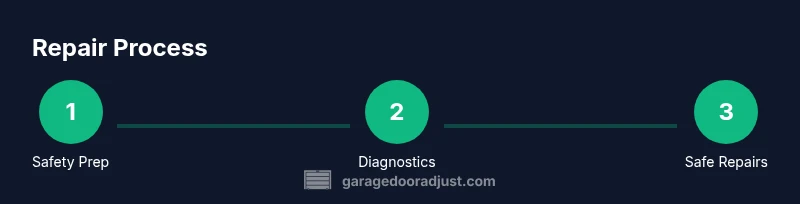
A practical, non-technical overview helps you organize tasks before you dive into the hands-on steps. Start with safety and power shutoff, then inspect tracks and hardware, balance the door, lubricate moving parts, and finally test the opener’s safety features. If parts show obvious wear or damage, plan replacements in a follow-up session. This workflow keeps you focused and minimizes unnecessary disassembly.
Replacing parts: when to replace hinges, rollers, or tracks
Worn hinges and rollers are common culprits for noise and rough movement. Replace damaged rollers and worn hinge pins to restore smooth operation. Bent or severely damaged tracks may require straightening by a professional and, in some cases, track replacement. Springs and cabling are complex and dangerous; do not attempt replacement unless you are trained. When replacing parts, ensure you use components compatible with your door’s weight and configuration.
Alignment, balance, and safety sensor alignment
Door balance is critical for safe operation and energy efficiency. Check that the door feels evenly weighted when raised or lowered manually. Misaligned tracks or off-center drums can cause the door to rub or bind. Reposition tracks with the door fully closed, then retighten mounting bolts and recheck alignment. Safety sensors should be aligned so the LED indicators show proper status; clean sensor eyes to remove dirt or spider webs that interfere with signaling.
Testing after repairs and routine maintenance
With the door reassembled, test the door manually and with the opener. Confirm smooth travel, proper stopping points, and consistent retraction. Listen for squeaks or grinding; apply lubricant to hinges, rollers, and tracks as needed. Schedule a light maintenance routine every 6 to 12 months, depending on usage and climate. Cleaning, lubrication, and tightening are key to prolonging life and reducing noise.
When to call a professional: warning signs you shouldn’t DIY
If you notice persistent misalignment, frayed cables, bent tracks, or springs showing wear, stop and call a qualified technician. Complex issues like torsion spring work, drum replacement, or opener logic problems should be handled by a pro due to safety risks. If you’re ever unsure, consult a professional—investing in safety now prevents costly, dangerous failures later.
Authority and ongoing maintenance references
For safety and best practices, refer to trusted sources: OSHA guidelines on general electrical and machinery safety, CPSC policy on garage door safety, and National Institute of Standards and Technology (NIST) guidance on user safety and maintenance procedures. These organizations provide foundational rules that support homeowner DIY efforts while emphasizing risk awareness and proper maintenance.
Preventive maintenance schedule for homeowners
Create a simple maintenance calendar that includes monthly sensor cleaning, quarterly lubrication of moving parts, and semi-annual inspection of tracks and hardware. Keeping up with these tasks helps catch wear before it causes larger problems and keeps your residential garage door operating reliably.
When to upgrade: considering a new door or opener
If your door is repeatedly failing despite repairs, or if insulation and efficiency are concerns, it may be worth evaluating a modern insulated door or a new opener system. Upgrades can improve energy efficiency, noise reduction, and reliability. A professional assessment can help you balance upfront costs with long-term savings.
Tools & Materials
- Screwdrivers (Phillips and flat-head)(Flat-head for stubborn screws; Phillips for most fasteners.)
- Adjustable wrench(Use for bolts on hinges and track mounts.)
- Pliers(Needle-nose or locking pliers help guide cables and small components.)
- Socket set or ratchet(Common sizes around 8-14 mm depending on hardware.)
- Tape measure(Check track alignment and door balance.)
- Utility knife(Trim weather stripping or cut away debris near tracks.)
- Safety glasses(Protect eyes from debris and moving parts.)
- Work gloves(Good grip and hand protection during adjustments.)
- Ladder(Access high mounting points and tracks safely.)
- Lubricant (silicone-based spray or white lithium grease)(Lubricate rollers, hinges, and tracks; wipe excess.)
- Rags or shop towels(Clean residue and wipe hands.)
- Replacement rollers/hinge screws (optional)(Only if you notice worn parts or missing screws.)
- Pry bar or flat tool(Used cautiously for track alignment if needed.)
Steps
Estimated time: 60-120 minutes
- 1
Power down and secure the area
Shut off power to the opener and unplug the unit. Inform others not to operate the door during the repair. This prevents sudden movement and protects you from electric shock or pinch hazards.
Tip: Lock the switch with a tag to avoid accidental re-energizing. - 2
Inspect tracks, hinges, and rollers
Visually inspect for bent tracks, loose screws, or worn rollers. Tighten mounting hardware and replace damaged parts as needed. Do not attempt to bend tracks back to shape without professional tools and training.
Tip: Take photos before adjusting to track alignment for reference. - 3
Check door balance manually
With the door closed, disconnect the opener and raise the door halfway by hand. It should stay in place. If it drops or rises easily, the balance is off and requires further adjustment or professional service.
Tip: Balanced doors place less stress on the opener and improve safety. - 4
Lubricate moving parts
Lightly lubricate hinges, rollers, and the track with silicone-based spray. Wipe away any excess to prevent dust buildup. Avoid lubricating the tracks themselves in some configurations where it can attract debris.
Tip: Lubricate every 6–12 months depending on use and climate. - 5
Realign tracks and tighten hardware
If tracks are misaligned, loosen mounting bolts slightly, adjust, and retighten. Ensure the tracks are plumb and parallel to the ground. Misalignment causes binding and noise.
Tip: Use a level during adjustment to confirm alignment. - 6
Test the opener and safety features
Reconnect power and test the opener. Check photo-eye sensors and auto-reverse mechanism at the beam. If protection features don’t work, shut down and re-check wiring and sensor alignment.
Tip: Always test safety features after any repair. - 7
Plan ongoing maintenance
Create a simple maintenance schedule that fits your climate and usage. Regular checks catch issues before they become major problems and extend door life.
Tip: Record dates and tasks to build a maintenance history.
Got Questions?
Can I repair a garage door myself?
Yes for many minor issues like lubrication, track alignment, or sensor realignment. However, do not attempt torsion spring work or major electrical repairs without professional training. When in doubt, consult a pro.
You can DIY common maintenance, but avoid springs and high-tension components. Seek a professional if unsure.
Do I need to disconnect power before starting?
Yes. Always disconnect the opener from power and keep the door in a secure position before inspecting or replacing parts. This reduces the risk of unexpected movement.
Yes—shut off power and secure the door before you start.
What maintenance should I perform monthly?
Wipe the tracks, check for loose screws, lubricate moving parts, and test the safety features. A quick monthly check prevents surprises and extends life.
Do a quick monthly check: wipe tracks, tighten screws, and test safety sensors.
Is it safe to lubricate tracks and rollers?
Lubricate hinges, rollers, and moving joints with a silicone-based spray. Do not over-lubricate tracks, and wipe away any excess.
Lubricate the moving parts, but don’t oversoak the tracks.
How long does a typical tune-up take?
A basic tune-up typically takes about 30–60 minutes, depending on the door’s condition and accessibility. Complex repairs can take longer.
Around half an hour to an hour for a standard tune-up.
What are common signs I need a pro for?
Persistent misalignment, frayed cables, bent tracks, or worn springs require professional service to avoid safety hazards and further damage.
If you see frayed cables or bent tracks, call a professional right away.
Watch Video
Quick Summary
- Be cautious and prioritize safety above all tasks
- Many common issues can be fixed with basic tightening, cleaning, and lubrication
- Know when to step back and call a professional for springs or electrical concerns
- Maintain a simple maintenance schedule to extend door life