Why Would a Garage Door Randomly Open? Troubleshooting Guide
Urgent, practical guidance to diagnose why would a garage door randomly open. Learn sensor alignment, remote interference, and opener faults, plus a step-by-step fix to prevent unexpected openings.


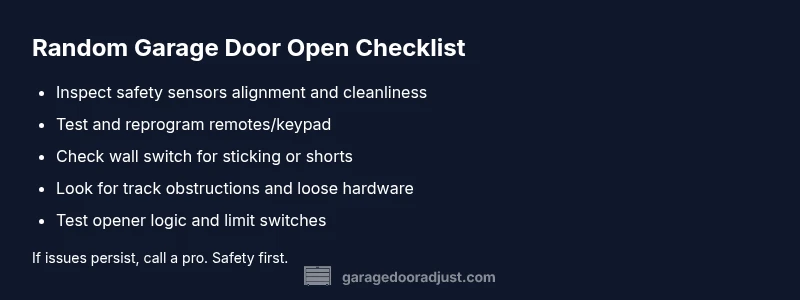
If you ask why would a garage door randomly open, the answer is usually sensor misalignment, remote interference, or a faulty opener. Quick steps: 1) unplug the opener to test if it opens on its own; 2) realign safety sensors; 3) inspect remotes and replace batteries; 4) examine wall switch; otherwise call a pro.
What to know before you start
When a garage door opens without input, it triggers urgent safety concerns for homeowners. The phrase why would a garage door randomly open comes up often in our support channels, and the most likely culprits are sensor misalignment, remote interference, or a faulty opener. According to GarageDoorAdjust, addressing the issue quickly can prevent property damage or injury, especially if children or pets are nearby. Use this guide to distinguish between quick fixes and more involved repairs, and always prioritize safety.
Common causes at a glance
Most random openings fall into a few broad categories. Sensor misalignment or obstruction can falsely signal a clear beam. Remote interference might come from neighboring devices or an old, unpaired remote. A stuck wall switch or misconfigured keypad can trigger the opener unintentionally. A failing logic board or limit switch in the opener is another possibility, along with power surges or a loose control wire. GarageDoorAdjust analysis shows sensor alignment and remote interference are leading culprits in 2026, so start there when diagnosing. By understanding these buckets, you can triage efficiently and reduce the risk of repeat events.
Sensor misalignment explained and how to test it
The safety sensors (photo eyes) are designed to stop the door if their beam is broken. If the sensors are misaligned or dirty, they may intermittently indicate a clear path and cause the opener to behave as if a human or object is present. Start by powering down and inspecting the two eyes: they should face each other in a direct line, with clean lenses and secure brackets. If the beams show a fault LED, loosen the mounting screws, adjust the angle so both LEDs show steady, aligned light, and wipe the lenses with a soft, dry cloth. After realigning, operate the door a few times with the opener reconnected to verify consistent behavior. If misalignment was the issue, you should see stable sensor readings and no spontaneous opening.
Remote controls and keypad interference
Remotes and keypads can intermittently trigger the opener, especially if codes are duplicated inadvertently or if a device nearby is broadcasting a conflicting signal. Start by removing all remotes from the garage and unplugging the opener for a minute to reset. Reconnect power, and reprogram only the remotes you use regularly. If the keypad was recently reprogrammed or replaced, double-check the entry codes and consider reinitializing the keypad to avoid stray signals. In many cases, a simple re-sync resolves the problem completely.
Opener faults, electronics, and limit switches
Even with perfect sensors, a faulty opener can cause unpredictable behavior. Worn limit switches, a failing logic board, or a damaged circuit can send erroneous commands. Inspect the opener for any obvious signs of wear, burning smells, or loose wiring. If you notice unusual noises, inconsistent travel limits (door stops too high or too low), or the door moves without command even when the unit is unplugged, you likely need a professional evaluation. Do not attempt to repair internal electronics or replace springs unless you are trained and equipped for garage-door work.
Safety considerations and when to avoid DIY
Garage doors are heavy and operate with high-tension components. Do not attempt to adjust springs, torsion systems, cables, or rollers unless you have proper training. Always disconnect power before inspecting electrical components and keep all bystanders clear while testing. If the problem persists after basic checks, or if you suspect a mechanical fault (springs, tracks, brackets), contact a licensed technician promptly. The risk of injury from DIY repairs far outweighs potential cost savings when safety is at stake.
Quick-start actions you can take today
If your door is opening randomly, perform these immediate checks to reduce risk while you arrange repairs: unplug the opener; test the door with the door manually disconnected from power to verify it remains stable; clean and realign safety eyes; reprogram remotes to remove stray signals; inspect for stuck switches or misbehaving keypads. If the issue continues, schedule a professional inspection as soon as possible; never leave the door unmonitored in an open state.
Steps
Estimated time: 60-90 minutes
- 1
Power down and isolate the opener
Unplug the garage door opener from the outlet and verify the door does not move. This preserves safety while you perform checks and prevents accidental operation.
Tip: Always keep hands away from the door while testing. - 2
Test sensor alignment
Inspect the photo eyes, ensure both face each other and the LED indicators show solid alignment. Clean the lenses gently with a soft cloth and retest.
Tip: Dust and cobwebs are common misalignment culprits. - 3
Reset remotes and keypad
Remove batteries from remotes, unplug, then replug the opener and reprogram only the remotes you use. If a keypad exists, reset and re-enter your code.
Tip: Keep a record of codes before resetting. - 4
Inspect the wall switch and wiring
Check for a stuck wall switch or signs of a loose wire. Secure any loose connections and ensure no moisture or corrosion is present.
Tip: Do not force or short wires; replace damaged components. - 5
Check tracks and hardware
Look for obstructions on the tracks, loose rollers, or bent brackets that could affect door travel. Clear debris and tighten hardware as needed.
Tip: A misaligned track can indirectly trigger sensor or opener faults. - 6
Test with power restored
Plug the opener back in and run a few cycles using the wall control and remotes to confirm consistent operation. Watch for any unusual noises or hesitations.
Tip: If issues recur, record symptoms for a technician. - 7
Evaluate the need for professional service
If the door still opens randomly after these steps, a licensed technician should inspect springs, cables, or the logic board.
Tip: Do not attempt spring work yourself. - 8
Document and prevent future occurrences
Note which steps resolved the issue or what remains uncertain. Schedule routine maintenance to minimize repeat events.
Tip: Set a reminder for annual inspections.
Diagnosis: Door opens by itself or intermittently without user input
Possible Causes
- highSensor misalignment or obstruction
- highRemote interference or stray signal
- mediumStuck wall switch or keypad
- mediumFaulty opener logic board or limit switch
Fixes
- easyUnplug the opener to isolate power and test if the door still opens by itself
- easyRealign safety sensors, clean sensor eyes, and verify LEDs indicate proper alignment
- easyReprogram or replace remotes/keypad and ensure only authorized devices operate the door
- easyInspect the wall switch and control wiring for sticking or shorting; replace if needed
- mediumCheck limit switches and logic board for faults; adjust or replace as recommended by the manufacturer
Got Questions?
Why would a garage door randomly open?
Sensor misalignment, remote interference, or a faulty opener are the most common causes. Start by inspecting the safety sensors, remotes, and the wall switch.
Most often sensor alignment, interference from remotes, or a bad opener cause random openings.
Can weather affect a garage door opening on its own?
Extreme conditions can affect electronics and sensor readings, potentially triggering false signals. Ensure sensors are clean and properly aligned after storms or temperature swings.
Weather can influence sensors and electronics, so recheck alignment after severe conditions.
Is it safe to DIY repair if the door feels heavy or springs look worn?
No. Do not attempt to repair springs or torsion systems yourself. These are high-tension components and require a licensed technician.
Don’t DIY springs or high-tension parts; you could be seriously injured.
How do I reset my garage door opener?
Unplug, re-plug, and reprogram remotes and keypad following the manufacturer’s instructions. If the problem persists, consult the manual or a pro.
Unplug, reprogram remotes, and reset the keypad per your manual.
When should I call a professional?
If you suspect broken springs, bent tracks, or a failing logic board, or if the door continues to behave oddly after basic checks, call a licensed technician.
Call a pro if you suspect springs, bent tracks, or logic board faults.
Watch Video
Quick Summary
- Identify sensor misalignment as a primary suspect.
- Reset remotes and keypad before deeper diagnostics.
- Do not adjust springs; call a pro for high-tension work.
- Document fixes and schedule maintenance to prevent recurrence.