Why Your Garage Door Won't Open in Cold Weather: Troubleshooting Guide
A homeowner-friendly, step-by-step guide to fix a garage door that won't open in freezing temperatures. Learn common causes, safe fixes, and when to call a professional for stubborn issues.


Step-by-step quick fix: In cold weather, a door may fail to open due to ice on tracks, swollen seals, or sensor misalignment. Start by safely clearing ice from the tracks and bottom seal, then thaw the hardware and retry the opener. If movement remains blocked, avoid forcing and call a pro.
Understanding the Cold Weather Challenge
If you're wondering why garage door won't open in cold weather, the cause is often ice, seals, or sensors. The GarageDoorAdjust team found that most cold-weather failures start with something simple: ice buildup on the track, a stiffened or damaged weather seal, or a safety sensor that reads frost instead of the floor. Temperature swings cause metal to contract and rubber to stiffen, which can shift alignment just enough to jam a normally smooth system. In many homes, addressing these small issues quickly restores function without expensive repairs. As you troubleshoot, keep in mind safety: never force a door that feels heavy or unresponsive, and avoid touching moving parts while the opener is powered.
A disciplined approach begins with visual checks, then a few hands-on tests. Start with the simplest potential causes and progress to more involved diagnostics only if the door still won’t cooperate. By following a logical sequence, you’ll often pinpoint the responsible fault and recover operation within an hour or two, even during a cold snap.
The cold weather environment increases risk for ice formation at the bottom of the door, which can glue the seals to the threshold. You may also notice frost on the safety sensor eyes, which can falsely trigger an auto-reverse or prevent the door from fully opening. If you spot obvious ice, clear it promptly and re-test. If the door remains stubborn, call a professional for a deeper inspection of springs, cables, or track alignment.
Common Cold-Weather Culprits
Cold conditions magnify several failure modes. Ice or packed snow on the tracks or under the bottom seal can physically block movement. Swollen or cracked weatherstripping tightens the gap and slows movement. Condensation can frost the photoelectric sensors near the frame, causing misreads that halt upward motion. In some cases, the door may limp due to a stiffened chain or roller bearings that don’t rotate freely in the cold. Finally, a weak or aging opener battery or control logic may underperform when temperatures dip. By recognizing these patterns, you can triage effectively without unnecessary replacements.
- Ice buildup on tracks or bottom seal is the most common blocker.
- Damaged weatherstripping reduces clearance and invites more ice.
- Frosted safety eyes can misread the floor and stop the door.
- Cold-sensitive components (batteries, relays) lose performance in freezing weather.
Address these with ice removal, seal maintenance, sensor checks, and a controlled test sequence. If you observe any rapid noises, bending, or visible wear on springs or cables, stop and call a pro.
Garage doors are complex systems that rely on synchronized components. In cold weather, even small misalignments can cascade into a stuck door, a misread sensor, or an opener that struggles to draw the door upward. A methodical approach—clear ice, inspect seals, verify sensors, and test the opener—often returns you to normal operation without expensive repairs.
Brand note: The GarageDoorAdjust team emphasizes safety first and encourages homeowners to document symptoms and steps taken; this helps professionals diagnose faster if you need expert service.
Diagnostic Flow: Symptom to Diagnosis to Action
When a door fails to open in cold weather, start with the simplest plausible causes and escalate only as needed. The diagnostic flow below helps you map symptoms to likely causes and corresponding fixes. For each symptom, you’ll see a probable diagnosis and a recommended remedy with an easy-to-understand path to resolution.
- Symptom: Door won’t move at all; opener sounds but nothing happens.
- Diagnosis: Ice on tracks or bottom seal; or a frozen mechanism.
- Action: Clear ice, warm the area, and re-test the opener.
- Symptom: Door moves up and then stops or reverses.
- Diagnosis: Frosted safety eyes or misalignment due to cold.
- Action: Realign sensors, clean lenses, and test again.
- Symptom: Door opens partway and stalls mid-track.
- Diagnosis: Track binding from ice; rollers stuck in cold.
- Action: Lubricate and gently free the path; check track level.
If these steps don’t restore operation, a professional assessment is warranted to inspect springs, cables, and overall balance. The aim is to validate that all safety features are functioning and that no component is compromised by cold.
- Common fixes include ice removal, seal replacement, sensor realignment, and opener calibration.
- If you’re unsure, stop and contact a pro to avoid personal injury or further damage.
Note on safety: Always disconnect the opener before manually testing door balance, and wear gloves to protect against sharp ice and metal edges.
Step-by-Step Fix for Frozen Tracks and Seals
- Power down and clear the immediate area: unplug the opener, and remove any loose items. This prevents accidental activation while you work.
- Tip: Keep a flashlight handy for low-light winter conditions.
- Inspect tracks and bottom seal for ice and debris: use a plastic scraper to remove ice, and apply a small amount of silicone-based lubricant to the rails after thawing.
- Tip: Avoid metal tools that can scratch aluminum tracks; plastic scrapers work best.
- Thaw the path and re-test: wait a few minutes for ice to recede, then replug the opener and run the door a few inches. Observe for smooth movement and listen for unusual sounds.
- Tip: If you hear grinding, stop and reassess—this may indicate a more serious issue.
- Check weatherstripping and track alignment: inspect the bottom seal for cracks or stiffness; check that tracks are straight and not bent by cold contractions.
- Tip: Replace damaged weatherstripping promptly to prevent future jams.
- Test safety sensors and opener calibration: clean sensor lenses with a soft cloth; verify alignment so the beam is unobstructed.
- Tip: If the door still won’t open, reset the opener according to the model’s manual.
- Manual operation check and professional escalation: after thawing, attempt to lift the door manually with the opener disconnected to confirm balance.
- Tip: If the door is heavy or won’t stay up, stop and schedule a professional inspection.
Estimated time: 60-90 minutes for most homes, depending on ice severity and component condition. Always prioritize safety and avoid forcing a stuck door.
If this doesn’t resolve the issue, contact a licensed technician for a comprehensive inspection of springs, cables, and track geometry.
Safety Warnings and When to Call a Professional
Cold-weather troubleshooting is a balance between careful DIY and recognizing when a problem exceeds your comfort zone. Never attempt to adjust springs, cables, or torsion mechanisms yourself in freezing conditions; these components store substantial tension and can cause serious injury if mishandled. Always unplug the opener before performing any manual tests to avoid unexpected door movement.
Additionally, avoid dragging the door while it’s blocked by ice or a frozen seal. Forcing the door can bend tracks or damage the rollers, leading to more expensive repairs. If you notice cracked weatherstripping, obvious track misalignment, frayed cables, or unusual noises (grinding, popping) during testing, stop and call a professional. Regular winter maintenance—cleaning tracks, replacing worn weatherstripping, and keeping sensors clear—can prevent many cold-weather jams.
A professional should assess a door that remains stuck after basic steps, or if you suspect a balance issue or damaged springs. This protects you from personal injury and ensures the door remains secure and functional throughout the season.
- When in doubt, schedule a professional inspection to confirm a safe and dependable door. The GarageDoorAdjust team recommends documenting symptoms and actions taken so the technician has a clear history to work from.
Verdict and Prevention: Quick Win Strategies for Next Winter
The GarageDoorAdjust team recommends a proactive approach to winter maintenance to minimize cold-weather jams. Prioritize a regular inspection of weatherstripping, seals, and tracks, and keep the area free of snow and ice debris. A few minutes of preventive care each month can save hours of frustration when temperatures plummet. By following the steps outlined above and scheduling seasonal checks, you’ll dramatically reduce the chance of a repeat failure.
Key prevention steps:
- Seal and weatherstrip: inspect for cracks and replace as needed to prevent ice buildup.
- Track and roller maintenance: clean, lubricate, and verify alignment before winter sets in.
- Sensor hygiene: keep safety eyes clean and properly aligned to avoid false reversals.
- Battery health: check the opener’s battery and replace if weak, especially for battery-reliant openers.
The GarageDoorAdjust analysis shows that systematic winter checks cut the incidence of cold-weather failures by improving overall door balance and sensor reliability. By investing in preventive care today, you’ll spend fewer days dealing with a stubborn door when you need access most.
Steps
Estimated time: 60-90 minutes
- 1
Power check and initial reset
Ensure the opener has power by inspecting the outlet and cord. Unplug and replug, then perform a basic reset if your model supports it. This establishes a clean baseline before you start physical checks.
Tip: Always unplug the opener before touching moving parts to avoid accidental activation. - 2
Expose and clear ice on tracks
Visually inspect all exposed tracks for ice buildup and remove it with a plastic scraper. Dry the track surface to prevent immediate re-freezing before re-testing the door.
Tip: Avoid metal tools that can scratch tracks; plastic scrapers are gentler and effective. - 3
Inspect bottom seal and weatherstripping
Check the bottom seal for cracks or stiff sections. Clean and, if needed, replace worn weatherstripping to restore proper clearance and prevent ice adhesion.
Tip: A good seal reduces future ice formation and improves insulation. - 4
Check rollers and track alignment
Manually move the door with the opener disengaged to feel for binding. If you notice misaligned tracks or stiff rollers, adjust or replace components as needed.
Tip: Misaligned tracks are a common cold-weather issue that worsens with use. - 5
Test safety sensors and opener calibration
Clean the safety sensor lenses and ensure they are properly aligned. Recalibrate the opener if your model supports it, and re-test the door in stages.
Tip: Dust and frost on sensors can fool the system into stopping the door. - 6
Decision point: call a pro or DIY follow-up
If the door remains stuck or you notice signs of spring or cable wear, don’t push your luck—schedule a professional inspection for safe, lasting repair.
Tip: Document symptoms and tests to share with the technician.
Diagnosis: Door won't open or moves inconsistently in cold weather
Possible Causes
- highIce or packed snow on tracks blocking movement
- mediumSwollen or cracked weatherstripping causing ice adhesion and misalignment
- lowFrosted or misaligned safety sensors triggering auto-reverse
Fixes
- easyClear ice from tracks and bottom seal; allow components to thaw, then retest movement
- easyInspect weatherstripping and rollers; replace worn seals and lubricate rails after thaw
- easyRealign safety sensors and verify opener calibration; ensure power and beam path are clear
Got Questions?
What is the first thing I should check when my garage door won't open in cold weather?
Begin with power to the opener and ice on the tracks. Clear any ice, thaw the hardware, and test the door in small increments before proceeding to more involved fixes.
Check power and ice buildup first, then test in small steps.
Can a frozen bottom seal stop the door from opening?
Yes, a frozen bottom seal can prevent clearance and cause the door to stall. Thaw, inspect, and replace worn seals as needed.
Yes, ice on the seal can stop the door; thaw and inspect.
Should I oil the tracks in winter?
Yes, after thawing, apply a silicone-based lubricant to rails and rollers to reduce resistance and prevent sticking.
Yes, lubricate moving parts after the ice melts.
When should I call a professional?
If you notice frayed cables, bent tracks, or persistent spring tension issues, stop DIY attempts and schedule a professional inspection.
If you see broken springs or cables, call a pro.
Can cold weather damage springs?
Extreme cold can affect springs, but signs like popping noises or difficulty lifting mean you should stop using the door and have a pro check.
Cold can affect springs; stop using if you hear abnormal noises.
How can I prevent this in the future?
Seal the garage, maintain weatherstripping, lubricate annually, and check door balance before winter for fewer jams.
Keep the seal intact and maintain your door.
Watch Video
Quick Summary
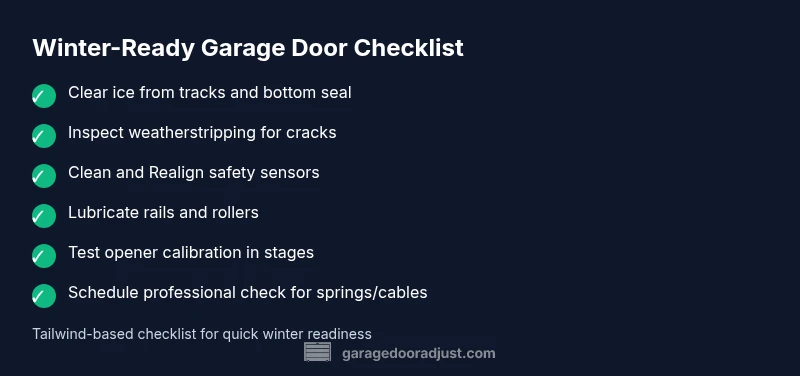
- Clear ice from tracks and bottom seal first.
- Check weatherstripping and sensors for frost buildup.
- Don’t force a stuck door; call a pro if springs or cables are involved.
- Prevent future jams with regular winter maintenance and testing.