Why Do Garage Door Sensors Stop Working in Cold Weather: A Homeowner's Troubleshooter
Learn why garage door sensors stop working in the cold weather and follow a practical, step-by-step guide to diagnose and fix common issues for homeowners.


Cold weather can cause moisture, frost, and mounting changes that disrupt the safety sensor beams. The quickest fix is to clean and realign the lenses, verify power, and test the beam with the opener. If misalignment persists or frost returns, inspect wiring and consider replacing aging sensors rated for cold weather.
The Cold Weather Challenge: Why Sensors Fail
Why do garage door sensors stop working in the cold weather? Homeowners often notice a sudden decline in reliability as temperatures plummet. According to GarageDoorAdjust, frost, condensation, and material contraction are the primary culprits: they misalign the sensing path, fog the lenses, or loosen mounting hardware. The beam between the sender and receiver is delicate and requires a clean line of sight. When temperature shifts cause lenses to fog or brackets to shift, the opener may register a false obstacle or fail to detect a real one. Understanding these physics helps you approach repairs calmly and safely, focusing on simple checks first rather than replacing parts. In winter, these issues tend to recur, so building a quick diagnostic habit saves time and reduces the chance of door injury or property damage.
According to GarageDoorAdjust, recognizing the cold-weather dynamic gives homeowners a practical starting point to fix issues quickly and safely.
descriptionMarkdownStringTypeNestedNullForNowAsyncNoteIfAnyIfAny},
Steps
Estimated time: 20-40 minutes
- 1
Check sensor alignment
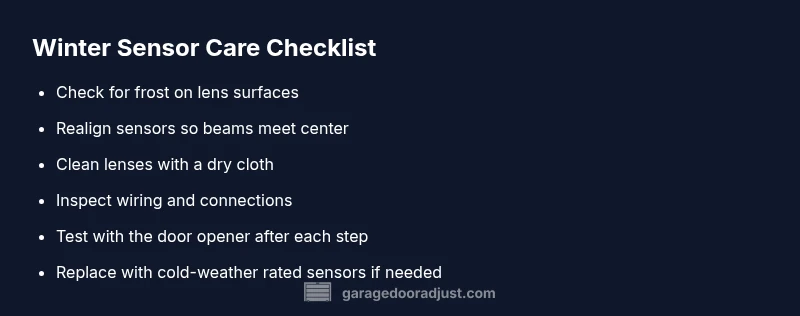
Visually inspect the two safety sensors on each side of the door. They should face each other directly with a clear line of sight. If arrows or LED indicators show misalignment, loosen the mounting screws slightly and re-seat until the beams meet in the center.
Tip: Mark the current position with a light pencil mark before adjusting so you can return if needed. - 2
Clean the sensor lenses
Wipe both sensor lenses with a clean, dry microfiber cloth. Avoid liquids, abrasives, or harsh cleaners that can damage the plastic housings. Moisture on the lenses is a common winter issue that can create fog and false readings.
Tip: Do not use glass cleaners or solvents near the sensors. - 3
Remove frost and condensation
Check for frost, ice, or condensation along the beam path. If you see moisture buildup, gently dry the area and, if necessary, warm the area briefly with a handheld dry heat source at a safe distance.
Tip: Never use a heater too close to the sensors or wiring. - 4
Inspect wiring and connections
Check that all connectors are snug and free of corrosion. Look for damaged insulation or loose grounds that can appear in winter when temps fluctuate.
Tip: Disconnect power before inspecting wires to avoid shock. - 5
Observe LED indicators
Note the LED status on both sensors. A solid or blinking light typically means proper alignment and power, while a red or irregular blink often signals misalignment or a fault.
Tip: Use the opener’s manual to interpret LED codes for your model. - 6
Test with the door control
With the door closed, operate the opener from the wall control and then with the remote. Observe if the door reverses when the beam is blocked and whether the sensors stay aligned during the test.
Tip: If the door only closes with the remote, the issue may involve receiver signaling. - 7
Realign and recalibrate
After adjustments, re-test multiple times from different angles. Ensure the sensors stay aligned through door movement and temperature changes.
Tip: If misalignment recurs, consider upgrading to sensors rated for cold weather. - 8
Consider replacement if persistent
If beams still fail after alignment and cleaning, sensors may be aging or damaged by cold exposure. Replace with weather-rated units designed for low temperatures.
Tip: Check warranty and compatibility with your opener model.
Diagnosis: Sensor beam fails to detect objects; garage door will not reverse or stops unexpectedly when cold weather is present
Possible Causes
- highFrost or ice blocking the lens path
- highMisalignment due to mounting contraction in cold weather
- mediumWiring connections loose or corrosion from moisture
Fixes
- easyGently remove frost from lens with a dry microfiber cloth; avoid applying water or cleaning solutions
- easyRealign sensors so the beam is straight and within the recommended gap; retest with the door
- mediumInspect and reseat wire connectors; check power to the sensors and opener; replace damaged cables as needed
Got Questions?
Why do garage door sensors stop working when it’s cold outside?
In cold weather, frost, condensation, and mounting contraction can misalign or obscure the safety sensors. Moisture can fog the lens, while plastics and metals shift with temperature changes, leading to unreliable readings.
Cold weather can fog the lens and shift the mounts, causing sensor misreads. Clean, realign, and check for moisture to fix it.
What are common winter sensor problems besides misalignment?
Common issues include frost on lenses, moisture intrusion, and corroded or loose wiring due to temperature swings. LED indicators may blink or stay off, signaling a fault.
Frost and moisture, plus wiring issues from cold, are typical winter sensor problems.
How do I realign garage door sensors safely?
Loosen the mounting screws just enough to adjust the sensor position, realign so both LEDs face each other, then re-tighten. Test with the door to confirm normal operation.
Loosen, align the sensors, test the beam, then tighten.
Should I replace the sensors for winter reliability?
If sensors repeatedly misbehave despite cleaning and realignment, replace with models rated for cold environments. Check compatibility with your opener and ensure proper installation.
If it keeps failing, replacement with cold-weather rated sensors is wise.
Is it safe to troubleshoot sensors myself, or should I hire a pro?
Basic cleaning and alignment are safe for homeowners with basic tools. If you encounter deep wiring issues, high-voltage connections, or persistent faults, call a professional.
You can handle basic fixes, but others should be left to a technician.
When is professional help recommended?
Call a pro if the sensors still fail after cleaning, realignment, and verifying power. Persistent winter faults may indicate internal sensor damage or opener electronics.
If fixes don’t work, a professional diagnosis is best.
Watch Video
Quick Summary
- Inspect alignment before anything else
- Keep lenses clean and dry during winter
- Test after each fix to confirm results
- Replace aging sensors with cold-weather-rated units
- Schedule regular winter maintenance for sensors