why doesn t my garage door close when it's cold
Urgent, step-by-step guide to diagnose and fix why your garage door won t close in cold weather, including ice removal, sensor checks, and safety tips.


The door failing to close in cold weather is usually caused by ice binding on the track or frost affecting the safety sensors. Start by thawing ice from the track and brackets, then clean the sensor lenses and recheck alignment. If the door still won t close, recalibrate the travel limits and test multiple closing cycles.
why doesn t my garage door close when it's cold
In winter conditions, a host of small changes can conspire to keep your door from closing fully. According to GarageDoorAdjust, cold temperatures cause metal parts to contract differently, lubricant to thicken, and moisture to freeze on key interfaces. This combination increases friction, binding, and misreads by the safety sensors. The result is a door that hesitates, reverses, or stays open. The same challenges are common across many homes, so a systematic approach is essential. The goal is not brute force but precise diagnosis and safe, measured fixes. The GarageDoorAdjust team emphasizes safety first, especially around springs and cables that carry heavy loads.
Common cold-weather failures
Cold weather introduces several predictable failure modes. Ice or frost on the track or rollers can physically bind the door. Frost or condensation can misalign or obscure safety sensors, causing the opener to stop short of closing. Thickened lubricant reduces motion efficiency, making the door feel slow or sticky. Weather-stripping may freeze to the sill, creating extra resistance. Finally, extreme cold can affect the opener’s electronics and limit switches, leading to miscalibration or erratic behavior. Identifying which one is happening is the first step toward a safe fix.
Safety-first checks you can perform safely
Always prioritize safety. Before poking around, unplug the opener or switch off the unit to prevent unexpected movement. Wear gloves and eye protection. Look for obvious ice along the track, hinges, and brackets; remove with a plastic scraper. Check the door’s balance by lifting it manually about halfway; if it jarps or sticks, that indicates friction or binding. Clear any debris, and ensure there are no cables or torsion springs exposed. If a component feels uncertain or dangerous to handle, stop and call a pro. The goal is to verify basic movement and identify where binding occurs.
Diagnostic overview: symptom to solution
When the door won t close, the symptom typically points to one of three issues: ice binding on the track, misaligned safety sensors due to frost, or a travel-limit calibration problem. Testing each cause in order helps you avoid unnecessary work. If the door closes partway and then reverses, suspect safety sensors first. If the door simply won t travel to the bottom, limit switches or motor timing might be off. This section outlines a practical, methodical approach to diagnose the root cause without guessing.
Prevention and winter maintenance (overview)
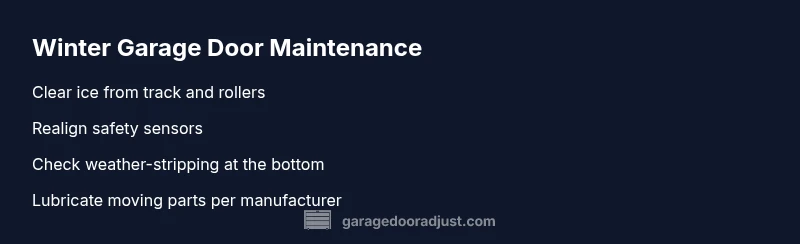
Adopt a proactive winter routine to minimize cold-weather failures. Keep the track clean and dry, and inspect weather-stripping for cracks or ice buildup. Schedule a seasonal check of springs, cables, and hinges to catch wear before it becomes a failure. Regular lubrication with a silicone-based product can prevent excessive friction, but only if your door manufacturer permits it. Blocking moisture at entry points and clearing snow from the door base helps reduce ice formation on contact surfaces. A little prevention goes a long way toward reliability.
Sensor alignment and weather-stripping checks
Frost and condensation can push sensors off their alignment or obscure the photoelectric beams. Clean the sensor lenses with a dry cloth, then realign mounting brackets if you notice misalignment. Verify that the beam paths are unobstructed and that tiny misreads don t trigger the safety feature. Inspect weather-stripping along the door bottom; if it s frozen, thaw it and ensure a tight seal when closed. A properly sealed door reduces moisture intrusion and helps maintain reliable operation in cold months.
When to call a pro and how to plan ahead
If you notice damaged tracks, frayed cables, or a clearly warped panel, stop and call a professional. Cold weather can magnify underlying issues, and DIY repairs on high-tension hardware can be dangerous. A pro can evaluate the torsion springs, verify the door balance, and recalibrate safety components safely. To reduce emergency calls, consider a winter maintenance plan that includes inspection of hardware, weather-stripping, and lubrication before cold snaps hit.
Closing note and practical takeaways from the field
In practice, most cold-weather close issues are fixable with ice removal, sensor checks, and correct calibration. The key is to approach the problem methodically and avoid forcing the door, which risks injury or damage. Use this checklist as a practical guide, not a substitute for professional service when you encounter unknowns. The aim is a door that closes reliably and safely regardless of outside temperatures.
Steps
Estimated time: 25-40 minutes
- 1
Power off and secure the area
Unplug the opener and confirm the door is supported before touching any springs or hardware to prevent unexpected movement.
Tip: Use a dry area and keep others away from the door. - 2
Inspect the track for ice
Look for ice buildup on the vertical and horizontal tracks, rollers, and hinges. Use a plastic scraper to remove loose ice and debris.
Tip: Avoid metal tools that can scratch the track. - 3
Gently thaw the track
Use a hair dryer on a low setting or warm air to melt ice. Do not use boiling water or forceful heat that could warp metal.
Tip: Keep the heat moving to avoid hotspots. - 4
Dry and re-test motion
Wipe away melted moisture and let the track dry completely before reconnecting power. Run a test close, watching for smooth operation.
Tip: Listen for even, quiet movement rather than grinding. - 5
Check safety sensors and limits
Inspect the photoelectric sensors for alignment; clean lenses and rewire if necessary. Calibrate door limits per the opener's manual.
Tip: Ensure the sensor beam path is free of obstructions. - 6
Finalize and monitor
Reconnect power and perform multiple close tests from both wall control and remote. If issues persist, seek professional assessment.
Tip: Document any unusual signs for the technician.
Diagnosis: Garage door won't close in cold weather
Possible Causes
- highIce or frost binding on the track
- mediumMisaligned safety sensors due to frost or movement
- lowIncorrect limit switch calibration due to cold contraction
Fixes
- easyRemove ice from track and brackets, then test door
- easyRealign safety sensors and ensure beam is clear
- mediumCheck and recalibrate travel limits per manual
Got Questions?
Why does cold weather cause my garage door not to close?
Cold temperatures can cause ice on the track, misaligned safety sensors, and lubrication that thickens, all of which hinder full closure. A systematic check helps identify the root cause.
Cold conditions can freeze the path, misalign sensors, or thicken lubricant, preventing full closure. A step-by-step check will pinpoint the issue.
Is it safe to pour hot water on a frozen garage door?
Pouring hot water is not recommended as it can damage seals and components. Instead, use warm water or a hair dryer to thaw ice, and dry the area afterward.
Avoid hot water; use warm water or a hair dryer to thaw ice slowly and safely.
What should I check first if the door closes slowly in cold weather?
Begin with the track, sensors, and limit switches. Slow closing often points to ice binding, sensor misalignment, or incorrect travel limits.
First check track icing, sensor alignment, and travel limits if the door closes slowly.
When is it time to call a professional?
If you notice frayed cables, a bent track, or signs of worn springs, stop and hire a trained technician. Complex repairs can be dangerous.
If you see damaged cables or bent tracks, call a pro right away.
How can I prevent this issue next winter?
Keep tracks clean and dry, seal the door bottom, and schedule seasonal tune-ups to address wear and alignment before cold weather hits.
Prevent with cleaning, sealing, and seasonal tune-ups before winter.
What parts are most likely to fail in cold weather?
Tracks, springs, sensors, and weather-stripping are commonly affected by cold, emphasizing the need for regular inspection and lubrication.
Tracks, springs, sensors, and weather-stripping are often affected by cold.
Watch Video
Quick Summary
- Inspect the track for ice and debris.
- Realign sensors and recalibrate limits as needed.
- Defrost and reseal the bottom weather-stripping.
- Test cycles safely after each fix.
- Call a pro if hardware shows wear or damage.