Can Cold Weather Cause a Garage Door Not to Close? A Troubleshooting Guide
Discover how freezing temperatures can affect garage doors, identify symptoms, and follow a safe, step-by-step plan to fix closing issues this winter.


In most cases, cold weather makes a garage door fail to close due to ice in the tracks, misaligned safety sensors, or sluggish openers. Start by warming the area and clearing ice from sensors and tracks, then test the opener. If the door still won’t close, inspect seals, lubricate moving parts, and check the safety eyes, and call a pro if necessary.
Can Cold Weather Cause a Garage Door Not to Close? Understanding the Issue
Yes, can cold weather cause a garage door not to close? In many homes, freezing temperatures introduce a combination of physical and electronic challenges that stop a door from closing reliably. Ice and moisture can freeze in the tracks, the weather stripping around the door can stiffen or crack, and safety sensors can misread the obstruction. The result is a door that appears to refuse to close or reopens unexpectedly. According to GarageDoorAdjust, winter conditions often amplify ordinary wear and tear, turning minor misalignments into obvious closing problems. To homeowners, this means a practical, methodical approach is essential: start with the simplest fixes and progressively address the more complex components. By understanding how cold impacts the door’s components, you’ll gain a reliable framework for diagnosing and solving issues before a small problem becomes a costly repair.
Common Symptoms You Might Observe in Cold Weather
When the temperature drops, you may notice several telltale signs that can cold weather cause a garage door not to close properly. The door may stall halfway and reverse, the safety sensors may flash or fail to illuminate, or you might hear the opener straining or grinding as it attempts to move. Ice buildup in the tracks can physically block movement, while stiffened hinges or rollers may slow closure. If the door closes but with resistance or a noticeable squeak, cold weather is likely contributing. In any case, perform the simplest checks first: confirm there’s no ice on the track, make sure weather-stripping is intact, and verify the sensors’ eyes are clean and aligned. If symptoms persist, you’re dealing with a more complex issue that requires a planned diagnostic flow and possibly professional help.
The Role of Seals, Tracks, and Sensors in Cold Conditions
Seals and weather-stripping play a crucial role in keeping out moisture, but they can become brittle when temperatures plummet. Brittle seals can trap ice or debris under the door, increasing drag and interfering with closure. The tracks can accumulate ice or become misaligned, which blocks smooth movement. Safety sensors, typically mounted near the bottom of the door, can be affected by fog, frost, or misalignment, causing false obstruction readings. In can cold weather cause a garage door not to close scenarios, these parts interact and amplify each other—ice in the tracks makes alignment more difficult, which in turn makes sensors more prone to misreadings. Regular inspection and gentle realignment can restore proper function, but if you notice persistent sensor faults or damaged tracks, you should consider professional assessment.
Why the Opener Might Struggle in Low Temps
Openers rely on electric motors and lubricants that can stiffen in cold weather, reducing torque and slowing response time. The roller and chain or belt drive may require more force to overcome friction. If the opener’s limit switches or safety reversal mechanism are not precisely calibrated, cold temperatures can cause misreads that trigger a closing stop or reversal. In can cold weather cause a garage door not to close, you’ll want to test the opener’s response at every step of the door’s travel. If the opener struggles or makes unusual noises in winter, it’s a sign that more thorough inspection is needed, including lubrication of moving parts and checking electrical connections.
Quick Checks You Can Do Safely
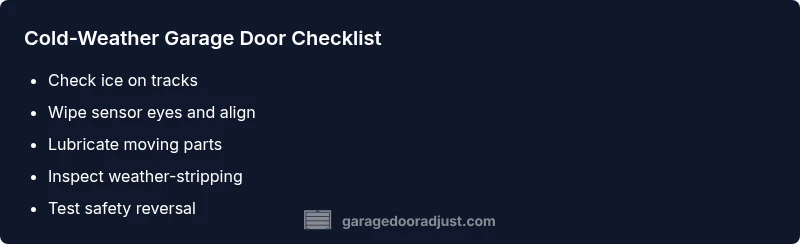
Before you reach for tools, run through a safety-first checklist. Make sure the area around the door is clear of people and vehicles. Unplug the opener before inspecting the tracks or sensors to avoid accidental closure. Look for visible ice on tracks and remove with warm water or a plastic scraper—not metal. Wipe the safety eyes gently with a dry cloth to remove condensation or frost. Realign the sensors if they seem offset and retest the door. Check weather-stripping for cracks or gaps; damaged seals can trap moisture and ice, undermining closure. If any components show wear or damage, plan for replacement or professional service.
Safety Considerations and Things to Avoid
Winter troubleshooting requires caution. Never hammer or pry on metal tracks or springs—these are under high tension and can cause serious injury. Avoid using excessive heat sources to thaw tracks, as rapid heating can warp metal or damage seals. Do not bypass safety sensors or manually override safety systems; this creates a risk of injury or property damage. If you’re ever uncertain, step back and call a professional. Can cold weather cause a garage door not to close? Yes, but with proper, patient steps you can usually restore function without compromising safety.
A Diagnostic Checklist: How to Diagnose Can Cold Weather Cause Garage Door Not to Close
A structured diagnostic flow helps you identify the root cause and select the right fix. Start with the simplest checks: ice removal, sensor cleaning, and track alignment. If the door still won’t close, inspect the door’s balance and track condition. Check the weather seals for cracks or stiffness. Finally, evaluate the opener’s performance: are there unusual noises, slow movement, or inconsistent responses? With each symptom, narrow down the probable causes (ice, sensor issue, lubrication, or balance problems) and apply the corresponding fix. If the issue remains after addressing these items, it’s time to contact a pro for a more in-depth assessment.
Prevention and Maintenance for Next Winter
Proactive maintenance reduces the chance that cold weather will cause a garage door not to close next season. Schedule a fall inspection to verify track alignment, tighten mounting hardware, and replace worn weather-stripping. Keep weather stripping clean and free of cracks, remove snow and ice promptly from around the door, and lubricate rollers and hinges with winter-grade lubricant. If you have an automatic opener, consider a professional tune-up to recalibrate safety sensors and limit switches. Regular maintenance not only prevents cold-weather closures but also extends the life of the door and opener.
What Not to Do: Common Mistakes That Fail in Cold
Avoid over-lubricating or using petroleum-based products on plastic components, which can attract dust and create a sticky buildup in winter. Don’t attempt to force a door that is stuck, as this can bend tracks or snap springs. Don’t ignore warning signs like excessive noise, inconsistent travel, or sensor flashes—these are red flags that require attention. Finally, avoid postponing professional service when you notice stubborn closure issues; Winter can exaggerate wear and tear, and a timely check can prevent a bigger failure.
Steps
Estimated time: 60-90 minutes
- 1
Inspect for ice or obstruction
Power off the opener and visually inspect the rails, track, and rollers for ice buildup or debris preventing closure.
Tip: Wear gloves and eye protection when handling ice. - 2
Clear ice and debris
Use warm water and a plastic scraper to remove ice. Do not use metal tools that can scratch the track.
Tip: Keep a small brush handy for stubborn frost around the edges. - 3
Check safety sensors
Wipe the sensor eyes with a dry cloth and realign if the indicator light is off or blinking.
Tip: Ensure the sensors face each other directly and are not blocked by debris. - 4
Lubricate moving parts
Apply a light winter-grade lubricant to rollers, hinges, and chain/belt drive as recommended by the manufacturer.
Tip: Wipe away excess lubricant to prevent dust buildup. - 5
Test the opener
Reconnect power and test the door in sections: close completely, stop in the middle, and reverse on contact.
Tip: Observe for any unusual noises or jerks during movement. - 6
Check weather-stripping
Inspect the bottom seal for cracks or stiffness; replace if worn to prevent ice buildup under the door.
Tip: Measure the door bottom to choose the correct seal length. - 7
Assess door balance
If the door feels heavy or sits unevenly, it may be out of balance or require spring adjustment by a pro.
Tip: Never attempt spring work yourself unless trained. - 8
Re-test safety reversal
Place a harmless obstacle under the door and confirm it reverses on contact.
Tip: If the reversal is weak, adjust or replace the safety sensor system. - 9
Document and plan maintenance
Record what you found and schedule preventive maintenance before next winter.
Tip: Create a winter maintenance checklist for easy reference.
Diagnosis: Door won't close in cold weather
Possible Causes
- highIce or debris in tracks
- highFrozen safety sensors or misalignment
- mediumStiff or brittle lubrication
- lowDoor balance or springs affected by cold
Fixes
- easyClear ice and debris from tracks and rollers
- easyWipe sensor eyes clean and realign if needed
- easyWarm the mechanism and apply winter-grade lubricant
- hardConsult a professional for springs or track repair
Got Questions?
Can cold weather cause a garage door not to close?
Yes, cold weather can affect tracks, sensors, and lubricants, leading to closure issues. Systematically check each component.
Yes. Cold weather can affect tracks, sensors, and lubrication, leading to closure issues. Check each part step by step.
Why does my door close slowly in winter?
Low temperatures can slow down motors and stiffen lubricants, causing slower closure. Warming the area and applying the right lubricant helps.
Cold slows the motor and stiffens lubricants, which can slow closure.
Are safety sensors affected by cold?
Yes, ice or misalignment can trigger the safety beams, stopping closure. Clean and realign if needed.
Ice or misalignment can trigger safety beams and stop closure.
Is it safe to clear ice from the tracks?
Yes, you can carefully remove ice with warm water or a plastic scraper. Do not use metal tools.
You can carefully remove ice with warm water or a plastic scraper.
When should I call a professional?
If the door remains unresponsive after basic checks, or if springs, cables, or tracks are damaged, contact a pro.
If problems persist after basic checks or if there are damaged springs or cables, call a professional.
Can weather-stripping affect closing?
Worn seals can trap moisture and ice; replace worn weather-stripping to help closure.
Worn seals can contribute to closing problems; replace them.
Watch Video
Quick Summary
- Inspect for ice and thaw before closing
- Check safety sensors and alignment
- Lubricate moving parts with winter-grade products
- Replace worn weather-stripping as needed
- Call a professional for springs or structural issues