Why Does Your Garage Door Stop When Opening? A Troubleshooting Guide
Urgent guide to diagnose why a garage door stops when opening. Quick checks, safe fixes, and a step-by-step repair path from GarageDoorAdjust Team to get doors moving again.


Most often the door stops due to safety-sensor issues, track problems, or spring imbalance. Start with the simplest test: verify sensors are aligned and clear of obstructions, then inspect tracks and rollers for debris or binding. If these don’t fix it, check opener limits and power, and consider consulting a pro.
Common Causes When a Garage Door Stops Opening
When a garage door stops during the opening process, homeowners typically face a handful of recurring culprits. The most frequent are safety-sensor misalignment or obstruction, track or roller binding, and spring imbalance that prevents smooth travel. Other issues include misconfigured opener limits, a power fault, or weather-related stiffness. According to GarageDoorAdjust, the top three culprits are sensor problems, balance issues, and track alignment. Understanding these common causes helps you approach the problem methodically rather than guessing. By documenting what happened just before the stop, you can narrow the likely causes and avoid unnecessary part replacements. This article walks you through a practical, safety-first diagnostic path that emphasizes simple fixes first and escalates carefully if the door remains stubbornly uncooperative.
Safety Sensors: Obstructions and Misalignment
The safety sensors sit near the floor on either side of the door and project invisible beams. If a beam is blocked, misaligned, or covered by dust, the opener will halt the door as a safety precaution. Check both sensor lenses for dirt, misalignment, or foreign objects. Clean them gently with a soft cloth, ensure the screws hold the brackets securely, and re-align until the indicator lights are steady and solid. If the door still stops, place a reflective object in the beam path momentarily to test whether the test pattern redirects the signal properly. After clearing obstructions, perform a full up-and-down cycle to confirm the door travels smoothly. GarageDoorAdjust stresses that sensor issues are a frequent and fixable cause, often resolved with a quick readjustment.
Spring Balance and Torsion Systems
Springs do the heavy lifting, balancing the door as it travels. If a torsion spring or extension spring is worn, stretched, or broken, the door can stop mid-travel or feel very heavy to lift. Do not attempt to replace or adjust springs yourself; high-tension springs can cause severe injury. If the door feels significantly heavier or you notice a gap in the spring area, contact a licensed technician immediately. Regular inspection by a pro can prevent these failures and prolong life, saving you from unexpected closures. GarageDoorAdjust highlights that spring issues are a critical safety concern and should be handled by professionals to avoid injury.
Tracks, Rollers, and Alignment
Bent rails, debris in the track, or worn rollers can impede smooth movement and cause a stop during opening. Inspect the entire length of the track for dents, rust, or misalignment. Look for loose screws or brackets and ensure the track is vertically aligned and plumb. Clean any debris and apply a light lubricant to rollers and hinges, avoiding the track surface itself if you have rubber or plastic rollers. If you notice a persistent misalignment, gently realign by loosening and re-securing mounting bolts without forcing the track. Avoid forcing the door through a jammed section. Small misalignments can quickly escalate into bigger problems if ignored.
Opener Settings, Limits, and Power
Modern openers rely on precise travel limits and power. A weak battery in the remote or keypad can make the door seem to stop mid-opening if signals fail mid-cycle. Check the outlet supply, circuit breaker, and the opener’s power cord for damage. Review the travel limits and force settings in the opener’s control panel or wall console; read the manual to understand how to reset or recalibrate limits. If the opener stutter-sounds or stalls mid-cycle, try resetting the opener to factory defaults and reprogramming remotes. These settings are intended to control how far the door travels and how quickly it responds to commands. This can resolve issues where the door stops before fully opening.
External Factors: Weather, Battery, and Electrical Issues
Cold weather can stiffen components, increasing friction and causing a stop mid-opening. Lubrication may be needed, but avoid over-lubricating to prevent dust buildup. If your keypad or remote relies on batteries, weak batteries can reduce signal strength and reliability. Check battery health and replace if needed. Electrical interference from nearby devices or power surges can also trigger sporadic stops. Consider testing the system during different times of day or with a known-good remote to isolate interference. Understanding how weather and power conditions affect your system can help you identify the underlying cause more quickly.
A Clear Troubleshooting Path: Quick Diagnostic Flow
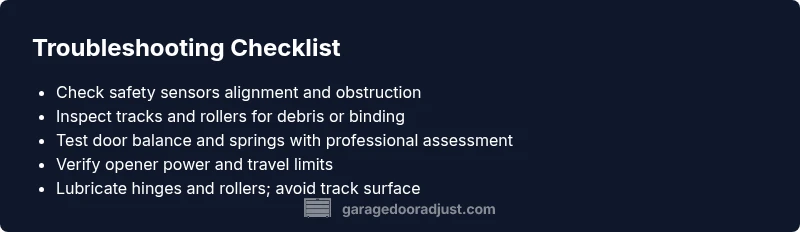
A structured approach reduces guesswork. Start with visible causes (sensors, obstructions, tracks), then move to mechanical balance and finally the opener’s power and settings. If at any stage you detect a hazard (cracked spring, frayed cable, or severe track damage), stop and call a pro immediately. Following a logical sequence keeps you safe while isolating the precise fault. Remember that persistent issues after these checks indicate a professional diagnosis may be required.
Steps
Estimated time: 60-90 minutes
- 1
Unplug and Safety Check
Unplug the garage door opener and inspect the immediate area for obvious hazards. Confirm the door is supported and cannot fall while you test. Visual inspection helps you spot broken parts before you touch anything.
Tip: Always disconnect power before inspecting any mechanical components. - 2
Test Safety Sensors
Stand inside the garage and slowly open the door a few inches, watching for sensor indicators. If a beam is blocked or the lights aren’t steady, adjust the sensors until both lights indicate proper alignment.
Tip: Do not bypass sensors; they prevent injuries. - 3
Inspect Tracks and Rollers
Check the entire length of both tracks for dents or obstructions. Remove debris, tighten mounting screws, and manually guide the door along the track to feel for binding.
Tip: Use a flashlight to spot hidden debris in the track. - 4
Evaluate Spring Balance
Observe if the door feels excessively heavy to lift manually. If so, springs may be worn or broken—call a pro. Do not attempt to replace springs yourself.
Tip: Handling springs is dangerous; avoid DIY fixes. - 5
Reset Travel Limits
Access the opener’s settings and reset the travel limits to recommended factory values. Test opening and closing cycles to confirm full travel.
Tip: Note the original settings before changing anything. - 6
Lubricate Moving Parts
Lightly lubricate hinges, rollers, and track components (not the track surface). Wipe away excess to prevent dirt buildup.
Tip: Use a silicone-based lubricant for best results. - 7
Test Full Cycle
Reconnect power and run several full opening and closing cycles with no load on the door. Observe for smooth operation and any stopping points.
Tip: Keep hands clear of moving parts during tests. - 8
Call a Pro If Needed
If the door still stops unexpectedly, schedule a professional inspection. Persistent stops may indicate a hidden fault that requires specialized tools.
Tip: Professional intervention prevents injuries and further damage.
Diagnosis: Garage door stops during opening
Possible Causes
- highSafety sensors misaligned or obstructed
- highSpring balance issues or broken torsion/extension springs
- mediumTrack misalignment, bent rails, or binding rollers
- mediumOpener limit switches or power settings misconfigured
Fixes
- easyRealign safety sensors and clear obstructions; ensure beam indicators show solid lights
- hardAssess springs with a professional; do not attempt DIY spring work
- easyInspect and true tracks, repair bent rails, and lubricate moving parts
- easyReset travel limits and verify power supply to the opener
Got Questions?
Why does my garage door stop during opening?
The door often stops due to safety-sensor misalignment, track binding, or spring imbalance. Start with sensor checks, then inspect tracks and balance. If unresolved, review opener limits and power settings, and consider professional help.
Common stops come from sensors, tracks, or springs. Start with sensor checks and track inspection, then reset limits if needed.
Can safety sensors cause a stop without warning?
Yes. Misaligned or obstructed safety sensors will halt the door mid-cycle as a safety precaution. Clear obstructions, re-align optics, and test with a few cycles.
Yes—the sensors can stop the door if their beam is blocked or misaligned.
Is it safe to adjust garage door springs myself?
No. Springs are under high tension and can cause severe injury if mishandled. Always hire a licensed technician for spring work.
Springs are dangerous to adjust yourself; call a pro.
How do I reset opener travel limits?
Consult your opener’s manual to locate the travel limit screws or menu, then reset to factory presets and test through several cycles.
Find the travel limits in the opener menu and reset them, then test.
Should I lubricate the tracks?
Lubricating hinges and rollers helps, but avoid the track surface itself as it can attract debris. Use silicone-based lubricant.
Lubricate moving parts, not the track surface; keep debris away.
When should I call a professional?
If you notice damaged springs, frayed cables, loud grinding, or cannot locate the cause after basic tests, contact a licensed technician.
If there’s damage or you can’t fix it after checks, call a pro.
Watch Video
Quick Summary
- Test safety sensors first and fix obstructions
- Balance and springs require professional care
- Clear, inspect, and clean tracks regularly
- Reset opener travel limits if needed
- Call a pro for stubborn or risky issues