Why Does a Garage Door Go Down Then Back Up? Urgent Troubleshooting Guide
A step-by-step guide to diagnose why your garage door goes down and then back up. Learn sensor checks, balance tests, safe testing, and when to call a pro. Practical, homeowner-friendly guidance from GarageDoorAdjust, 2026.


Most often this happens because the safety sensor detects an obstacle or is misaligned, causing the opener to reverse. It can also indicate a balance or limit-switch issue. Start by testing the photo-eye sensors, clearing any obstruction, and checking the door balance; if it still reverses, reset the opener and consider professional help. GarageDoorAdjust emphasizes addressing safety-first before any repair.
Why this symptom matters
A garage door that moves down and then immediately reverses is a safety-driven behavior built into most openers. It protects people, pets, and property from a closing event that could trap or injure someone. While it can sometimes be a quick fix, ignoring the symptom can accelerate wear on rollers, tracks, and springs. According to GarageDoorAdjust, the most common culprits are sensor misalignment, an obstruction in the beam, or a door that’s out of balance. Understanding this helps you prioritize checks that are safe and effective. In short, treat reversing as a warning signal rather than a normal quirk, and work through a structured diagnostic path to avoid expensive damage.
Common causes at a glance
- Obstruction or misalignment of safety sensors (photo-eyes) on either side of the door. These sensors form a beam that must stay uninterrupted to allow a full closing cycle.
- The door is out of balance, placing excessive load on the springs and track, triggering the opener’s safety reverse.
- Incorrect travel/limit settings in the opener, so the door thinks it has reached the floor before fully closing.
- Dirty or damaged tracks and rollers, causing binding as the door moves.
- Electrical issues or memory glitches in the opener that cause erroneous signals.
Address each item in a logical order, starting with the simplest checks and moving to mechanical diagnostics. Real-world fixes tend to be quick when you stay organized and avoid skipping safety steps.
Sensor alignment and obstruction details
Photo-eye sensors are low on each side of the doorway, aimed toward each other. A small misalignment or a speck of dust can cause the beam to fail, prompting the opener to reverse. LEDs on the sensors are your visual guide: steady solid lights usually mean alignment is good; blinking lights typically indicate a misalignment or obstruction. Cleaning lenses with a soft cloth and re-aiming the sensors is a common, safe first step.
Electrical and opener settings to inspect
Many reversing issues originate from the opener’s internal settings: travel limits, force, and safety reverse adjustments. If the door seems to travel farther than expected or feels unusually stiff, the limit and force settings may be off. A basic reset, followed by careful re-programming of these limits, often resolves the problem. If you don’t have the manual, you can usually find the procedure on the manufacturer’s support site or by contacting customer support.
Mechanical wear that can trigger reversal
Even a door that appears balanced can develop issues if rollers, hinges, or tracks are worn or misaligned. Damaged tracks can create unexpected binding, causing the door to stop and reverse. Springs (torsion or extension) also play a crucial role; excessive wear can alter tension, making the door feel heavy or unsafe. Do not attempt spring adjustment yourself unless you’re trained—this is a high-risk area that often requires a pro.
Quick, safe diagnostic approach you can use
- Stand clear of the door and observe from the side as you operate it by the wall switch (not the remote) to see how it travels. If it reverses mid-travel, note whether the sensors blink or stay steady.
- Check for visible obstructions on the tracks and ensure the area beneath the door is clear.
- Manually open and close the door after disconnecting the opener power to test balance. If you feel resistance, stop and call a pro.
- Reset or reprogram the opener controls according to the manufacturer’s instructions and retest with same safety precautions.
If symptoms persist after these steps, professional diagnosis is recommended to avoid further damage or injury.
Putting it all together: a maintenance mindset
Regular inspection and preventive maintenance can drastically reduce occurrences of this issue. Clean the photo-eye lenses every 6–12 months, tighten loose hardware, lubricate tracks where metal-on-metal contact occurs (avoid excessive lubrication near sensors), and schedule annual balance checks with a technician if you’re unsure. Keeping the door balanced and the sensors aligned minimizes sudden reversals and extends the life of your opener.
Steps
Estimated time: 60-90 minutes
- 1
Power down and secure area
Turn off the opener or unplug the unit. Keep hands away from the door and ensure pets and children are clear. This step prevents accidental movement during inspection.
Tip: Use a flashlight to inspect the full length of the tracks without bending or reaching into moving parts. - 2
Test the safety sensors
Check that both photo-eye lenses are clean and directly facing each other. Look for blinking LEDs indicating alignment issues.
Tip: Clean lenses with a soft microfiber cloth; avoid touching the lenses with fingers. - 3
Inspect balance and tracks
Disconnect the opener and manually lower and raise the door to feel for ease or binding. Inspect tracks for dents, obstructions, or loose mounting screws.
Tip: Do not force the door; if it sticks, stop and call a pro. - 4
Reset and reprogram the opener
Reconnect power and perform a factory reset or reprogram travel limits and force as per the manual.
Tip: Test after each adjustment to avoid over-tightening or mis-setting limits. - 5
Re-test the full cycle
Operate the door from the wall control and, if safe, the remote. Observe whether it closes completely without reversing.
Tip: If reversing occurs again, document the exact moment for the technician. - 6
Schedule a professional evaluation
If you’re unsure about springs, balance, or electrical components, contact a licensed technician. Faulty springs or damaged cables can be dangerous.
Tip: Ask for a written estimate and a test that confirms safe operation after repair.
Diagnosis: Garage door moves down and then reverses upward
Possible Causes
- highObstruction or misaligned safety sensor (photo-eye)
- highDoor out of balance or springs wearing
- mediumLoose limit switch or opener settings
- lowDirty tracks or rollers causing binding
Fixes
- easyClear obstruction from the sensor beam and realign sensors until both LEDs are steady
- mediumDisconnect the door from the opener and manually balance the door; if heavy or stiff, call a pro
- easyReset travel limits and force settings per the manual, then re-test
Got Questions?
Why does my garage door reverse before reaching the floor?
Reverse action usually means a safety trigger. Sensor misalignment, obstruction, or an imbalance can cause the door to stop early and reverse. Correcting alignment and clearing obstructions often fixes the issue.
Reverse happens because safety sensors or balance issues trigger the opener to halt. Align the sensors and clear obstructions to fix it.
Can a dirty track cause reversing?
Yes. Dirt, debris, or damaged tracks can bind the door and trigger the reversal mechanism. Clean and inspect tracks, then lubricate sparingly if the tracks are smooth and undamaged.
A dirty track can bind the door and cause reversal. Clean and inspect; avoid over-lubricating.
How do I test safety sensors safely?
With power off, inspect the photo-eye lenses and ensure they face each other. A visible obstruction or misalignment will show a blinking LED. Clean lenses and realign until both LEDs stay steady.
Test by cleaning and aligning photo-eyes; steady LEDs mean proper alignment.
Is it safe to adjust the springs myself?
No. Torsion and extension springs are under high tension and can cause severe injury. Leave spring adjustments to a licensed technician and focus on sensor and balance checks first.
Springs are dangerous to adjust yourself; call a professional for that.
When should I replace the opener rather than repair it?
If the opener is old, frequently malfunctions, or has multiple failing components, replacement may be more cost-effective and safer than piecemeal repairs.
If repairs pile up and the unit is old, replacement is often best.
Watch Video
Quick Summary
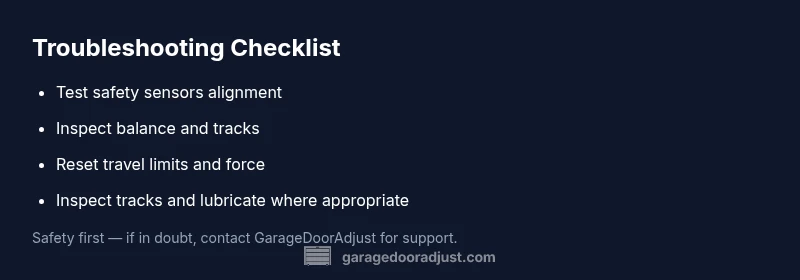
- Check sensor alignment and beam obstructions first
- Balance and track condition drive most reversals
- Reset limits and test cycle after basic fixes
- Call a professional for springs, cables, or uncertain repairs