When Garage Door Closes Then Reopens: Troubleshooting Guide
Quick, safe troubleshooting for when a garage door closes then reopens. Learn sensor alignment, track checks, travel limits, safety tips, and when to call a pro today.


According to GarageDoorAdjust, when garage door closes then reopens, the most likely causes are safety-sensor misalignment or a travel-limit issue. The GarageDoorAdjust team found that cleaning and realigning the photo-eye, and checking limits and tracks fixes many cases. If unresolved, schedule a safety inspection with a professional.
Understanding the symptom and how you’ll fix it
When a garage door exhibits the behavior described as when garage door closes then reopens, it points to safety or mechanical signals being out of spec. The system is designed to reverse if a beam is interrupted or if it senses a risk of collision. Most modern doors rely on a pair of safety photo-eye sensors across the opening, plus limit switches that tell the opener how far to travel. If any input fails, the opener may complete the first part of closing and then reverse, causing the door to reopen before it settles. This is a common, solvable issue for homeowners who follow a safe diagnostic path. In many cases, you’ll fix it without replacing parts; in others, a pro must recalibrate or replace a component. Use the steps below to follow a safe, logical flow and avoid overreaching beyond your comfort zone.
Note: This symptom is related to the keyword when garage door closes then reopens, which signals a sensor or limit problem rather than a failed motor. Safety first: disconnect power before touching the opener.
-## Common causes of this behavior
- Misaligned or dirty photo-eye sensor: Dirt, dust, or misalignment can fail to read the beam, triggering an early reversal.
- Travel limits or end-switch misadjustment: If the opener thinks it has reached the bottom, it may reverse prematurely.
- Obstructions or binding along the track: Debris, warped track, or sticky rollers can cause a false stop.
- Wiring or safety circuit issue: A loose connection can produce intermittent signals.
- Remote or wall-switch interference, or a weak remote battery: Intermittent signals may confuse the opener’s logic.
Each of these is a common, addressable cause you can check in sequence.
Safety-first steps you can take now
- Turn off power to the garage door opener at the wall switch or disconnect the unit from power to prevent unexpected movement while you inspect.
- Visually inspect the photo-eye lenses on each side of the opening. Look for dirt, spider webs, or misalignment, and wipe them clean with a soft cloth.
- Check the track for obstructions and verify the rollers roll smoothly. If the track is bent or the rollers look worn, stop and call for professional help.
- Do a quick limit-stop test by manually triggering the door (if it’s safe to do so) and observing whether it fully closes without reversing. If the door still reverses, the issue is likely electrical or mechanical rather than purely dirt.
If at any point you feel unsure or the door is heavy to lift, stop and seek help from a pro.
Diagnostic flow: symptom → diagnosis → solutions
- Symptom: Door closes and then reopens instead of staying shut.
- Diagnosis: Start with safety-sensor alignment and track obstruction checks. If the beam is blocked or misaligned, the door will reverse before closing.
- Solutions: Realign/clean sensors, clear obstructions, tighten loose wiring, and recalibrate travel limits. If none of these fix the behavior, the control board or motor may require professional service.
Step-by-step fix for the most common cause: sensor misalignment
- Power down the opener to prevent movement. 2) Check the photo-eye alignment—aim both sensors so they face each other directly, with a clear beam. 3) Clean both lenses with a soft, damp cloth; avoid abrasive cleaners. 4) Reconnect power and test from the wall switch. 5) If the beam is still blocked, adjust the alignment screws slightly until the LED indicators show a solid state. 6) Test the door’s auto-reverse and ensure it stays closed when fully down. Tip: Do this test with the door in a safe position and a helper to observe.
Prevention tips and maintenance
- Schedule quarterly visual checks of sensors, tracks, and rollers. Dust and debris accumulate quickly in garages; a quick wipe saves trouble later.
- Keep cables and wire harnesses routed away from moving parts but do not tighten clamps too much—allow slack for movement.
- Use a silicon-based lubricant on tracks and rollers every 6–12 months to avoid stickiness.
- Replace old batteries in remotes and educate household members on not obstructing the sensors.
- If you’re unsure about wiring or board logic, do not attempt to rewire; contact a professional.
When to call a pro and what to expect
If the door still closes then reopens after performing these checks, or you’re uncomfortable with any step, it’s time to contact a trained technician. A GarageDoorAdjust technician will inspect sensors, tracks, and the opener’s linkage, and may recalibrate limits or replace components. Expect a safety-first assessment and a written estimate for parts and labor.
Steps
Estimated time: 60-90 minutes
- 1
Power down the opener
Disconnect power to prevent movement while inspecting. If you have a manual release, use it only when safe. Ensure all helpers are out of the way.
Tip: Never work under a door while power is connected. - 2
Inspect safety sensors
Check both photo-eye alignment. Ensure they face each other directly and that the LED indicators show proper alignment.
Tip: A minor misalignment can trigger the safety circuit. - 3
Clean and realign
Wipe lenses with a soft cloth; verify no obstructions. If your model has alignment marks, reestablish them.
Tip: Avoid touching sensor housings with dirty hands. - 4
Test track and rollers
Inspect the track for dents or debris and ensure rollers roll smoothly. Remove obstructions gently.
Tip: Lubricate with silicone-based product, not oil-based. - 5
Check travel limits
Review the limit switch settings or programming method in the manual. Adjust until the door fully closes without reversing.
Tip: Test gradually to observe behavior. - 6
Power up and test
Restore power and test using wall switch and remote, watching for proper closing without reversal.
Tip: If the door reverses again, stop and call a pro.
Diagnosis: Door closes and then reopens during the closing cycle
Possible Causes
- highSafety sensor misalignment or dirty photo-eye
- mediumTravel limits or end-switch misadjustment
- lowTrack obstructions or binding rollers
Fixes
- easyRealign and clean the photo-eye sensors, ensuring an uninterrupted beam
- easyAdjust travel limits and verify end-switch calibration
- easyClear obstructions and lubricate tracks/rollers
Got Questions?
What does it mean when my garage door closes and immediately reopens?
This usually signals safety sensor alignment issues, a tripped limit switch, or a track obstruction. Start with the photo-eye sensors and limits, then check tracks for binding.
It's usually a safety sensor or limit switch issue. Start with the sensors and limits, then check the tracks.
How do I fix a misaligned photo-eye?
Adjust the sensors so they face each other directly, clear any dirt, and verify the LEDs indicate proper alignment. Test the door after each adjustment.
Realign the photo-eyes and test the door after adjustments.
Can a dirty track cause this problem?
Yes. Debris can impede movement and trigger the reversing mechanism. Clean the track and check for warping or bent sections.
Yes; clean the track and inspect for damage.
Is this dangerous or should I avoid DIY?
Potentially dangerous if you work near moving parts or wires. Follow safety steps, and if unsure, call a pro to assess wiring and the opener board.
It can be unsafe; if unsure, hire a pro.
Should I replace the opener?
Not usually necessary. Most issues are sensor or limit-related and can be fixed on-site. Replacement is considered if the motor is failing or the unit is old.
Usually not; seek repairs first unless the unit is failing.
Why does it work sometimes after unplugging?
A reset can temporarily clear a fault in the logic board, but if the underlying issue persists, the problem will recur. Schedule a professional diagnostic if it repeats.
A temporary reset may help, but fix the root cause.
Watch Video
Quick Summary
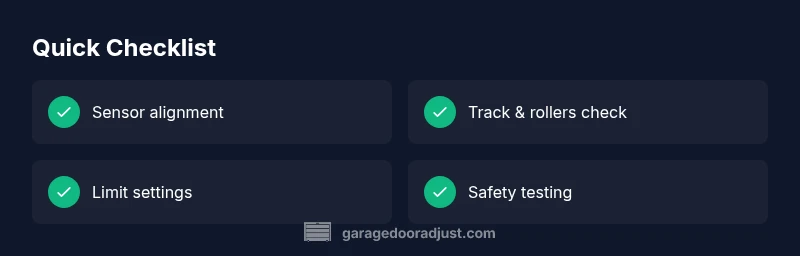
- Inspect sensors first and clean lenses
- Realign the photo-eye beams
- Test travel limits after each fix
- Call a pro if unresolved